
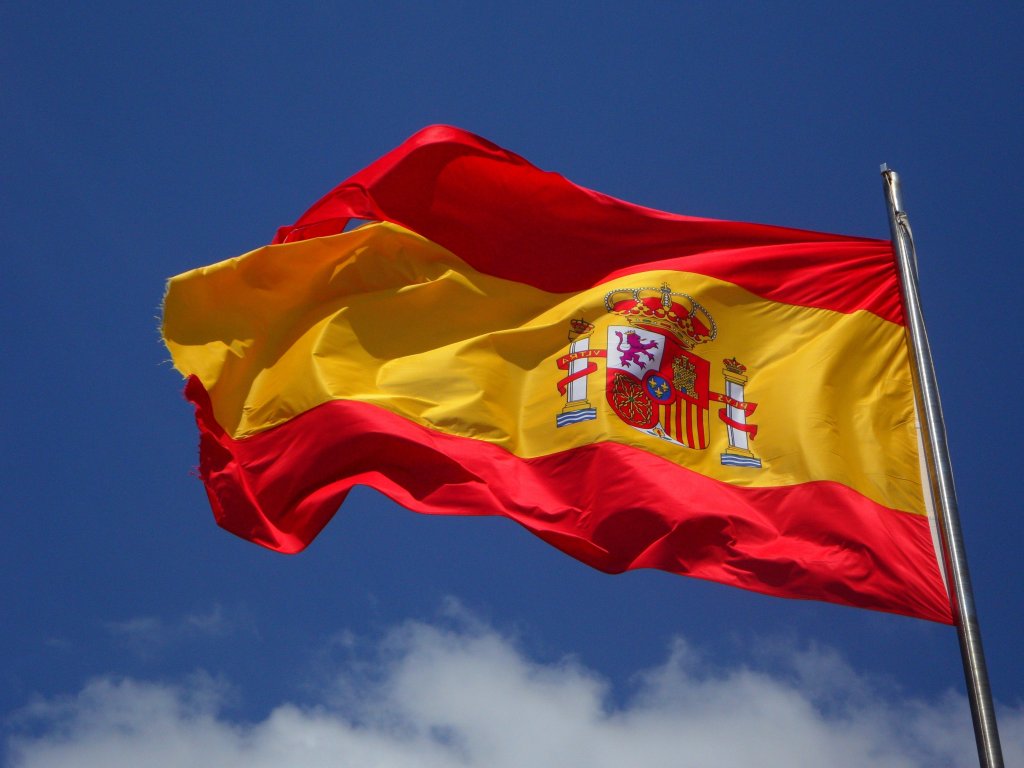
Spain’s Prime Minister, Pedro Sánchez, has now called a general election for Sunday, the 29th of November.
Spain, to be honest, has been in a state of flux since the last elections. The Prime Minister only just scraped his return to office in the last election in July 2023, after he won the backing of Catalan pro-independence parties by promising a controversial amnesty to those involved in the failed, illegal push for independence from Spain in 2017.
Sánchez’s minority coalition government with the smaller, left-wing Sumar alliance has struggled to get legislation through a fraught Congress and has not passed a budget since 2023!
Despite being behind in the polls, he has taken the opportunity presented by the housing crisis, and the fact that his decrees to try and ‘help’ the situation were vetoed in Parliament last week, to call an election.
What he fails to grasp is that it is his government, which has been in power since 2018, that has failed to build enough social housing to try and solve the problem.
He, in his wisdom, implemented a mass regularisation programme for immigrants in 2026, receiving over 1.1 million applications from undocumented migrants by the late-June deadline! 34,000 applied across the Balearic Islands, and those people will now have the same rights as me. Yes, in all intents and purposes, I am an immigrant too, but I’m an immigrant who’s been living legally for the past 35 years. Yet I’m still treated the same? Any ideas on where these people are going to live? And what about the strain this then puts on all the other services, such as schools, hospitals, etc.?
Coalitions in any country do not work. You’ve got a group of political parties who are only looking out for themselves and, therefore, nothing gets done. Take my point above that no budget has been passed since 2023 as a good example of this.
Having lived and worked in Spain since 1990, I cannot vote in this election. Yes, having paid taxes, bought a property, owned businesses and employed people, I still am not allowed to vote. How crazy is that?
Even our own country scrapped its rule on not being able to vote after living away for 15 years or more. British citizens who have moved abroad will be given ‘votes for life’, as the Government scrapped the arbitrary 15-year limit on voting rights.
New measures will also make it easier for overseas electors to remain registered to vote for longer.
Together, these changes will empower more British citizens living overseas to participate in the UK’s democracy.
Decisions made in the UK Parliament on foreign policy, defence, immigration, pensions and trade deals affect British citizens who live overseas. It is therefore right that they have a say in UK Parliamentary General Elections.
Minister of State for the Cabinet Office, Lord True, said at the time:
“In an increasingly global and connected world, most British citizens living overseas retain deep ties to the United Kingdom. Many still have family here, have a history of hard work in the UK behind them, and some have even fought for our country.”
More information can be found at:
https://www.gov.uk/government/news/votes-for-life-for-british-citizens-living-abroad
So why am I being denied that right in the country in which I reside?
One thing we will be able to vote on is the municipal elections in May next year. If you are a resident EU citizen, you can vote in your municipality, but remember, you have to register before the 30th of December 2026.
This can be done at your Town Hall, online through the Town Hall website and at most tourist offices. You will need your NIE and passport for identification.
Being registered at the Town Hall is also important for access to schools, local discounts, healthcare and other municipal services.
Because of Brexit, we are now non-EU citizens, meaning our voting rights are considered less important again. We are still waiting for news on how we can register in order to vote. Last time, we were only given a very short window to register, and it looks like this time it will be the same. I will keep you posted on this. I believe that if you want to have a say in what goes on where we live then you need to exercise your right to vote.
Remember, it doesn’t matter if you were registered to vote last time; you have to go through the process again.
In conclusion, I can vote in the country of my birth, where I no longer reside. I can’t vote in the country where I live, work and pay my taxes. And if I want to vote in the local elections, I, as a non-EU citizen, have to wait until the central Government tells me when I can. How does that song go? “Clowns to the left of me, jokers to the right, here I am, stuck in the middle with you!”


