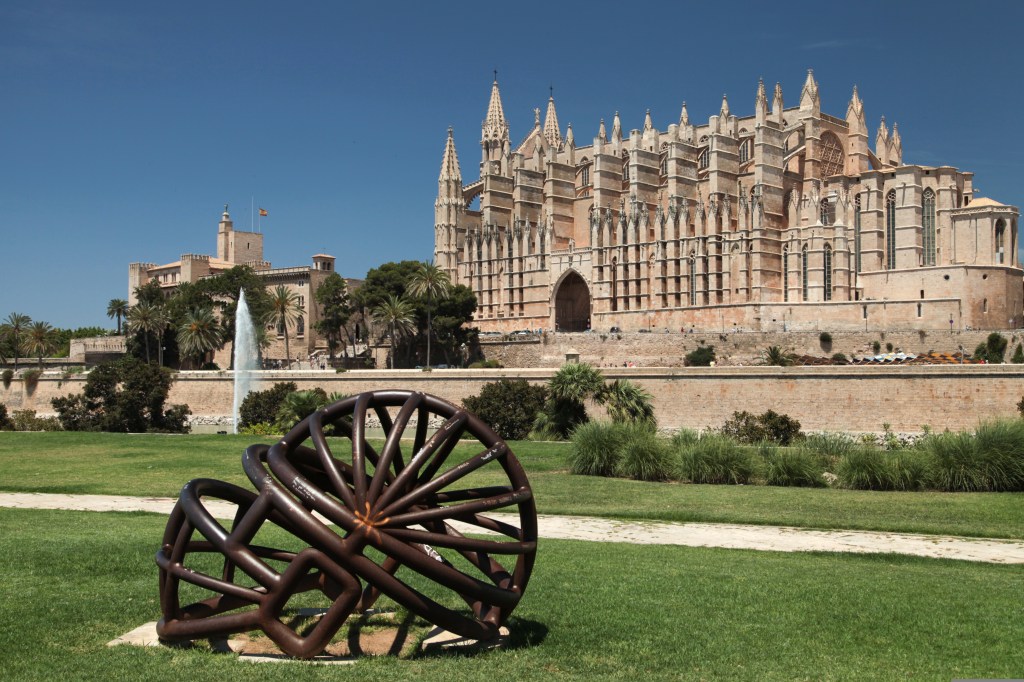
September is here and we are finally seeing a drop in temperatures across the island. You won’t be surprised to hear that this has been the hottest summer on record since 1961. The highest temperature recorded on the island was 41.9°C in Pollença.
Whilst it has been a busy high season in Mallorca, some areas of tourism are reporting a downturn in both numbers and spend. However, figures just released say that tourist daily spend in Mallorca has surged from €150 pre-pandemic to €219, and it has been driven by higher prices. So, where is the money going?
Rafael Roig, president of the Balearic Transport Federation, says that coach operators are experiencing a “somewhat weaker” season than last year, mainly due to a decrease in excursions and tour groups.
“The season is proving to be worse than last year’s.” “In July and August, there have been days when we’ve had more than a hundred 55-seater coaches sitting idle in the Balearics.”
He also added that excursions have seen at least a 10% decrease year on year.
Juanmi Ferrer, president of the CAEB Restaurants Association in Mallorca, highlighted that individual establishments have faced severe drops of up to 40% in patronage, putting hundreds of businesses at risk of closure.
There are two factors that have affected this. People aren’t coming on holiday now for seven or 14 nights. A long weekend of three or four days has become popular, as has a three- or four-day midweek break when flights and hotels are usually slightly cheaper.
Nearly 70% of all hotels in Magaluf are now four- or five-star, so disposable income is now being spent on those hotels and flights, with less money being spent on in-resort offerings such as bars, cafés, restaurants and excursions.
Because they are coming for less time, they are becoming more choosy about what they want to do. This means that all the in-resort offerings will need to look at their models and see if they not only fit into this new way of travelling, but are also offering what the clients are actually looking for.
Mallorca has an opportunity to reinvent itself, and the quicker it realises this, the better. What do I mean? Well, I’ll come to that, but we have already shown it can be done with the transformation of Magaluf. So, what does Mallorca as a whole need to do?
Well, in my opinion, it has the opportunity to not only reinvent itself but solve the overtourism problem too.
Without any doubt, global warming is becoming more and more prevalent with each passing year. The proof is in the numbers. In the 1960s, the first 30°C day was occurring, on average, on the 13th of July. In the 2020s, that figure has been the 19th of June.
This means that temperatures during the high season of June, July, August and September are becoming hotter and hotter, which for some people is becoming unbearable.
The rise in temperatures, though, is not limited to Mallorca. The UK is suffering the same problem and, let’s face it, the UK isn’t built for heat!
Where they are suffering most is in schools. With no air conditioning and limited ventilation, the heat became stifling, and more than 1,000 schools across the UK either closed or sent pupils home early before the hottest part of the afternoon this summer. Conditions were particularly challenging for GCSE and A-level students sitting exams during extreme heat.
According to research, high temperatures can significantly impair the concentration and performance of children in schools. So, there is a call for the whole school year to be looked at.
I’ve been banging on for years about how draconian the law is when it comes to not allowing children out of school during term time for holidays. This now needs to be scrapped, giving families and schools the right to determine when children can take holidays.
But it also looks like the authorities want to completely change the school calendar year. This may well mean that people will be travelling outside of the traditional high-season months of July and August.
Therefore, the whole model of how Mallorca currently works will have to change. Will we be ready for that change?
Well, it’s coming, so we mustn’t get left behind.