I’ve got a positive and a negative for you this week.
Last week, I talked about the changes in Magalluf that I’ve seen over my 35 years here, and that the council were going to be holding a special opening last Saturday.
My wife and I decided to go along and do something completely different.
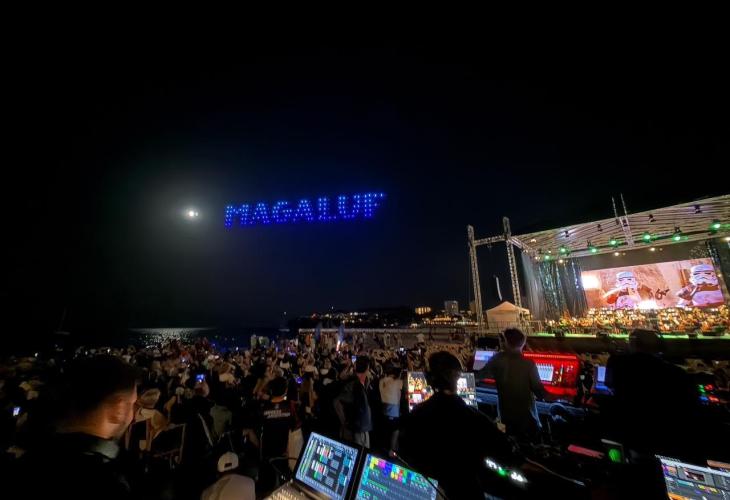
If you’d said 10 years ago that the Balearic Symphony Orchestra would be playing live on Magalluf Beach, you would have been laughed out of town.
Such is the change in the resort over time that this was possible, along with a spectacular drone show.
We booked ourselves into Blackbeard’s Beach Bar & Grill, and as luck would have it, we had a perfect view of the stage from where we were sitting. There were thousands of people there, both tourists and residents from lots of different countries. Police estimates were around the 10,000 mark, and everyone seemed to be enjoying the evening.
The orchestra played music from shows and films, with a huge screen behind them showing videos that linked the two together. This was perfectly accompanied by 400 drones, which lit up the night sky with some amazing images.
Chapeau! to Mayor Juan Antonio Amengual and his team for putting on such a great evening. I hope it isn’t a one-off, as this proved that, with the right planning and organisation, anything can be done.
My good mood was tempered on Monday morning when Real Mallorca released their season ticket prices for the new league campaign. Since we got relegated on the 23rd of May, it has been nothing but bad news.
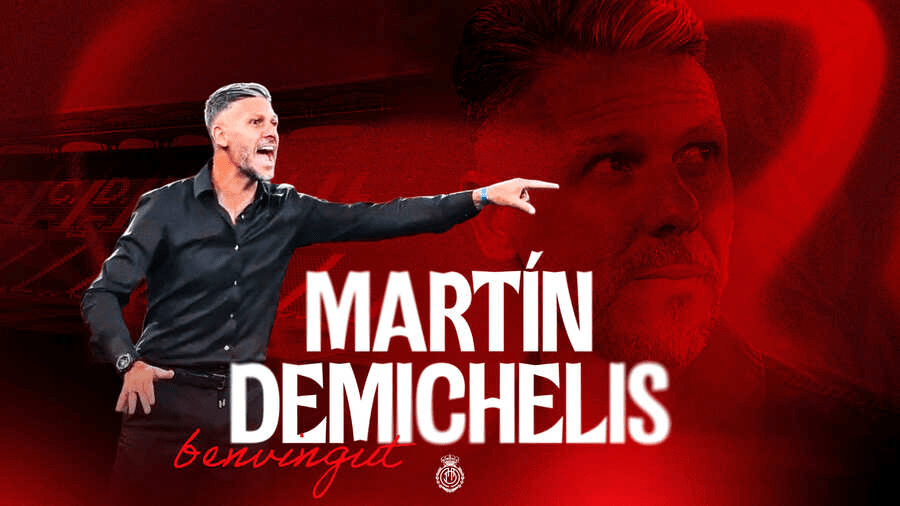
The coach, Martin Demichelis, signed a new contract and then, two weeks later, reneged on the deal and left for RB Leipzig in Germany.
From the team, we’ve lost Muriqi, Larin, Maffeo, Mascarell and Asano, who have either been sold or left on free transfers. Joseph and Kumbulla have gone back to their parent clubs, and I think we’re going to lose Costa, Mojica, Virgili, Torre, Román and Lato too.
As I write this, not one player has been signed.
So, with all that great news, the club decided to reduce my season ticket price by just 20%. We’re no longer watching Barcelona and Real Madrid; we’re watching Almería and Las Palmas! No offence to those two clubs—they were simply the first that came to mind.
Contrast that with the other relegated teams. Girona have reduced their prices by 50%, and Real Oviedo by 40%, which I think is fair in both cases.
Mallorca wrote into all the players’ contracts that relegation would mean a 50% cut in wages, so what happened to the 50% cut in the cost of season tickets? It’s a joke!
My seat last season cost me €500, and this year it will cost €415. If you’d like to sit in the same area as me but you’re buying a seat for the very first time, that will set you back €700! More than half of the Premier League clubs are cheaper than that.
With the relegation parachute payment, the transfer money from players sold, and the wages saved on those players—plus the 50% wage cut for the rest of the squad—Mallorca will have the biggest budget in the Second Division. So why not pass some of that on to the long-suffering fans?
You might say, “Well, you don’t have to buy one if you don’t want to.” But football fans are a different breed. We support our teams through thick and thin, and I can’t turn my back on them.
Whoever is in charge of this debacle obviously hasn’t read the room.
Heartbreak for RCD Mallorca last night as they were relegated from La Liga to Segunda División. Mallorca did their job, beating an already relegated Real Oviedo 3-0, but results elsewhere meant they went down based on their head-to-head record against other teams. When exactly two teams are tied, the league separates them using the matches played only against each other.
The league table doesn’t lie and, in truth, Mallorca went down for a few reasons. In the first half of the season, they just weren’t good enough, and they took too long to replace coach Jagoba Arrasate. They finished seventh in the league based on their home form; where they struggled was away from home, finishing 19th in the away table and winning only two games on the road. The new coach, Martín Demichelis, got the team playing again, but they lost two of their last three games, and that was enough to send them down.
Mallorca finished on 42 points, and in most seasons that would be enough to stay up, but it was so tight that Getafe CF, who qualified for Europe in seventh place, finished just nine points ahead.
One of the positives to come out of the season was Vedat Muriqi, who scored 23 goals and finished second in the “Pichichi”, Spain’s Golden Boot award, behind Kylian Mbappé of Real Madrid CF. The question now is whether they can hang on to him.
After five straight seasons in La Liga, Mallorca must now rebuild and look for promotion back to the top division. I hope they can keep the majority of the squad together.
Players out of contract are Takuma Asano, Omar Mascarell, Javier Llabrés and Iván Cuéllar. Players on loan are Marash Kumbulla, Luvumbo and Mateu Joseph. Conversely, players currently out on loan who will return are Leo Román Domenech, Cyle Larin and David Luna.
The lack of TV money will undoubtedly lead to players leaving. In La Liga, top teams like Real Madrid CF and FC Barcelona pull in €155 million to €160 million per season. Mid-table or lower teams generally secure around €40 million to €50 million.
In Segunda División, most sides earn roughly €6 million to €8 million. The only clubs that cross the €15 million to €22 million mark are recently relegated teams, who receive heavily subsidised payouts from a shared compensation fund (parachute payments) to ease their transition.
Criticism has been levelled at the club and its directors over the direction the club has taken. You could say there has been too much focus on the non-footballing side and not enough on the core business. The stadium is of a very high standard, with lots of corporate opportunities, conference facilities, a sports clinic and a sports café, but when your team on the field doesn’t match your facilities off it, there is a problem.
Is there a Premier League team this scenario reminds you of?
We now have a La Liga stadium with a team playing in Segunda División.
I can’t stress enough how important it is for Mallorca to return to La Liga next season. It’s great for tourism, as people do visit the island to watch football. It’s great for those of us who live here to see teams such as FC Barcelona and Real Madrid CF play live. Finally, it’s great for youth football on the island. Having a team playing in La Liga is aspirational for all of our young footballers.
The one positive I can draw from this sorrowful tale is that season tickets will be cheaper next season.
I’ve kept my powder dry on what’s been happening at Real Mallorca over the last few weeks. I think it had become obvious that the coach, Jagoba Arrasate, had taken the team as far as he could. When he came to the club in July 2024 from Osasuna, he was known as an attacking coach who loved to promote younger players into the team.
He started well enough, and by Christmas that year they’d accumulated enough points to virtually assure their La Liga status for the following season. That was when the wheels started to come off, as the second half of the season was awful. That disappointing form continued into the start of this season, and by Christmas I thought the club would look elsewhere.
However, they continued with some good results at home, notably against Sevilla and Athletic Club, but away they were awful. Arrasate finished his tenure at Real Mallorca with a win rate of approximately 30.9% (21 wins in 68 matches).
His record across all competitions during his time in charge (spanning from July 1, 2024, to his departure on February 23, 2026) was:
Matches: 68
Wins: 21
Draws: 15
Losses: 32
The disappointing part of his tenure was not promoting enough youngsters into the first team. The squad is ageing and needs some young, refreshing talent. The only young player who was successful was Jan Virgili, brought in from Barcelona. It was a shame to see former San Francisco forward Marc Domenech loaned out when backup was needed for Muriqi.
When the club did decide to twist, it was obvious they didn’t have a candidate in place. Luis García Plaza and Kike Sánchez Flores seemed to be the two names in pole position. The only problem was that the club did not want to commit to a contract longer than the end of the season, as if they were relegated budgets would have to be cut.
Out of the blue, Argentine Martín Demichelis appeared. The former Manchester City and Bayern Munich player had played over 50 times for his country and had been coaching in Argentina. He agreed to take the short contract and try to keep Mallorca in La Liga.
Demichelis’ first match was yesterday afternoon, away in Pamplona against Osasuna, a side that had only lost two games at home so far this season. Unbelievably, Mallorca found themselves 0–2 up in a game they dominated. That was until Virgili was sent off in the 73rd minute. Osasuna managed to get two goals back, with the second coming from former Mallorca player Ante Budimir.
In all honesty, if you’d offered Mallorca a draw before the game they would have taken it, but having been 0–2 up it will feel like a loss. The huge plus is the form of Vedat Muriqi, who has scored 18 goals this season so far. Making him the second best scorer in La Liga, 5 goals behind Kilian Mbappe of Real Madrid.
With 11 games to go, Mallorca lie in the relegation places, but a win could see them climb out. The next game is at home to Espanyol next Sunday at Son Moix, kick-off at 14:00.
I can’t stress enough how important it is for Mallorca to stay up. It’s great for tourism, as people do visit the island to watch football. It’s great for those of us who live here to see teams such as Barcelona and Real Madrid play live. And finally, it’s great for youth football here on the island. To have a team playing in La Liga is so aspirational for all of our young footballers.
As they say here in Spain “Si se puede”(yes we can).
We have two sons who are both working hard to climb the football ladder. Our eldest, Jacob, at 19 years old, is starting on the path to becoming a coach. He has been working at the Borussia Dortmund International Academy Mallorca for a couple of years, running various training sessions. This year, however, he will be coaching his own team while studying for a UEFA C licence and completing his education with an FP Superior in Sport.
Our youngest, Jude, at 16 years old, has his sights set on becoming a professional goalkeeper. He is playing at the second-highest level of youth football with Palma FC while studying for an FP in Sport, just like his brother.
Both realise that they are on a difficult path, as very few actually make it, which is why their studies become so important.
Footballers who do make it enter a life that most of us can only dream of. Whilst most behave in a manner befitting their standing, unfortunately there are some who don’t. Several cases have come to light this season, both here in Mallorca and back in the Premier League.
Dani Rodríguez is a player I admire at Real Mallorca. He has been at the club since January 2018 and always gives 100%. However, a couple of weeks ago he let himself down. He was suspended by the club after publicly criticising the club and coach on social media following a loss to Real Madrid. He was frustrated at not being brought into the game—especially as his family was watching—and questioned the value of loyalty and hard work in the dressing room. The club responded by suspending him for 10 days without pay and permanently removing him as vice-captain.
I hope he can train his way back into the team, whether under the current coach or another one (that’s for another day!).
Players thinking they are above the law are becoming more and more common. The case of Alexander Isak is probably the biggest one this summer. He refused to play for his parent club, Newcastle, while still under contract, in an attempt to force a move to Liverpool, who had submitted a bid for him. On the other hand, you have a club like Chelsea, who have sidelined two of their squad players—Raheem Sterling and Axel Disasi—making them train in the evenings, away from the first-team squad. The Professional Footballers’ Association (PFA) has become involved, reminding Chelsea of their duty of care.
But where were the PFA in the case of Isak, telling him he should fulfil his contractual obligations? You heard nothing from them. Yet when it comes to a player like Sterling, they suddenly come out of the woodwork and get involved. I am sure these players had opportunities to move on in the summer but, for whatever reason, chose not to. They are still being paid and have access to all the facilities provided to the first team. In Sterling’s case, he is still earning £325,000 a week! On that amount of money, I’d be training all day, all night, and twice on Wednesdays! I’m sorry, but the “duty of care” argument in this case doesn’t wash with me.
We have taught our sons to be respectful to others, and we hope that if either—or both—of them make it into the big wide world of football, they continue in that vein. As the old saying goes: be nice to the people on your way up, because you might well meet them on your way back down!
Liverpool comedian John Bishop comes to the Palma Auditorium in Mallorca on Friday, April 11th, with his 25 Years of Stand-Up tour, Back At It. I was lucky enough to catch up with John this week and have a chat with him.
RP: John Bishop, born at Mill Road Hospital, Everton, on November 30th, 1966. So, shouldn’t that make you a Blue rather than a Red?
JB: Well, that’s a very good question, and no one has ever picked up on that before. So yeah, Mill Road Hospital was the main maternity hospital in Liverpool, and as you say, it was in the Everton part of Liverpool—or at least it was. It’s not there anymore. I was born there, and we lived on that road, just a few doors down from the hospital, which was handy because my mum and dad were knocking kids out at an alarming rate!
Then we moved. The council came along and said, We’re going to knock your house down as part of this slum clearance. That really annoyed my dad because he’d just decorated it! So we moved out of Liverpool to a place called Winsford. In fact, I spent most of my life outside of Liverpool, but always in spillover towns filled with people from Liverpool.
RP: So, growing up, what did the young John Bishop want to be?
JB: Steven Gerrard. Well, actually, at the time, it would have been—I don’t know—probably Kevin Keegan. I wanted to play for Liverpool, that’s what I wanted to do. Yeah. I wanted to be a footballer, like everyone else. That’s how dreams were shaped back then. I certainly never, ever thought I’d be a comedian.
RP: You still had a pretty good career as a semi-professional footballer. You played for quite a few different clubs, and your brother Eddie was a professional footballer at Tranmere, right?
JB: Yeah, Eddie played for Chester and Tranmere. He played at a very good non-league standard, and I played at a decent standard too. The difference, though, in elite sportsmen is the same as in the entertainment industry—everyone can do something to an extent, but to get to the top, you’ve just got to have something. Some level of determination, commitment, and desire to carry on when it really gets hard.
You see that in elite sportsmen. When I’ve played in charity matches and they’re messing about—operating at maybe 30% of their normal level—I still think, God, they’re so much better!
RP: You went to Manchester University, got a Bachelor of Arts degree in Social Science, and became a pharmaceutical salesman. How was that?
JB: When I started doing stand-up, I was the sales and marketing director of a company that had a product I was responsible for—one that stopped people from rejecting their organs after transplants. It was the hardest thing in the world to stand up and talk about. But there were no jokes. It wasn’t like the job was in any way related to stand-up comedy.
RP: You came into comedy quite late, and your story of how you got into it is fascinating. But it wasn’t the easiest of times for you, was it?
JB: Yeah, I’d just split up with my wife, and I used to have the kids every weekend, taking them back to school or nursery on a Monday and picking them up again on Friday. That meant I was just depressed on a Monday. I was looking for something to do that night—something I could do on my own—because all my mates were bored of listening to me.
So I ended up going to a comedy club, just because I could go on my own. I was 34 and couldn’t think of anything else to do. The guy on the door said, Look, if you put your name down, it’s an open mic night, and you don’t have to pay. I didn’t even know what an open mic night was! He explained it meant I’d have to get up on stage, but because the only comedy clubs I’d ever been in had been packed, I assumed this one would be too.
So I put my name down, thinking, They’ll never get to me—there are probably 200 people in there. But when I walked in, there were only seven. Seven people, and five had already put their names down. I ended up being called up second.
The truth is, if I’d been third or fourth, I probably would have left. But I got called out second, and I was following a Geordie who just did chicken impressions. It was bizarre—I was thinking, Is this some kind of care-in-the-community thing?
I thought, There’s nothing to lose. There are only seven people here, and one of them thinks he’s a chicken! So I just did it. And after that, it became my thing. I started going every Monday, then got asked to do other nights, then weekends. It just grew and grew.
One Thursday, I got called in as a last-minute replacement, and by that point, my act had grown to be all about my divorce. Unbeknownst to me, my wife was in the audience that night—she’d been invited on a work do.
She came over to me at the end, and I just thought, Jesus, this will finalise the divorce settlement. My act is going to cost me another 20 grand. But she said, That was really funny. It was nice to see you the way I’ve always seen you—as funny. Can we do something to get back together?
That’s why comedy is so important to me.
This year marks 25 years since that first night. So much has happened since, but everything has grown out of stand-up—television, acting, all of it. I owe comedy everything.
I’ve been asked loads of times about doing a gig in Mallorca, but I always said no because I wanted to keep it separate. Mallorca has a really special place in our family. But Jimmy Carr sent me a photo of the theatre, and I thought, Oh my God, that looks just like the theatres I tour in the UK. It suddenly made sense to do a show in Mallorca, in a venue that feels right, in a place that means so much to us.
RP: Let’s finish how we started—on football. What are your thoughts on Liverpool post-Klopp? And now you’re probably nailed on to win the league what do you think of your new boss, Arne Slot?
JB: I mean, it’s been a fantastic first season. Jurgen left behind a great squad but also a great legacy as a person. He really got Liverpool—the city, the people, the culture. He galvanized the club just when it needed it most.
No one expected what’s happened this season. Jurgen’s personality is so imprinted on the club that whoever followed him couldn’t come in with a big ego—it just wouldn’t have worked. But Arne Slot slipped into the slipstream perfectly. You can tell how confident he is in himself because he didn’t rush out and buy loads of players. He just took his time, respected the squad Jurgen built, and figured it out.
RP: Do you begrudge Trent Alexander-Arnold leaving Liverpool for Real Madrid?
JB: Absolutely not. Trent goes with everyone’s blessing. I guarantee he’ll get an amazing reception because he owes the club nothing.
At a club like Liverpool, if you give everything, the fans give you everything back. It was the same with Jurgen—when he decided to leave, everyone just… accepted it.
I actually got to interview him at the Liverpool Arena in front of 10,000 fans. The warmth in the room, the gratitude—it was overwhelming. And I think the fans will feel the same way about Trent.
RP: John, I appreciate your time. I know you’re really busy.
JB: No problem—I just want everyone to know this is happening.
John is performing Back At It on Friday, April 11th, at the Palma Auditorium. Get your tickets at www.johnbishoponline.com
Any football aficionado will tell you that a supporter that follows his or her club home and particularly away is a true supporter. Now I’m not putting myself in that bracket, but over the last few weeks I have been lucky enough to go to two of the biggest games my two clubs have played in the last few years. Two clubs? How can you support two clubs, I hear you say. Well, I’ve been an Arsenal supporter all my life, however when I moved to Mallorca I missed the opportunity to go and watch live football. I travel back for a game in London when I can, but Real Mallorca have become my adopted club. I said the other week that following them to Sevilla was a great experience, even though they lost. It was the same for me and my two boys last week when we travelled to Munich to see Arsenal play in the Champions League quarter-finals. Finding tickets was not easy, and this is when a good network of friends comes in handy. Thank you to Debbie at Inspire Sport who managed to get them for us.
My Wife said to all of us before we went, aren’t you going to take a coat? We had looked at the weather forecast, which didn’t look great, but none of us felt we needed one. Which in truth was a schoolboy error. As soon as we arrived in Munich, it was raining, which also turned to hail and sleet! We managed to find the bar that many of the Arsenal fans were in, which was right in the centre of the city. It was an Irish bar that was right opposite a huge German beer hall, so you can imagine that everyone was enjoying the German hospitality. We decided to get to the ground early as I remembered how difficult it was to get there the last time I went, and also the boys were excited to see it. The Allianz Arena is situated in the north of Munich and is one of Europe’s most striking grounds. It certainly is impressive, and the atmosphere was amazing with a crowd of 75,000. One thing I’ve noticed in European games is within the Ultra fans there always seems to a “conductor” who starts all the songs. In Munich, there were two of them orchestrating everything. It’s not something you see so much in the UK, as it’s normally someone randomly starting each chant.
You probably don’t need me to tell you the score, but two defeats in two away trips for my two teams certainly wasn’t great. But spending time with my boys and enjoying the atmosphere of the two different cities meant the results were soon forgotten about. We all agreed that going to away fixtures was actually more fun than going to home games, and it’s something that we will look to do more of in the future.
Travelling away from the island has been interesting these past few weeks. We’re lucky to get the residents discount on flights and ferries travelling interisland and to the mainland. Although it does sometimes seem that companies take advantage of this by putting up their prices. But one of the main things is how easy it is to pass through customs travelling within Europe. Apart from showing our TIE identity cards at the check-in, we would just walk through at the other end. I can’t help feeling that Brexit has ruined that form of travel for us Brits and all the hanging around we have to do now. I’ve talked before about the difficulties in employing Brits now with the freedom of movement taken away. Which then begs the question, has Brexit actually been worth it? If anyone can give me a positive, then I’m willing to listen.
Richie is the MD at Pirates, the island’s number one night out featuring Adventure, Reloaded and Gringos. Subscribe to receive his blogs at http://www.dadtaximallorca.com
Follow him on Twitter @DadTaxi1 & Instagram @dad.taxi or feel free to email him at rprior@globobalear.com