UK-EU Deal: Impact on Mallorca Travelers and Businesses

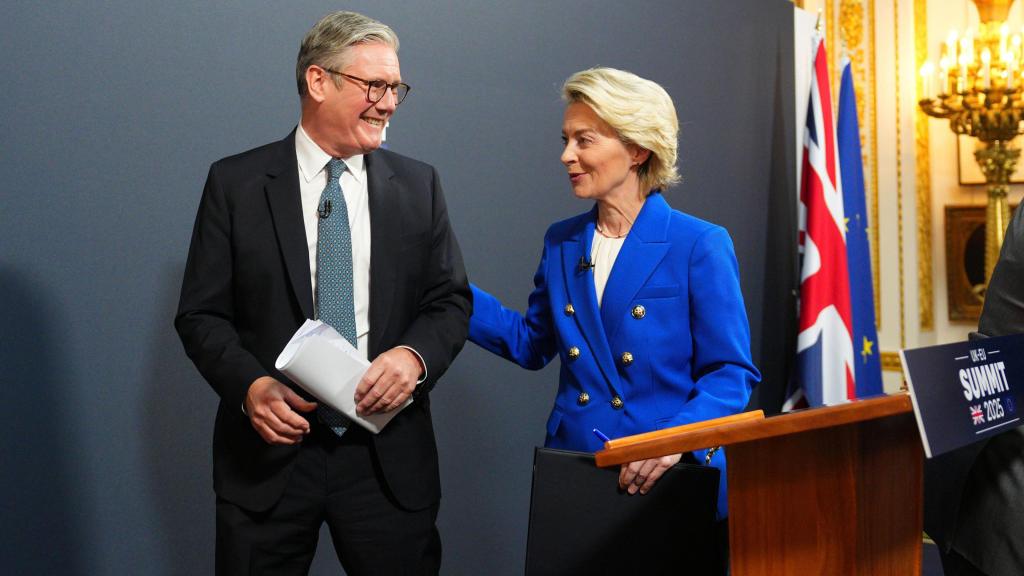
There seemed to be quite a lot of backlash this week following Sir Keir Starmer’s UK Government agreement with the EU. Now, depending on which paper you read—and its political leaning—you’ll see varying reports on the reaction. The Labour-supporting Mirror said, “Deal is Win-Win,” while The Guardian reported, “EU deal puts Britain back on world stage.” On the other side, the Conservative-supporting Mail declared, “Starmer’s Surrender,” and The Daily Telegraph (or “Torygraph” as it’s sometimes known) ran with, “Kiss goodbye to Brexit.”

With any deal, there are always going to be winners and losers—it’s pretty much impossible to keep everyone happy. As I always say, the devil is in the detail. While there are various headlines surrounding what’s been discussed, a lot of it is still in the planning stage and should have a large TBC written next to it.

Purely from a selfish point of view, and focusing on the parts that matter to us here in Mallorca, I think it’s a great deal for travellers and businesses.

The food deal—or to give it its full name, the Sanitary and Phytosanitary (SPS) Agreement—would eliminate some of the trade barriers erected during Brexit. This would provide provisioners, supermarkets, and their suppliers with the opportunity to import more UK produce more quickly and easily. I imagine this could result in cost savings, so hopefully we’ll see a drop in prices too.

Also, for businesses here wanting to sell their produce in the UK, the previous barriers should now be removed, making it easier and cheaper to export.

Using e-Gates-There is a suggestion that holidaymakers could avoid “huge queues” at airports through an agreement allowing British travellers to use e-Gates at European airports. The agreement states that there will be “no legal barriers to e-Gate use for British nationals travelling to and from member states”—but nothing firmer yet. It’s up to individual member states to implement this. I’m not sure if Palma Airport’s owner, AENA, will be too happy, after redesigning Terminal A to cater solely for British tourists and passengers from non-Schengen countries. But still a positive step for UK travelers around Europe.

A youth mobility scheme—which the government has now rebranded as a “youth experience scheme”—also appears to be in the works. The terms must be mutually agreed, as the final numbers, how the cap will apply, and the time limits all still need to be worked out.

If it does happen, I think it will be great news not only for young adults who want to travel and work, but also for businesses here, which are crying out for young workers. I do hope the Spanish Government acts quickly on this. It benefits not only young Brits wanting to come here, but also Spanish young adults, who should have a reciprocal arrangement.

As I said above, all these so-called deals still need some meat on the bone—they need to be fully negotiated. But in my opinion, the ones that affect us represent a positive step in the right direction. I had that opportunity as a young person, and I didn’t look back. I, for one, would like my children to have the same opportunities.

Spain’s New Workweek: 37.5 Hours and Same Pay

If you say to any worker, “I’m going to reduce your working hours but still pay you the same,” without a doubt they’ll respond, “Where do I sign?”

Ask the same question to employers, and I’m sure they’ll look at you in utter dismay and ask, “Why?” Most employers are already finding it hard enough to recruit good, qualified staff—and enough of them to cover the hours they need.

But the Spanish government is moving ahead with plans to reduce the official working week from 40 to 37.5 hours, without reducing salaries. Implementation is expected towards the end of 2025, and it won’t surprise you to know that the proposal has full support from the unions.

“This proposal is about living better, working less, and being much more productive and economically efficient,” said Labour Minister Yolanda Díaz, who put the idea forward.

However, the centre-right Catalan separatist party Junts has already signalled resistance, while the main employers’ lobby, CEOE, argues it will raise Spanish firms’ costs and make them less competitive.

If I’m honest, I lean toward the second opinion. This proposal is heavily weighted in favour of employees rather than employers, and it feels like a populist move designed to win votes in the next election.

I can understand it more on the mainland, where industries like manufacturing and construction are more prominent than here in Mallorca. On the island, tourism is by far the dominant sector, accounting for a significant portion of the economy. While specific figures vary, tourism is estimated to contribute between 40% and 75% of Mallorca’s GDP. It’s also the primary driver of employment, with a large percentage of the workforce directly or indirectly involved in tourism-related businesses.

Once again, Mallorca will suffer from a policy that benefits the mainland more than it benefits us.

Exploring the Palma International Boat Show: A Nautical Industry Overview

After working in tourism for most of my life, it was refreshing to immerse myself in a totally different world last week. The radio station was invited by two different companies to present live broadcasts from their stands at the Palma International Boat Show. The world of yachting is a fascinating industry that employs thousands of people and generates a significant amount of income.

To give you a full breakdown, the Balearics encompass 879 companies generating €1.106 billion in revenue and creating 5,145 jobs, with an annual growth rate of 4.26%, according to a report unveiled last year by the Balearic Marine Cluster. This was the first time a comprehensive overview of the sector had been provided, revealing the consolidation of the Balearic Islands as a hub for nautical activities in the Mediterranean.

Toni Salom, President of the Balearic Marine Cluster, stated in his opening speech: “The nautical industry in the Balearic Islands, representing 3.1% of the Balearic GDP, is not only an integral part of our local economy but also a symbol of our identity and culture.”

I was reliably informed by one of the exhibitors that the Palma International Boat Show is now the fourth largest in Europe. It has over 300 exhibitors and a 96% year-on-year return rate. On our site visit early last week, you couldn’t help but be impressed by the amount of detail people went to in order to make their stand or yacht stand out.

On Wednesday and Thursday, we were with Estela Yachts in the Port Authority building, which was right by the main entrance of the show. They are a full-service agency for commercial vessels, cruise ships, and superyachts, headquartered in Barcelona. They have offices and representatives on three continents and a global network for bunkering, shipping, customs & immigration support, and concierge services.

On Friday, we were with Precision Marine at their stand inside the show.

They provide a wide range of pragmatic, affordable, and always professionally conducted marine engineering services. They are experienced professionals in the marine engineering industry and have been providing successful services from 1994 to the present day. Their policy is to provide a quality service geared to customers’ requirements and deadlines. PME has been a family-run business since it was formed in 1996. Its founder, Andrew Wilcox, is still actively involved in the business today.

Outside broadcasts are fun, as they take you out of your comfort zone and make you totally reliant on a good internet signal. Unfortunately, that wasn’t always the case, but our plan B was to interview people and broadcast the segments back throughout the shows. All of this was great experience for us as we move on to the next big event. We met loads of different people from loads of different companies. It’s only when you get into it that you see what goes into making a successful boat show.

The vibe I got from everyone I spoke to was that this was one of the best shows ever, and they are looking forward to a very busy season. It’s an industry that, in my opinion, should be looked after by the authorities. I came away totally impressed by all the people who work in it, and we look forward to working with many of them in the near future.

Starting A New Chapter: My Mallorca Concierge Service Launch

2024 was a difficult year if I’m honest . Losing my Mother, having a few health problems and leaving Pirates after 30 years wasn’t how I had planned the year to turn out. I decided to take stock of everything and reevaluate what I wanted to do going forward. It did give me an opportunity to spend some time with my family and friends and do some things I probably wouldn’t have done in the past. 

My eldest son Jacob had decided to carry on his education for another two years which really pleased us. After doing a summer season at Pirates he had also managed to find a job coaching football for youngsters with Rob Croll who runs the Russell Martin Academy. More free time also allowed me to spend more time with my youngest son Jude who has signed with a football agency and was asked to play in a higher age group for his club CD San Francisco. At 15 years old he is already playing for San Francisco Juvenil regional and he trains and is the reserve goalkeeper for San Francisco Juvenil Nacional who train at Real Mallorcas training ground Son Biblioni. 

A few people thought I had retired but that wasn’t on my radar, if I’m honest. If I wanted to carry on living on this beautiful island I certainly needed to earn some money. The start of a new radio station came a little bit out of the blue and hadn’t been in my plans. However as I said before the feedback has been amazing and the feeling we’re getting from the community and also further afield makes me think we made the right decision. That was strengthened even further this week when we did three live broadcasts from the Palma International Boat show. I’m reliably informed that it’s the fourth largest boat show in Europe and is probably second to tourism as far as its size as an industry on the island. A big thanks to Estela Yachts and Precision Marine for inviting us to their stands and a shout out to all our sponsors that made it possible. It was a classic example of how a team of professional people pull together to put on such an event. We are already looking forward to next year. 

What I have been working on was starting my own concierge service. It was a natural move into that World considering the amount of contacts I have acquired over the years. I am constantly being asked for a variety of different things and turning that into a business was the perfect progression. 

I have built up a team of people who are professionals in their own particular fields and it’s a case of using their professionalism to help others. 

Therefore if I can be of any help to your business or you have family or friends coming to Mallorca or any of the Balearic Islands, please let me know.

http://www.prioritymallorca.com 

Magaluf & San Antonio: From Excess to Excellence

Back in January 2020, the Balearic government passed a decree law against the so-called “tourism of excesses” and for the improvement of quality in tourist zones. They singled out the resorts of Arenal, Playa de Palma, and Magaluf in Mallorca, and San Antonio in Ibiza, as the areas that would be affected.

At the time, these laws didn’t really come into effect as the pandemic took over, but when everything returned in 2022, they were put into practice.

In 2024, after the elections, the laws were relaxed a little—but what has changed in these resorts since 2020? Well, having lived and worked in Magaluf since 1990, I think I’m well placed to tell you about it. I’ve also asked my good friend Martin Makepeace to give you a view on San Antonio in Ibiza. We do a weekly podcast called Talking Balearics, where we talk about Mallorca and Ibiza. Martin, like me, has lived in Ibiza for over 30 years.

Magaluf, ever since I’ve known it, has had a reputation—some see that as bad, others see it as an opportunity for good.

When I arrived in 1990, families and young people mixed without any problems—even in the winter. Slowly but surely, that balance ebbed away, and the headlines became worse and worse. You didn’t need to be a rocket scientist to know that something had to change.

Meliá was the first to invest in the resort, followed by pretty much every other hotel chain, meaning that over 75% of the hotels in Magaluf are now either 4 or 5-star. Anyone in the know will tell you that Magaluf beach is still one of the best on the island. A new four-million-euro promenade is being built as we speak, with phase one due for completion at the beginning of May. Phase two will be completed in the early part of 2026.

In my opinion, the measures brought in were a bit draconian and wouldn’t have been needed if the resort had been policed properly. The map of the so-called “Red Zone” was drawn in a way that benefited some businesses and not others. It should have been a blanket ban or nothing at all.

It was the short-sightedness of authorities in the past that meant they didn’t understand that the youngsters of today will be the families of the future. Most of my friends had been to Magaluf in their teenage years. They loved it so much that, fast forward five years, they were coming back and staying in a four or five-star hotel. Fast forward another five or ten years, they were renting villas with their families—and all of a sudden, they are the clientele that the authorities want.

You need to give people a taste of what your tourism product is at a relatively early age and hope that it ignites that blue touch paper. They then become bonded and emotionally attached to that location for the rest of their lives.

My list of positives about Magaluf is endless. And when you look closely, it’s a resort that still mixes families and youngsters—and, in my opinion, for longer throughout the year. For families, there’s Pirates, Gringos Family Rave, Western Water Park, karting, Katmandu, the beach, and countless bars, beach bars, cafés, and restaurants to cater to their needs.

For youngsters, there’s Reloaded & Gringos, Oceans Beach, BCM, The Strip, the beach—and again, countless bars, beach bars, cafés, and restaurants to cater to their needs.

I like the new Mayor and his administration in Calvia and believe the changes that are being made are good for the future. Magaluf has changed for the better, and my love for it doesn’t diminish.

Reputation is everything, and the court of public opinion can be a brutal place, passing judgment without the full facts. But times change. 

San Antonio, or Sant Antoni de Portmany to use its official name, is a great example. The stigma of the 80s and 90s still lingers—but it ain’t 1987 anymore. It’s 2025, and the shackles have been released.

New luxury hotels, top-end restaurants serving delicious food, world-class entertainment venues, a sunset that many say is the best on the planet—and more importantly, a young, ambitious mayor who’s not afraid to try new things, improve infrastructure, and make big plans for the future with major investment.

San Antonio now has some of the most expensive real estate in Spain and is already the most expensive place to rent. The gentrification process continues unabated on a small island with limited space. This is the yin and yang of an island that has seen incredible growth over the last 15 years. 

Being comfortable in your own skin takes time, and Ibiza’s second-largest town is finally the mature adult it wanted to be—rather than a sulky teenager prone to bouts of self-harm. 

“It’s a process” is a well-used phrase, and the perception of San Antonio is no different. But this can only be changed by a potent mixture of self-awareness, communication, consistency, and patience. The town is now controlling its own narrative—with actions rather than words. 

New and improved pedestrianised areas, world-famous street art, a new environmentally friendly summer police station, a spanking new port area, plans for cutting-edge sports facilities… and this is just in the last 12 months!

The future is bright. San Antonio isn’t walking into the future—it’s sprinting with confidence.

We both feel that the tourist model of Mallorca and Ibiza is changing for the better—and will need to change even more to keep up with its competitors.

You can hear “Talking Balearics” every week wherever you get your podcasts and Martins blog is https://maninsanan.com

John Bishop’s 25 Years of Stand-Up Comedy in Mallorca

Liverpool comedian John Bishop comes to the Palma Auditorium in Mallorca on Friday, April 11th, with his 25 Years of Stand-Up tour, Back At It. I was lucky enough to catch up with John this week and have a chat with him.

RP: John Bishop, born at Mill Road Hospital, Everton, on November 30th, 1966. So, shouldn’t that make you a Blue rather than a Red?

JB: Well, that’s a very good question, and no one has ever picked up on that before. So yeah, Mill Road Hospital was the main maternity hospital in Liverpool, and as you say, it was in the Everton part of Liverpool—or at least it was. It’s not there anymore. I was born there, and we lived on that road, just a few doors down from the hospital, which was handy because my mum and dad were knocking kids out at an alarming rate!

Then we moved. The council came along and said, We’re going to knock your house down as part of this slum clearance. That really annoyed my dad because he’d just decorated it! So we moved out of Liverpool to a place called Winsford. In fact, I spent most of my life outside of Liverpool, but always in spillover towns filled with people from Liverpool.

RP: So, growing up, what did the young John Bishop want to be?

JB: Steven Gerrard. Well, actually, at the time, it would have been—I don’t know—probably Kevin Keegan. I wanted to play for Liverpool, that’s what I wanted to do. Yeah. I wanted to be a footballer, like everyone else. That’s how dreams were shaped back then. I certainly never, ever thought I’d be a comedian.

RP: You still had a pretty good career as a semi-professional footballer. You played for quite a few different clubs, and your brother Eddie was a professional footballer at Tranmere, right?

JB: Yeah, Eddie played for Chester and Tranmere. He played at a very good non-league standard, and I played at a decent standard too. The difference, though, in elite sportsmen is the same as in the entertainment industry—everyone can do something to an extent, but to get to the top, you’ve just got to have something. Some level of determination, commitment, and desire to carry on when it really gets hard.

You see that in elite sportsmen. When I’ve played in charity matches and they’re messing about—operating at maybe 30% of their normal level—I still think, God, they’re so much better!

RP: You went to Manchester University, got a Bachelor of Arts degree in Social Science, and became a pharmaceutical salesman. How was that?

JB: When I started doing stand-up, I was the sales and marketing director of a company that had a product I was responsible for—one that stopped people from rejecting their organs after transplants. It was the hardest thing in the world to stand up and talk about. But there were no jokes. It wasn’t like the job was in any way related to stand-up comedy.

RP: You came into comedy quite late, and your story of how you got into it is fascinating. But it wasn’t the easiest of times for you, was it?

JB: Yeah, I’d just split up with my wife, and I used to have the kids every weekend, taking them back to school or nursery on a Monday and picking them up again on Friday. That meant I was just depressed on a Monday. I was looking for something to do that night—something I could do on my own—because all my mates were bored of listening to me.

So I ended up going to a comedy club, just because I could go on my own. I was 34 and couldn’t think of anything else to do. The guy on the door said, Look, if you put your name down, it’s an open mic night, and you don’t have to pay. I didn’t even know what an open mic night was! He explained it meant I’d have to get up on stage, but because the only comedy clubs I’d ever been in had been packed, I assumed this one would be too.

So I put my name down, thinking, They’ll never get to me—there are probably 200 people in there. But when I walked in, there were only seven. Seven people, and five had already put their names down. I ended up being called up second.

The truth is, if I’d been third or fourth, I probably would have left. But I got called out second, and I was following a Geordie who just did chicken impressions. It was bizarre—I was thinking, Is this some kind of care-in-the-community thing?

I thought, There’s nothing to lose. There are only seven people here, and one of them thinks he’s a chicken! So I just did it. And after that, it became my thing. I started going every Monday, then got asked to do other nights, then weekends. It just grew and grew.

One Thursday, I got called in as a last-minute replacement, and by that point, my act had grown to be all about my divorce. Unbeknownst to me, my wife was in the audience that night—she’d been invited on a work do.

She came over to me at the end, and I just thought, Jesus, this will finalise the divorce settlement. My act is going to cost me another 20 grand. But she said, That was really funny. It was nice to see you the way I’ve always seen you—as funny. Can we do something to get back together?

That’s why comedy is so important to me.

This year marks 25 years since that first night. So much has happened since, but everything has grown out of stand-up—television, acting, all of it. I owe comedy everything.

I’ve been asked loads of times about doing a gig in Mallorca, but I always said no because I wanted to keep it separate. Mallorca has a really special place in our family. But Jimmy Carr sent me a photo of the theatre, and I thought, Oh my God, that looks just like the theatres I tour in the UK. It suddenly made sense to do a show in Mallorca, in a venue that feels right, in a place that means so much to us.

RP: Let’s finish how we started—on football. What are your thoughts on Liverpool post-Klopp? And now you’re probably nailed on to win the league what do you think of your new boss, Arne Slot?

JB: I mean, it’s been a fantastic first season. Jurgen left behind a great squad but also a great legacy as a person. He really got Liverpool—the city, the people, the culture. He galvanized the club just when it needed it most.

No one expected what’s happened this season. Jurgen’s personality is so imprinted on the club that whoever followed him couldn’t come in with a big ego—it just wouldn’t have worked. But Arne Slot slipped into the slipstream perfectly. You can tell how confident he is in himself because he didn’t rush out and buy loads of players. He just took his time, respected the squad Jurgen built, and figured it out.

RP: Do you begrudge Trent Alexander-Arnold leaving Liverpool for Real Madrid?

JB: Absolutely not. Trent goes with everyone’s blessing. I guarantee he’ll get an amazing reception because he owes the club nothing.

At a club like Liverpool, if you give everything, the fans give you everything back. It was the same with Jurgen—when he decided to leave, everyone just… accepted it.

I actually got to interview him at the Liverpool Arena in front of 10,000 fans. The warmth in the room, the gratitude—it was overwhelming. And I think the fans will feel the same way about Trent.

RP: John, I appreciate your time. I know you’re really busy.

JB: No problem—I just want everyone to know this is happening.

John is performing Back At It on Friday, April 11th, at the Palma Auditorium. Get your tickets at www.johnbishoponline.com 

Balancing Mallorca’s Tourism: Strategies for Year-Round Success

It’s time for me to say to the protesters of over tourism, whilst I have every sympathy with your problems, I, for one, do not support the way you are going about it. The problem with housing and the affordability to either buy or rent isn’t that of the tourists that come to the island and spend their hard-earned money. It lies with the failure of successive Governments for not putting together a house building programme and making some of those properties affordable to the younger people trying to get onto the housing ladder. I would also ask where have you been for the past six months? And why is that? Well, the easiest answer is that apart from the capital city of Palma, the island has more or less been closed. 

The Government should have been offering more encouragement to the Airlines, tour operators and Hoteliers to keep working through the winter. Rather than being happy to only open from May to October. Maybe if the population was employed for 12 months instead of 6 then housing would possibly be more affordable? I would be interested to know what the cost is for paying people unemployment benefit in the winter. Why not strike a deal for the businesses here to open up and not have to pay social security in the winter months, a cost which cripples most companies. When I arrived in Mallorca in 1990 the winter was just as busy as the Summer. However, over the years this has eroded to a situation where most resorts are ghost towns in the winter. Flights have been taken away through the years and as that’s more or less the only way you can get here, the island has consequently suffered. Also, the advent of the low-cost airlines has opened up lots of new destinations that bring competition and that weren’t on the map back in the 1990s. 

Maybe if the tourism load was spread over 12 months instead of 6 then the problem of over tourism might go away? I, for one, doubt it, but it might be one of the solutions to the problem. Take Benidorm on the mainland as a perfect example of this. It’s literally half an hour across the water, temperatures are the same around 15–20 degrees, and it’s still as busy in the winter as it is in the Summer. In fact, there were reports of thousands of people heading there instead of going to Cheltenham in mid-March. They were saying it was cheaper to go there than spend four days at the famous horse racing festival. Combine that with the climax to the Six Nations Rugby on the Saturday the Carabao Cup Final between Liverpool and Newcastle on the Sunday and St Patrick’s Day, what a week that was! The authorities here should take note. 

To go back to my main point that the protesters in my opinion should not target the tourists as that is the lifeblood of our island. Do they not remember what it was like in the pandemic? I’ve said it before, but I’m sure, like me, most of them have a friend or family member that is involved in tourism in one way or another. So targeting them isn’t going to help in any way. 

One thing the protesters haven’t mentioned and was reported to me by Brad Robertson of Save The Med, when I interviewed him a few months ago. He said, “There’s too many people mate, whether you’re a tourist or someone that doesn’t leave your house, it doesn’t matter, there’s just too many of us”! In two decades, Mallorca’s population has grown from 727,000 to 960,000, an increase of 32 per cent. Maybe we should get our own house in order first? 

Understanding Mallorca’s Tourist Tax and Its Impact

Having seen the reports in the Spanish papers and in the Daily Bulletin, it seems that our Government here has some work to do in order to get its own house in order in regard to tourism over crowding. If you haven’t seen the story, it said that over three million people went “missing” in the tourism numbers of 2024. These were all people that didn’t pay the tourist tax, although quite a lot of them for a legitimate reason. As I said back in 2018, “. Just a thought, why isn’t the Government promoting what they are spending the Tourist Tax money on? A video on that massive screen as you come through arrivals at the airport or pictures on the walls saying “last year we raised….and this is what we have spent the money on. Keeping Mallorca the way we all love it for now and for future generations.” That message also may make people think about where they are booking their accommodation. As always, though, with any alarming headline you have to look into the detail. Apparently one million stayed in their own “second home accommodation” and a further two million stayed with family and friends or perhaps more damaging in illegal holiday lets. From what I can see, the numbers for the illegal lets are unclear, making this report inconclusive. Also remember that out of this total of three million, how many are actual tourists, and they only equate to a small percentage of the overall number of tourist visitors to the island. Other avenues will need to be looked at, but if the illegal lets were controlled more it would surely ease the situation if not greatly, at least a little?

I notice the mainland Government is thinking of lowering the drink drive limit. The maximum limit will go from 0.5 grams of alcohol per litre of blood to 0.2, while the limit for expelled air will be reduced from 0.25 milligrams of alcohol per litre to 0.10 milligrams. Why don’t they just make it zero? It would make it a lot easier to decide whether after one drink you are actually safe to drive. Alcohol affects us in different ways and one drink for one to be over the limit, could be two drinks for another. This new measure, which will affect all drivers, is not yet in force but is expected to be implemented during the course of this year and will entail new fines for those who do not respect the established limits.

I have been overwhelmed by the hundreds of messages of support after we launched a new English speaking radio station this week. Wave Mallorca will broadcast from our studios in Palma across the island on 105.2 and 88.2 in Calvia. Online at www,wavemallorca.com and soon to be on all your smart speakers. Between all the presenters, we have lived for over 100 years on the island, so we should have all local, national and international news all covered. We will be very close to the community, both local and tourists, and we will be bringing back our Radiothon and Christmas charity appeals. Anybody interested in sponsoring or advertising with us should get in touch with me. 

Finally, I would like to take this opportunity to say my deepest condolences to the family and friends of Margaret Whittaker, who very sadly passed away a couple of weeks ago. I had the pleasure of interviewing Margaret on a couple of occasions on the radio, and she would regularly come to our Pirates Charity Premiere, where she would always donate to the charities. I lost my Mother last year and whilst it’s tough you can always look back and remember the good times they and you had together. Rest in peace. 

Launching Wave Mallorca: A New Radio Experience

Radio has been a passion of mine since I was a child. You have to remember I’m of an age that is way before the World Wide Web, mobile phones, Social Media, YouTube and Sky TV had started. 

My go-to stations when I was younger were BBC Radio 2 for the football, Radio 1 and Capital Radio for music. My two favourite DJs were Chris Evans and Steve Wright. That’s now moved onto Talksport, BBC Radio 5 Live for the sport and Radio 2 and Virgin Radio for music. 

After spending my life working as a Redcoat, a Holiday Rep and at Pirates, I had dallied in DJing but nothing really significant. Until I was asked to go onto an island radio station called Luna Radio back in the mid 2000s. That was the catalyst to launch Radio One Mallorca back in 2012 which we sold in 2019, and I finished working with them in June 2023.

Back in February last year, I wrote the following, “Steve Wright to me was the G.O.A.T. and the King of afternoon radio. Like Terry Wogan or to me, Chris Evans was to breakfast. It’s made me think that my time in radio isn’t over just yet. A better work, health and family balance and I will be back in the future.” 

So after a short stint on Radio One Mallorca just before Christmas, my colleague Jo and I decided it was time to open our own radio station and I will be back on breakfast on our new station Wave Mallorca from this Monday. 

The station will have a dynamic mix of current and classic hits. We will look to embrace the local community with our presenters and DJ’s, Des Mitchell, Izzy Newman, Charles Nutter plus Jo and me of course. All of us have lived on the island for over 25 years, so we will bring you all the local news and events. I am really pleased that my former Radio Wife Ayesha Wood will be back with me at least once a week on the breakfast show. 

With radio now readily available around the world, we will keep you all up to date wherever you’re listening with what’s happening on our island on a daily basis. 

Charity will also be a very important part of the station, that will see the return of our Radiothon which has raised just under €200,000 for good causes. Also, our Christmas campaign helping those in need here on the island. We will be happy to help promote other charity events, so please get in touch. 

If you’d like to hear about our Sponsorships, feature sponsorships, advertising campaigns, presenter reads and competition prizes. We have something to suit all budgets. Please get in touch, Call: 0034 670 704 311 or email: sales@wavemallorca.com

See you on Monday morning from 07.00! 

Future of Mallorca Tourism: Optimism and Investment

In the European tourism world, there are three main tourist fairs. The World Travel Market in London in November, Fitur in Madrid in January and the ITB in Berlin in March. These are all large-scale events where exhibitors from travel, hospitality, and cultural sectors convene to showcase their services and products.

So the great and the good from the travel world here in Mallorca have returned from Madrid, and I was wondering what was the message they returned with. 

After speaking to a few of them, the main answer I got was “optimism”. 

One of the main problems the Government need to address is the sustainability of the Islands and how they are going to do that yet still reap the economic benefits.

President Marga Prohens announced that 1.12 billion euros is to be spent on tourism sustainability and modernisation in the Balearics.

The slogan for the campaign is ‘the reason is you’ and the strategy is to make the Balearics a benchmark in tourism sustainability. The money will come from the EU next generation funds and the tourist tax – respectively 260 million euros and 860 million euros of tourist tax revenue raised since 2016.

Being an island, we rely on people arriving by air and sea, so is it any wonder the amount of investment in our airport and ports?

Many airlines are increasing their seat capacities. One of them United Airlines from the United States, will increase its direct flights from Palma to New York by more than 50%. A route between the two cities that will also remain in operation until the 24th of October, an extra month on last year.

Anybody travelling through Palma Airport this winter will have seen the massive investment in the infrastructure. Now, I imagine this is being put in place to improve the customer journey, but without doubt it is also preparing for an increase in passenger numbers. 

Back in 2021 there was a 5-year agreement signed to limit the size and number of cruise ships visiting Palma. Whilst there are fewer ships and passengers compared to 2019, the numbers are still high. In 2025, 541 cruise ships are scheduled for Palma. The total number of passengers is put at 1.8 million. By comparison with 2024 there will be 47 more ships and 41,000 more passengers. 

According to Ibestat the passengers that disembark “only spend €35 on the island”. Only? That’s not a bad per head for a person spending less than a day here. That 63 million euros I am sure is welcome. What isn’t taken into account is the employment this all creates and the other revenue such as coaches, taxis and the companies restocking those ships. I would also wager a bet that a certain percentage of those 1.8 million visitors will return to the island for another holiday. 

You may wonder why the Club de Mar and the Paseo Maritimo in Palma are being revamped? Like the airport, I imagine this has been to not only improve the area for residents but preparing for greater numbers arriving at the port. 

1 in 5 people in the Balearics work in Tourism, we all know someone who is involved in that Industry. Tourism both directly and indirectly contributes between 40% and 50% of the Balearic Island’s total GDP. Mallorca continues to face major challenges in terms of making tourism more sustainable while at the same time safeguarding their economic interests.