England World Cup Journey: Memories from Mallorca

This week I wanted to talk about my England World Cup experiences since I arrived in Mallorca.

Italy 1990

My first ever season in Mallorca, and England, after a slow start, were playing out of their skin. It was the emergence of Paul Gascoigne, and I can distinctly remember Punta Ballena going completely mad when David Platt scored a dramatic late winner against Belgium in the last 16. That was followed by a nervy 3–2 win over Cameroon, before a heartbreaking penalty shootout loss to our old foes, Germany.

United States of America 1994

This was an easy one, as England didn’t even qualify! It was the tournament where Graham Taylor, the then England manager, famously said, “Do I not like that!”

France 1998

I can still see Michael Owen waltzing through the Argentinian defence as a young 18-year-old to score one of the World Cup’s greatest goals. That was tempered by David Beckham kicking out at the wily Diego Simeone, leaving England with 10 men. They hung on gallantly, only to lose on penalties again.

South Korea and Japan 2002

This was a World Cup much like the one we are experiencing now, with some strange kick-off times. I remember watching Beckham’s revenge over Argentina over breakfast! This World Cup, though, will be remembered for Ronaldinho lobbing David Seaman from 40 yards. Was it a fluke or an act of genius? Nobody really knows, but it meant England were saying Sayonara to Japan.

Germany 2006

England were sweating on the fitness of a young Wayne Rooney, who had a broken foot and was deemed to be the man to lead them to glory. He did go but was disappointing and failed to score a single goal. They eventually lost to Portugal in the quarter-finals on, yes, you’ve guessed it… penalties! Scoring just one of the four they took.

South Africa 2010

Remembered for those damned vuvuzelas! I remember being back home in the UK for a family celebration and watching the Germany game with my brother-in-law, Anthony. It was the game that produced the “goal” that never was. Frank Lampard hit a shot that clearly crossed the line, but the referee didn’t give it. England were outclassed, went on to lose the game, and were out. That incident led to the introduction of VAR.

Brazil 2014

A tournament to forget. Losing to Italy and Uruguay, and drawing with Costa Rica, meant we were home before the 14-day return period on my new England shirt was up!

Russia 2018

The first of Sir Gareth Southgate’s tournaments, and the one where we finally broke our penalty shootout hoodoo against Colombia. Hands up if you had no faith in Eric Dier scoring the winning penalty! Unfortunately, we couldn’t maintain that momentum and lost in the semi-finals to Croatia.

Qatar 2022

I would have put my house on Harry Kane scoring from the penalty spot. However, against France in the quarter-finals, he managed to hit a guy in Row Z, and we were out.

USA, Mexico and Canada 2026

From my first World Cup in Mallorca in 1990, standing on Punta Ballena, to now, I’m at the stage where my boys are sending me videos of themselves celebrating in the very same street while I’m in bed! Regardless of where I was, this was honestly one of the greatest football matches I have ever seen England play.

I was born in 1966, so it’s sixty years of hurt…Never stop me dreaming! 
Magalluf’s Transformation: Symphony on the Beach

I’ve got a positive and a negative for you this week.

Last week, I talked about the changes in Magalluf that I’ve seen over my 35 years here, and that the council were going to be holding a special opening last Saturday.

My wife and I decided to go along and do something completely different.

If you’d said 10 years ago that the Balearic Symphony Orchestra would be playing live on Magalluf Beach, you would have been laughed out of town.

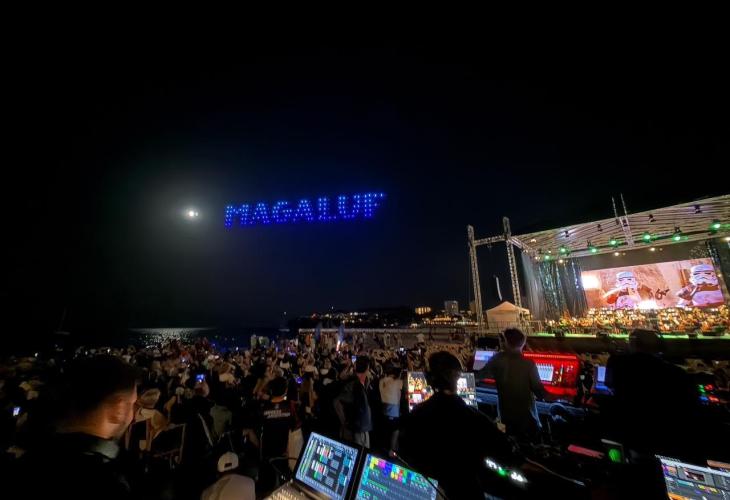
Such is the change in the resort over time that this was possible, along with a spectacular drone show.

We booked ourselves into Blackbeard’s Beach Bar & Grill, and as luck would have it, we had a perfect view of the stage from where we were sitting. There were thousands of people there, both tourists and residents from lots of different countries. Police estimates were around the 10,000 mark, and everyone seemed to be enjoying the evening.

The orchestra played music from shows and films, with a huge screen behind them showing videos that linked the two together. This was perfectly accompanied by 400 drones, which lit up the night sky with some amazing images.

Chapeau! to Mayor Juan Antonio Amengual and his team for putting on such a great evening. I hope it isn’t a one-off, as this proved that, with the right planning and organisation, anything can be done.

My good mood was tempered on Monday morning when Real Mallorca released their season ticket prices for the new league campaign. Since we got relegated on the 23rd of May, it has been nothing but bad news.

The coach, Martin Demichelis, signed a new contract and then, two weeks later, reneged on the deal and left for RB Leipzig in Germany.

From the team, we’ve lost Muriqi, Larin, Maffeo, Mascarell and Asano, who have either been sold or left on free transfers. Joseph and Kumbulla have gone back to their parent clubs, and I think we’re going to lose Costa, Mojica, Virgili, Torre, Román and Lato too.

As I write this, not one player has been signed.

So, with all that great news, the club decided to reduce my season ticket price by just 20%. We’re no longer watching Barcelona and Real Madrid; we’re watching Almería and Las Palmas! No offence to those two clubs—they were simply the first that came to mind.

Contrast that with the other relegated teams. Girona have reduced their prices by 50%, and Real Oviedo by 40%, which I think is fair in both cases.

Mallorca wrote into all the players’ contracts that relegation would mean a 50% cut in wages, so what happened to the 50% cut in the cost of season tickets? It’s a joke!

My seat last season cost me €500, and this year it will cost €415. If you’d like to sit in the same area as me but you’re buying a seat for the very first time, that will set you back €700! More than half of the Premier League clubs are cheaper than that.

With the relegation parachute payment, the transfer money from players sold, and the wages saved on those players—plus the 50% wage cut for the rest of the squad—Mallorca will have the biggest budget in the Second Division. So why not pass some of that on to the long-suffering fans?

You might say, “Well, you don’t have to buy one if you don’t want to.” But football fans are a different breed. We support our teams through thick and thin, and I can’t turn my back on them.

Whoever is in charge of this debacle obviously hasn’t read the room.

The Transformation of Magaluf: From Party Hub to Luxury Destination

I arrived in Mallorca in 1990 on a Dan-Air flight (remember them?) as I was attending a training course for new holiday reps with a company called Intasun. We had never been abroad as a family, so my mum (God bless her) thought I would be back within a week. Thirty-six years later, I’m still here!

The training course took place at the Hotel Guadalupe in Magaluf. It was fairly intense, but my previous four years as a Butlin’s Redcoat stood me in good stead, and I passed with flying colours. There must have been around 50 people on the course, and everyone who passed was called in to be told where in the world they were being sent. Another girl called Lisa and I were told we were staying in Magaluf.

And so my love affair with Mallorca and Magaluf began.

Magaluf’s advertising in 1990 was defined by brash, party-focused marketing from budget travel operators like Club 18–30. Campaigns relied heavily on cheeky slogans, radio spots, and tabloid print ads, promoting cheap booze and “sun-and-sex” holidays. That said, there was still a healthy mix of families visiting the resort.

A family holiday in Magaluf in 1990 was the classic British package holiday. It offered 3-star hotels, sun-drenched sandy beaches, and a boisterous, neon-lit nightlife, with family-friendly bars such as Manos and Benny Hill’s. It was also the time when Pirates Adventure came to the fore. As a hot-day rep, it was my favourite excursion, and I sent hundreds of people there. Little did I know it would become the company I would eventually spend the next 30 years working for.

Like this year, 1990 was a World Cup year, when England came so close to reaching the final. World in Motion by New Order, featuring the iconic John Barnes rap, was released and became a massive hit. Other songs I remember include Step On by The Happy Mondays, Groove Is in the Heart by Deee-Lite, and U Can’t Touch This by MC Hammer.

A pint of lager cost around 200 to 300 pesetas, and a full English breakfast was between 350 and 500 pesetas. Yes, this was all before the euro even existed.

I lived through all the good times of the 1990s and early 2000s, but then it all started to go wrong. Magaluf was making headlines for all the wrong reasons.

Something had to change, and it did.

This transformation was driven by strict local legislation, hundreds of millions of euros in private investment, and a major push to improve the resort’s image and environmental footprint.

The new Magaluf was born – or, as it’s now known, Calvià Beach Resort.

It is no longer a resort dominated by the UK market. Instead, it has become far more cosmopolitan, with visitors arriving from all over the world.

More than 80% of the hotels are now four- and five-star properties. Brands such as Meliá, Fergus, and Globales have invested millions, helping to extend the tourist season and encouraging growth in the MICE (Meetings, Incentives, Conferences and Exhibitions) sector.

Nikki Beach Mallorca has become the luxury anchor of Magaluf’s upscale transformation. Fashion brands such as Mango and Springfield, supermarket chains including Lidl and Aldi, and food and beverage names such as Five Guys and Starbucks are now all part of the resort’s growing fabric. Add to that the increasing number of bars, restaurants, beach clubs, and cafés run by local entrepreneurs, whose food, drinks, and customer service are second to none.

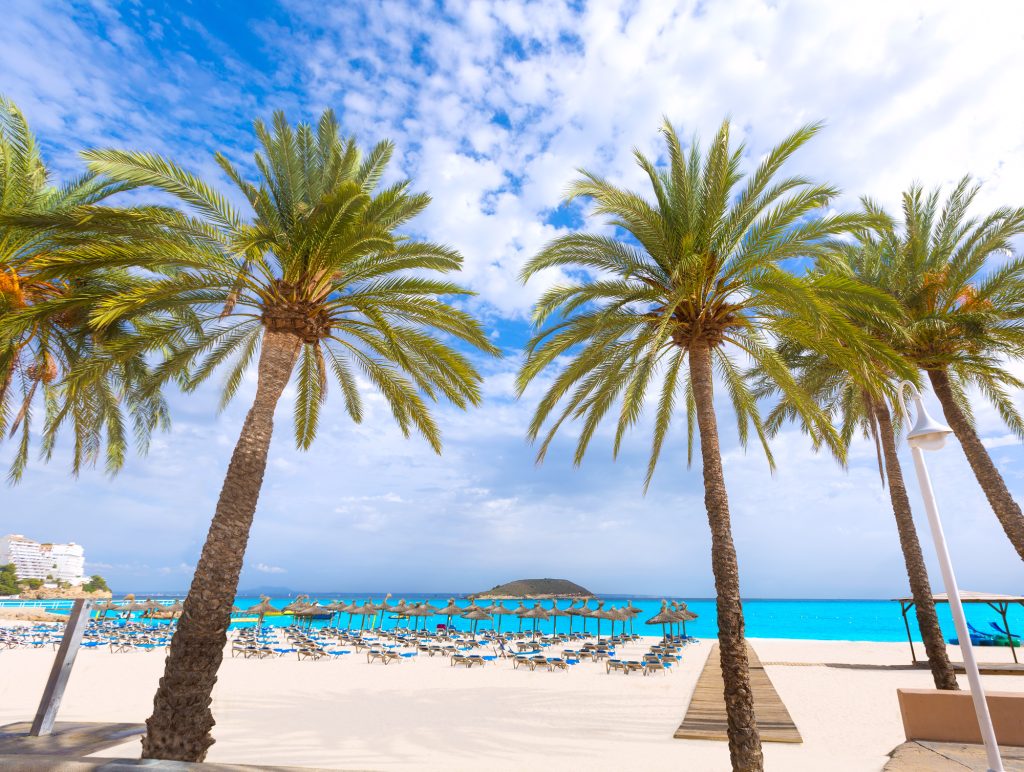
The beach is one of the finest urban beaches in Mallorca, having earned the prestigious Q for Tourist Quality flag. It has also been restored to a more natural state, complete with a dune system and palm trees. Through the new DTI (Smart Tourist Destination) project, the beach is now monitored in real time, allowing visitors to instantly check occupancy levels, water quality, and other useful information.

There’s also a new boardwalk, which has enhanced the range of leisure and dining options, significantly raised standards, and helped establish the resort as a Mediterranean benchmark for urban renewal.

The resort is home to some of the island’s leading family attractions, including Pirates Adventure, Western Water Park, and Katmandu Park.

Mallorca Live Festival, held on the outskirts of Magaluf, has established itself as one of Europe’s must-visit music festivals. This year, more than 70,000 people attended over three days to see artists including The Prodigy, Kaiser Chiefs, and David Guetta. Next year, the festival celebrates its 10th anniversary, with the dates of 11th and 12th June already in the diary.

Sports tourism has also grown significantly, with the state-of-the-art athletics stadium leading the way in welcoming athletes from around the world.

Magaluf still offers a fantastic nightlife; it’s simply become that little bit more sophisticated. BCM has consistently been ranked among the world’s leading nightclubs by DJ Mag and Nightlife International. It focuses heavily on EDM, house, trance, hip-hop, and R&B, and has welcomed world-renowned artists such as Calvin Harris, David Guetta, Steve Aoki, and Martin Garrix.

Probably one of the greatest achievements by the local authorities has been the improvements in safety and security. In recent years, the number of complaints during the high season has fallen by around 30% – a steady improvement backed up by Local Police data.

Magaluf has changed and, in my opinion, changed for the better. Granted, it’s not the same resort I first arrived in back in 1990. But times change, and Magaluf has evolved into a high-quality destination that now attracts visitors from the four corners of the world.

Why Tourism is Crucial for Mallorca’s Economy

We live in a democratic world, thankfully, and that gives us the opportunity for free speech and the right to protest. So, I have no problem with the people who were protesting in Mallorca a few weeks ago. Where I do have a problem is with the mixed messages that seemed to be coming out.

My understanding was that they were there to protest about tourist overcrowding and the lack of affordable housing. But there were also people waving Palestinian flags and calling for Mallorcan independence. When the messages start to become mixed, the actual purpose of the protest, in my opinion, loses credibility.

The protesters claimed there were 30,000 people, while the police said there were 8,000. Who do you believe? Well, even if you go with what the protesters claim, that’s just 3% of the overall population. Hardly a majority, is it?

In my opinion, they shouldn’t be protesting against tourism or tourists. The issue lies with the government—and more importantly, with previous governments—and their lack of investment in social housing. You could also argue that some of the protesters are being hypocritical. Why, you ask? Well, for two reasons: one, you can almost guarantee that each and every one of them has a family member or friend who earns their living through tourism. And two, do these people not go on holiday themselves? If they do, they are contributing to the very thing they are protesting about!

The question is: if you’re really pushing back against tourism, what else are we able to offer? We’re not exactly in the heart of the manufacturing world, are we? Like it or not, tourism is a major pillar of our economy, contributing approximately 45% of our total GDP. Some analyses suggest that tourism’s influence extends even further, potentially impacting up to 90% of the island’s economic activity.

We should be embracing what we have and looking for solutions to the problem. We have a great example of how holiday destinations can evolve right on our doorstep. Magaluf is, in my opinion, a shining example of how a resort once much derided can reinvent itself. If you don’t believe me, go and see for yourself.

Magaluf & San Antonio: From Excess to Excellence

Back in January 2020, the Balearic government passed a decree law against the so-called “tourism of excesses” and for the improvement of quality in tourist zones. They singled out the resorts of Arenal, Playa de Palma, and Magaluf in Mallorca, and San Antonio in Ibiza, as the areas that would be affected.

At the time, these laws didn’t really come into effect as the pandemic took over, but when everything returned in 2022, they were put into practice.

In 2024, after the elections, the laws were relaxed a little—but what has changed in these resorts since 2020? Well, having lived and worked in Magaluf since 1990, I think I’m well placed to tell you about it. I’ve also asked my good friend Martin Makepeace to give you a view on San Antonio in Ibiza. We do a weekly podcast called Talking Balearics, where we talk about Mallorca and Ibiza. Martin, like me, has lived in Ibiza for over 30 years.

Magaluf, ever since I’ve known it, has had a reputation—some see that as bad, others see it as an opportunity for good.

When I arrived in 1990, families and young people mixed without any problems—even in the winter. Slowly but surely, that balance ebbed away, and the headlines became worse and worse. You didn’t need to be a rocket scientist to know that something had to change.

Meliá was the first to invest in the resort, followed by pretty much every other hotel chain, meaning that over 75% of the hotels in Magaluf are now either 4 or 5-star. Anyone in the know will tell you that Magaluf beach is still one of the best on the island. A new four-million-euro promenade is being built as we speak, with phase one due for completion at the beginning of May. Phase two will be completed in the early part of 2026.

In my opinion, the measures brought in were a bit draconian and wouldn’t have been needed if the resort had been policed properly. The map of the so-called “Red Zone” was drawn in a way that benefited some businesses and not others. It should have been a blanket ban or nothing at all.

It was the short-sightedness of authorities in the past that meant they didn’t understand that the youngsters of today will be the families of the future. Most of my friends had been to Magaluf in their teenage years. They loved it so much that, fast forward five years, they were coming back and staying in a four or five-star hotel. Fast forward another five or ten years, they were renting villas with their families—and all of a sudden, they are the clientele that the authorities want.

You need to give people a taste of what your tourism product is at a relatively early age and hope that it ignites that blue touch paper. They then become bonded and emotionally attached to that location for the rest of their lives.

My list of positives about Magaluf is endless. And when you look closely, it’s a resort that still mixes families and youngsters—and, in my opinion, for longer throughout the year. For families, there’s Pirates, Gringos Family Rave, Western Water Park, karting, Katmandu, the beach, and countless bars, beach bars, cafés, and restaurants to cater to their needs.

For youngsters, there’s Reloaded & Gringos, Oceans Beach, BCM, The Strip, the beach—and again, countless bars, beach bars, cafés, and restaurants to cater to their needs.

I like the new Mayor and his administration in Calvia and believe the changes that are being made are good for the future. Magaluf has changed for the better, and my love for it doesn’t diminish.

Reputation is everything, and the court of public opinion can be a brutal place, passing judgment without the full facts. But times change. 

San Antonio, or Sant Antoni de Portmany to use its official name, is a great example. The stigma of the 80s and 90s still lingers—but it ain’t 1987 anymore. It’s 2025, and the shackles have been released.

New luxury hotels, top-end restaurants serving delicious food, world-class entertainment venues, a sunset that many say is the best on the planet—and more importantly, a young, ambitious mayor who’s not afraid to try new things, improve infrastructure, and make big plans for the future with major investment.

San Antonio now has some of the most expensive real estate in Spain and is already the most expensive place to rent. The gentrification process continues unabated on a small island with limited space. This is the yin and yang of an island that has seen incredible growth over the last 15 years. 

Being comfortable in your own skin takes time, and Ibiza’s second-largest town is finally the mature adult it wanted to be—rather than a sulky teenager prone to bouts of self-harm. 

“It’s a process” is a well-used phrase, and the perception of San Antonio is no different. But this can only be changed by a potent mixture of self-awareness, communication, consistency, and patience. The town is now controlling its own narrative—with actions rather than words. 

New and improved pedestrianised areas, world-famous street art, a new environmentally friendly summer police station, a spanking new port area, plans for cutting-edge sports facilities… and this is just in the last 12 months!

The future is bright. San Antonio isn’t walking into the future—it’s sprinting with confidence.

We both feel that the tourist model of Mallorca and Ibiza is changing for the better—and will need to change even more to keep up with its competitors.

You can hear “Talking Balearics” every week wherever you get your podcasts and Martins blog is https://maninsanan.com