The advertising world is not an easy space to work in. An idea that you think is going to blow people’s minds can completely fail—and likewise, a campaign you think isn’t going to work can do exactly the opposite.
There’s also a fine line between what’s okay and what becomes controversial. But sometimes, controversy can actually work in your favour. When you look back on ad campaigns of the past, you do wonder if they would survive in this so-called “woke” era.
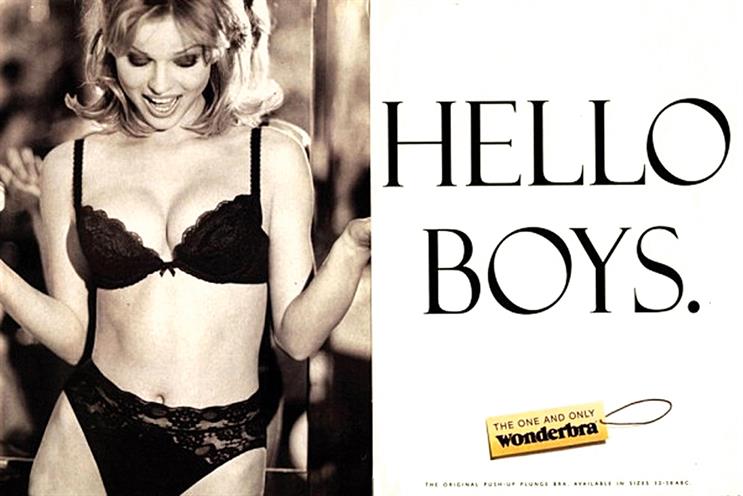
Probably one of the most famous ad campaigns of the last 50 years was the “Hello Boys” campaign by Wonderbra in 1994, featuring Eva Herzigová. It ticked pretty much every box in the advertising world.
It increased sales, raised brand awareness, gained iconic status, caused controversy and public discussion, and finally, inspired imitation.
Likewise, another brand around in the ’90s that caused a lot of controversy was Club 18-30 and its ad campaign, which was put together—believe it or not—by Saatchi & Saatchi. Club 18-30 had gone bust along with ILG and a company I was working for at the time called Intasun. It was resurrected by its former directors, but under the name The Club Holidays, as the brand Club 18-30 was banned for three years.
In 1995, it was due for relaunch as Club 18-30, so it went with a very brash and in-your-face campaign:
“You get two weeks for being drunk and disorderly,” “Beaver España,” and—with a picture of a man in boxer shorts—“Girls. Can we interest you in a package holiday?”

Complaints were few at the beginning, and the management team were clever in keeping it away from London, where all the newspapers were based at the time. After eight weeks, it was banned by the Advertising Standards Authority—but by then, the “damage” was already done. Bookings increased by 30%, and I remember being in Magaluf, where all the talk was about people wanting to be on a Club 18-30 holiday.
These are examples of when taking a risk worked in advertising. Again, there’s a fine line between what’s okay and what becomes controversial. A company’s ad becomes controversial when it crosses boundaries or touches on topics that provoke strong, mixed reactions from the audience. This usually happens when the content challenges societal norms, pushes against cultural sensitivities, or sparks debate over ethics, values, or taste.
Quite a lot of companies these days use social media to get their message across. In 2020, Burger King did just that. They tweeted, “Women belong in the kitchen.” Why would a company as big as the one behind the Whopper say that?
What they were trying to do was draw attention to the fact that, at the time, only 20% of chefs were women. They hoped to empower women with the opportunity to pursue a culinary career. Unfortunately, they failed to realise that people often just scroll through their content feed rather than actually reading the full post or any follow-up comments.
Thousands of complaints later, they removed the tweet.
This brings me to an ad campaign by Kensington International Estate Agents here in Mallorca. They had a billboard which said “Game of Homes.” At first glance, it didn’t look too controversial—I read it as a play on words from the popular TV drama Game of Thrones.

But the Spanish press picked it up and claimed it was an offensive message to the people of Mallorca, who are finding it increasingly difficult to secure housing in the current climate. I saw one comment that blamed the company for massively inflating prices for corporate greed. But what happened to the phrase, “Something is only worth what somebody else is prepared to pay for it?”
With all the backlash, they agreed to remove the billboard.
Finally, there’s an example of a product that had no need for publicity, was highly controversial and provocative, and was banned by the country’s biggest radio station at the time—Radio 1. Ironically, the ban helped the song gain further notoriety, increased its popularity, and it went on to become one of the most commercially successful records of the 1980s, with sales of over two million.
That was Relax by Frankie Goes to Hollywood. It is widely considered a strong example of effective marketing, particularly due to its innovative approach to merchandising. The “Frankie Say Relax” t-shirt became a viral sensation, worn by countless fans and even appearing in popular media like the TV show Friends.
Oscar Wilde once said, “There is only one thing in life worse than being talked about, and that is not being talked about.”

 Dad Taxi Mallorca