Remembrance and Identity: A British Expat’s Tale

I came to Mallorca back in 1990. Back then, I worked the summer seasons and went back home in the winter to look for work. My wife Rachael and I met at Pirates; she was Captain Scarlett and I was Captain Darling. We bought an apartment together in 1999, and once we had done that, we tended to stay here in the winters more and more. We got married in 2005 and moved to where we live now, and not long after that our first son, Jacob, was born. Three and a half years later our second son, Jude, arrived.

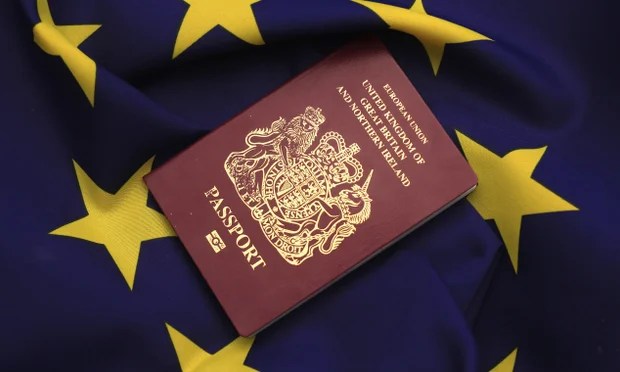
I class Mallorca as my home, but I have never once considered giving up my British passport and becoming a Spanish citizen. Having lived here for 35 years now, and my wife for slightly less, we could both apply for citizenship — but it’s not something we want to do. We have said to our sons that it’s entirely up to them what they decide.

My youngest, Jude — who you probably know is an aspiring footballer — said to me, “What if it comes to choosing England or Spain in football?” Now, firstly, he’ll be lucky to ever get into that position of course, but we can dream. If he ever did, I said it would be totally up to him. His choice right now is England.

He is also considering other avenues of work in case the football dream doesn’t materialise, which is something we have encouraged. Right now, he wants to go into the military or the fire service, and he would like to do that in the UK.

Working on the radio, I like to keep a keen eye on the news and particularly on things that are happening in the UK. I also listen intently to family and friends and what they have to say about the state of my country of birth. None of it right now seems to be positive.

A poll released only a few days ago from King’s College London reported that less than half of those polled (46%) felt proud of Britain, down from 56% in the past five years.

Remembrance Sunday was a couple of weeks ago — a day held annually on the second Sunday in November in the UK and other Commonwealth countries to commemorate the contribution of British and Commonwealth military and civilian service members in all wars and conflicts. It is a time for national reflection, observed with acts of remembrance such as wearing poppies, attending ceremonies, laying wreaths, and observing two minutes of silence.

My nephew William was part of the RAF band playing at the Cenotaph. I was saddened to hear Alec Penstone, aged 100, who fought in World War II and has attended several remembrance events and appeared on ITV’s Good Morning Britain. When asked what his message was for Remembrance Sunday, he said:

“My message is, I can see in my mind’s eye those rows and rows of white stones, of all the hundreds of my friends who gave their lives. For what? The country of today? No, I’m sorry. The sacrifice wasn’t worth the result that it is now.”

Alec explained:

“What we fought for was our freedom, and even now, it’s a darn sight worse than what it was when we fought for it.”

Surely this can’t be right?
UK-EU Deal: Impact on Mallorca Travelers and Businesses

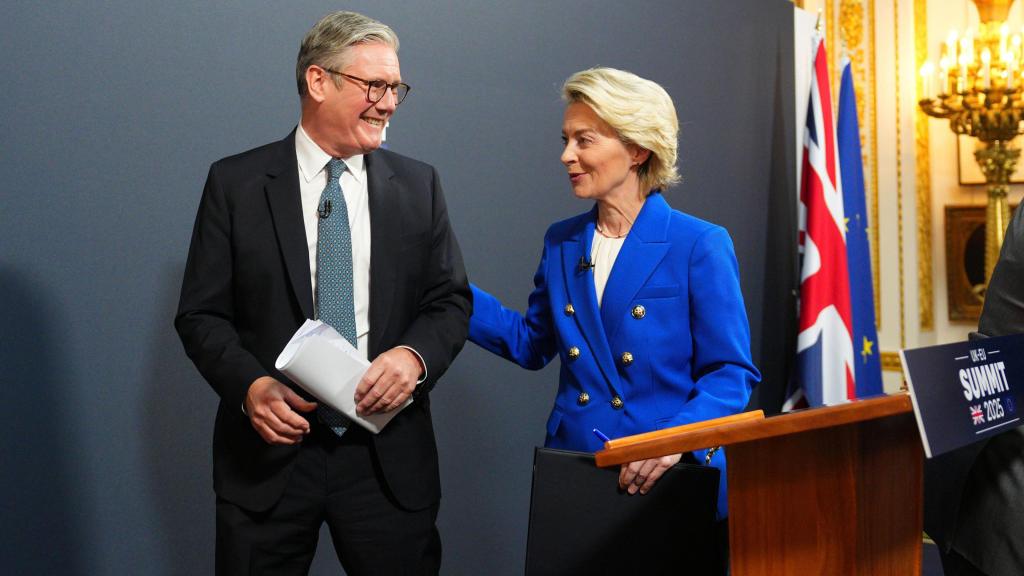
There seemed to be quite a lot of backlash this week following Sir Keir Starmer’s UK Government agreement with the EU. Now, depending on which paper you read—and its political leaning—you’ll see varying reports on the reaction. The Labour-supporting Mirror said, “Deal is Win-Win,” while The Guardian reported, “EU deal puts Britain back on world stage.” On the other side, the Conservative-supporting Mail declared, “Starmer’s Surrender,” and The Daily Telegraph (or “Torygraph” as it’s sometimes known) ran with, “Kiss goodbye to Brexit.”

With any deal, there are always going to be winners and losers—it’s pretty much impossible to keep everyone happy. As I always say, the devil is in the detail. While there are various headlines surrounding what’s been discussed, a lot of it is still in the planning stage and should have a large TBC written next to it.

Purely from a selfish point of view, and focusing on the parts that matter to us here in Mallorca, I think it’s a great deal for travellers and businesses.

The food deal—or to give it its full name, the Sanitary and Phytosanitary (SPS) Agreement—would eliminate some of the trade barriers erected during Brexit. This would provide provisioners, supermarkets, and their suppliers with the opportunity to import more UK produce more quickly and easily. I imagine this could result in cost savings, so hopefully we’ll see a drop in prices too.

Also, for businesses here wanting to sell their produce in the UK, the previous barriers should now be removed, making it easier and cheaper to export.

Using e-Gates-There is a suggestion that holidaymakers could avoid “huge queues” at airports through an agreement allowing British travellers to use e-Gates at European airports. The agreement states that there will be “no legal barriers to e-Gate use for British nationals travelling to and from member states”—but nothing firmer yet. It’s up to individual member states to implement this. I’m not sure if Palma Airport’s owner, AENA, will be too happy, after redesigning Terminal A to cater solely for British tourists and passengers from non-Schengen countries. But still a positive step for UK travelers around Europe.

A youth mobility scheme—which the government has now rebranded as a “youth experience scheme”—also appears to be in the works. The terms must be mutually agreed, as the final numbers, how the cap will apply, and the time limits all still need to be worked out.

If it does happen, I think it will be great news not only for young adults who want to travel and work, but also for businesses here, which are crying out for young workers. I do hope the Spanish Government acts quickly on this. It benefits not only young Brits wanting to come here, but also Spanish young adults, who should have a reciprocal arrangement.

As I said above, all these so-called deals still need some meat on the bone—they need to be fully negotiated. But in my opinion, the ones that affect us represent a positive step in the right direction. I had that opportunity as a young person, and I didn’t look back. I, for one, would like my children to have the same opportunities.

Freedom Of Movement

Back in May, I wrote this;

“The 23rd of June 2016 was a day when the older generation in the UK totally changed the landscape for the younger generation. It was the day that Brexit became a reality and unfortunately, just over half of the population believed the spin of vote leave campaign more than the spin of vote remain. One of the driving forces for vote leave was immigration, and by taking away the freedom of movement they said the UK would get their borders back. Well that went well didn’t it!

On the one hand, all it has done is to drive the people to take much riskier ways of getting to the UK. And on the other hand, it has denied the younger generation all over Europe, the freedom to travel and work abroad. 

Why is the UK Government so obsessed with denying people the freedom to travel? It seems they and those who voted for Brexit forgot they were young once and decided it is best that they deny the same opportunities to younger people.”

Of the 18-24 year olds, 73% voted to remain and 27% voted to leave. Compare that to the over 65’s where 60% voted to leave and 40% voted to remain. It’s a sad fact of life that some of those over 65’s are now no longer with us, and while I respect their right to vote for what they believed in. Surely a clearer majority should have been put in place to make sure a tight result meant a second referendum? Although you have to be over 18 to vote in the UK, why weren’t the 16 and 17-year-olds at the time not given the opportunity to vote on something that would ultimately affect their future? Unless something changes they’re going to have to live with the consequences of this decision for about 70 years, and it’ll affect every area of their lives from education, to jobs and to travel.

Both the UK and the EU have suffered from an employment point of view, ever since the freedom of movement was taken away. Mallorca has suffered twice in the need for workers from both Brexit and the pandemic. Brexit has brought the lack of workers from the UK and since the pandemic, less seasonal workers from the Spanish mainland have arrived. Meaning some bars and restaurants only open for 5 days a week, and have you wondered why it’s so difficult to get a taxi in July and August? 

Rumours are abound in Westminster that the Government have set up a task force to forge closers ties with our former EU partners. One of the topics is the freedom of movement for 18-30 year olds. I don’t understand anyone who would deny anyone of any age their freedom of movement, particularly if it was to go somewhere looking for work. But if it means our children can enjoy the same freedom as I and many others did, then I am all for it.