Mallorca’s Tourism Strategy: Diversification and Sustainability Goals

This past week has seen the World Travel Market in London, where the great and the good of the travel world descend on the Excel Centre to showcase their wares. Mallorca focused on diversification and sustainability as the new buzzwords, while the Government continues to fend off questions about tourismphobia.

There are three main travel markets in Europe: the WTM in London in November, Fitur in Madrid in January, and the ITB in Berlin in March. The majority of Mallorca’s tourist numbers come from three countries:

Germany: The largest single source market for tourists in Mallorca, accounting for around 40% of total tourist traffic. In 2024, estimates suggest over 5 million German visitors. Reports indicate that this year there has been a decrease in the number of German tourists.

United Kingdom: The second-largest market, typically making up around 26% of visitors. In 2024, there were an estimated 3.58 million British tourists. Reports suggest that the British helped save the summer season this year, with a slight decline in visitor numbers in July and August but a significant increase in September.

Spain: Domestic tourism from mainland Spain is also a key market, with approximately 1.8 million visitors estimated in 2024.

We are starting to see more and more visitors from other countries. In my concierge business, I have met and spoken with people from the USA, France, Italy, Austria, Scandinavia, the Netherlands, Iraq, and Singapore. Next year, we are expecting flights from Canada, Abu Dhabi, and possibly South Africa.

For me, it is fundamental that we are represented at these travel markets. I often see comments online such as, “Why are we going when we’re always full?” and “Do we really need to spend this money?”

Marketing is crucial for sustainable growth — not just for attracting more visitors. It helps draw in a higher-spending demographic, which is something the Government is keen to encourage. It also helps spread tourism throughout the year and attracts people interested in different types of activities, helping to manage and reduce pressure during peak times. In addition, it can attract tourists with different needs and preferences, which in turn diversifies the local economy and ensures long-term stability.

Not being represented may not have a noticeable effect on tourism numbers in the short term, but you can be sure that in the long term, we would start to suffer. Competition among destinations is increasing, and according to the organisers of the WTM, London 2025 is expected to be the largest event in its 45-year history. Early indicators show significant growth, surpassing the more than 4,000 exhibitors from 2024, with an 8% increase expected.

Let’s be clear: tourism accounts for approximately 45% of Mallorca’s GDP, making it the island’s primary economic driver. The sector’s total impact is even greater, with analyses suggesting it influences up to 90% of the island’s economy through indirect effects on other industries. Most of us have a family member or friend who works in tourism.

Sustainability will be a vital part of our tourism strategy in the coming years. One change I would make immediately is to the tourist tax — I would charge a fixed fee all year round for every traveller.

At the moment:

• Under-16s don’t pay.

• Rates vary depending on the type of accommodation.

• There’s a 50% reduction if you stay longer than nine nights.

• It’s discounted during the low season.

Let’s be in no doubt: the island’s beauty must be maintained for generations to come — but we should also be proud of what we have. I’ve said it before, and I’ll keep saying it:

We are a beautiful island of contrasts — from the stunning beaches in the north to the mountains of the west, the caves and coves of the east, and the bustling nightlife of the south. There is something here for absolutely everyone.

If ever there was a destination built for tourism, it’s our island. It hasn’t been one of the most popular islands in the world for the past 50 years for nothing. In my opinion, it remains one of the best places to live and one of the best holiday destinations anywhere.

We can boast turquoise-blue waters, secret coves, soft golden sands, lush green landscapes, rugged mountains, picturesque villages, amazing cuisine, an up-and-coming wine industry, vibrant nightlife, and a lively capital city. And we’re just a couple of hours’ flight from most major European cities — right in the heart of the Mediterranean.

As someone who lives and works here, I see Mallorca’s magic every single day — in the people, the landscapes, and the memories our visitors take home. If we can combine smart marketing with genuine care for our environment and communities, I have no doubt that Mallorca will continue to shine as the jewel of the Mediterranean for decades to come.

Discover Mallorca: An Emerging International Destination

Mallorca is developing more and more into an international destination, and with that, more opportunities are becoming available to those of us living and working here. The truth is, why would you not want to come here?

We are a beautiful island of contrast, from the stunning beaches in the north to the mountains of the west, the caves and coves of the east, and the bustling nightlife of the south. There is something for absolutely everyone.

If ever there was a destination built for tourism, it is our island. It hasn’t been one of the most popular islands in the world for the last 50 years for nothing. In my opinion, it remains one of the best places to live and one of the finest holiday destinations. We can boast turquoise-blue waters, secret coves, soft golden sands, lush green foliage, rugged mountains, picturesque villages, amazing cuisine, an up-and-coming wine industry, a lively nightlife scene, and a vibrant capital city. We’re also an island in the Mediterranean, just a couple of hours’ flight from most European cities.

Palma Airport, which is Spain’s third busiest, is currently undergoing a €559 million expansion and modernization by its owner, AENA. The project began in 2022 and is expected to be completed by the end of 2026. Its purpose is to improve the airport’s passenger-friendliness, efficiency, and sustainability.

One thing that is changing is the increasing number of direct flights arriving from outside of Europe. It used to be that anyone coming from further afield had to visit us via Madrid, Barcelona, or another European city. Since the pandemic and around the start of the airport expansion, things have started to change. In June 2022, a direct flight from New York to Palma began operating, and its frequency has increased every year. From June 17th to October 24th, 2026, Air Canada will launch a direct flight between Montreal and the island, and Etihad Airways has officially announced that it will begin direct flights between Abu Dhabi and Mallorca starting June 12th, 2026, running through to mid-September. This will be the first-ever direct connection between the UAE and Mallorca, and currently the only direct air link between Asia and the island — a landmark moment in Mallorca’s international connectivity.

Not only are all these connections great for the island but let’s remember we now have the opportunity to travel to these destinations for either business or pleasure. Making it a win-win situation.

Friends of mine in the wedding industry here on the island tell me that since the flights from New York began, there has been a steady increase in American couples getting married here. Friends in the property world also say that more and more foreign buyers are being lured to the island because of its beauty and great connectivity.

Not only is this good for business here but this also has a knock-on effect on many third-party businesses that may not be directly involved in these industries but will benefit from their growth.

I see all of this as positive, but I also understand that the sustainability aspect needs to be seriously looked at and addressed in a constructive way. We need to continue working to extend our seasonality. A 12 month year round Mallorca is far more appealing then a 6 month one and it could well lighten the load on the summer months. I see this slowly moving in the right direction, and we need to look at how we can better cope during the busiest months of the year, July and August. For Mallorca to become a year-round destination, we all need to work harder during the shoulder months to achieve this. Don’t listen to the naysayers who constantly say it can’t be done — Magaluf is now a perfect example of how positive change can happen. Keep those glasses half full!

Ryanair’s New Baggage Rules: What Travelers Need to Know

My last column, writing about Ryanair and the possibility of them setting up a tour operator, got some really good feedback — so thank you for that. Ryanair is a story that keeps on giving, and these past two weeks have been no exception.

They have introduced new baggage rules which, to be honest, won’t make much of a difference. I imagine I’ll just be able to bring back a few more tea bags than I did before. They have increased the maximum size of the so-called “personal item” (to be stored under the seat) from 35x20x20cm to 40x25x20cm. This is the standard allowance for all passengers. If you want to bring a larger wheelie case, you must pay for priority boarding, which includes one larger cabin bag (55x40x20cm) and a second smaller item that can be stored in the overhead locker. Don’t you just love it when the priority boarders have to get on the same bus to the airplane as the rest of us in cattle class — or is that just me?

I wish all airlines would agree on a standard size for cabin baggage. It’s very confusing. When you arrive at the gate there are so many different baggage sizers. Take a look at the photo above — and that’s only four airlines.

Ryanair will no doubt have their pack of hyenas at the gates, doing their best to ruin the start of your flight. I think some of them take pleasure in causing that misery. To make matters worse, they have increased their staff incentive programme to catch people out — from €1.50 to €2.50. This bonus used to be capped at €80 per month per person, but this has now been removed, which means they can earn as much as they want. Be warned!

I still laugh that they charge you a €45 administration fee to change a flight. I have no problem with being charged the difference between the flight I booked and the flight I am changing to. What I do object to is the so-called “admin fee.” Why? Because you actually do the admin yourself! At this rate, I’ll be charging myself for an oversized bag if I’m not careful.

They’ve also been in the news this week after apparently dropping one million seats from Spanish airports for the upcoming year. I’m led to believe that the rise equates to €0.68 per passenger. AENA, the company in charge of most of Spain’s airports, has said that it’s a 6.62% year-on-year rise. AENA also points out that Ryanair has raised its fares by 21% in the past year. Whilst this is a game of poker, it will be interesting to see if either side folds. My guess is that the routes Ryanair has dropped are their least profitable or loss-making ones and therefore won’t have a significant effect on their bottom line.

My friend and fellow podcaster Martin Makepeace, from our Talking Balearics podcast, loves Ryanair. He always books seat 17F — by the window, with legroom. Mind you, he is 6’7”, so he needs as much help as he can get!

As you can probably tell from the above, I’m not a fan. Will it stop me booking a flight with them if it’s the cheapest around? Probably not. And if any of those hyenas come snooping around, I’ll stick my bag where the sun doesn’t shine!

Real Mallorca’s Growth: A Community Football Vision

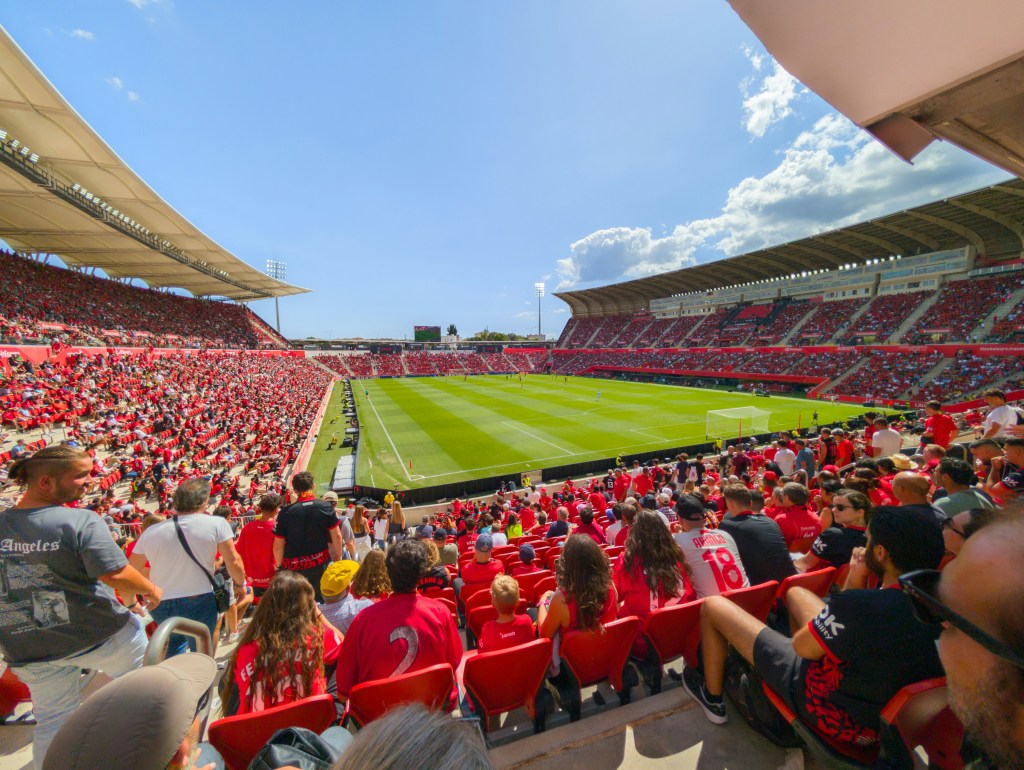
This weekend sees the return of La Liga here in Spain, and for fans of Real Mallorca, it’s another season where the first aim is to avoid the drop. Having finished in a very impressive 10th place last year, you’d think relegation wouldn’t be on our minds—but we all know Mallorca too well. This season will be their fifth consecutive one in La Liga, and the growth in interest in the club has been enormous. Since their promotion in the 2020/21 season, they have gone from 14,471 season ticket holders to 23,044 this season.

You cannot help but applaud the American owners for what they have done since buying the club in 2016. One sticking point in the sale of the club, however, was that the ownership of the stadium is not directly tied to the club’s ownership structure. While RCD Mallorca has a long-term agreement to use the stadium, the facility is owned by the local government, specifically the Consell de Mallorca. The club has a 50-year agreement with the city council to use the stadium, which they have occupied since 1999.

Where I think the Americans have been very clever is in getting their stadium improvements approved by the government in return for agreeing to open the stadium year-round. Both parties are working together to ensure it is not just a football venue but a place that serves the local community throughout the year. The broader aim is to increase the stadium’s accessibility and utility for residents of Mallorca, promoting it as a place for recreation, events, and social interaction.

Last month I had a tour of the stadium to see the improvements and to learn about how the La Liga salary cap works and how they manage ticketing. They had just finished a series of outdoor concerts on the pitch, which was being dug up and replaced. At that point, you would have thought it impossible to host La Liga matches just a month later.

The stadium is very impressive these days. With the running track gone, fans are much closer to the pitch, making the atmosphere far more intense. But it’s also behind the scenes where you notice the biggest changes. They have gone all-in on corporate hospitality, adding a tunnel experience, private boxes, and various lounges where you can enjoy food and drink both before and after the game. While I was there, stadium tours were running, the Mallorca Sports Bar was open, and a new sports clinic had just launched. The club shop has been transformed into a state-of-the-art space that does a roaring trade, not only on match days. Conference facilities of various sizes are now available around the stadium.

Every one of these extras contributes to how the salary cap is calculated for the club. La Liga’s salary cap, known as the Squad Cost Limit, restricts how much clubs can spend on player and staff wages, amortised transfer fees, and other related expenses. This limit is determined by each club’s projected revenue and expenses for the season, including debt repayment and overheads. So, all this investment ultimately supports the entire playing structure of the club, from the first team right down to the youth levels.

There’s little to criticise the owners for, but one thing I don’t understand is why the club doesn’t yet have a women’s team. You’d think that with Spain and the USA ranked number 1 and 2 in the world, respectively, they would. The other professional team on the island, Atlético Baleares, does have one, and they play in the second tier of women’s Spanish football.

Mallorca has produced outstanding women’s talent. Three players from the island were in Spain’s national team at the European Championships: goalkeeper Cata Coll from Pòrtol, midfielder Patri Guijarro from Palma, and forward Mariona Caldentey from Felanitx. All three started in the final against England. So, the talent is definitely here.

I’m hearing that Mallorca will finally launch a women’s team ahead of the 2025/26 season. It will initially compete in the Alevín eight-a-side category, for players aged 10 and 11. The club has emphasised a long-term commitment to the women’s programme, ensuring it will be a serious project with dedicated staff and resources.

Prior to this launch, the club focused on stabilising the men’s team and building a solid foundation for growth. The women’s team will be fully integrated into the club’s football structure, with shared facilities and staff. Hopefully, that will evolve into a full programme for women, giving girls on the island the chance to pursue their dreams here rather than having to go elsewhere.

The wait is over for the first team—and tonight they face the small matter of current La Liga champions Barcelona in their opening match.

Visca Mallorca!

The Ultimate AC/DC Concert Experience in Madrid

Back in February, we asked our youngest son, Jude, what he wanted for his 16th birthday, which was in July. We were expecting the usual football boots or goalkeeping gloves. What we weren’t expecting was his answer:

“I want to go see AC/DC in Madrid!”

Very left-field, but we said OK and began our quest to find tickets. The day the tickets went on sale, we went online — and we were 34,374th in the queue! Not a chance, I said, and then the computer blinked — and two tickets came up. Restricted view tickets, they said, but seeing as it was AC/DC, if viewing was a problem, hearing definitely wouldn’t be. The tickets were booked, along with our 75% resident-discounted flights and a hotel.

Last weekend, we both headed off to Madrid — my son very excited, and me looking forward to it, but not sure if I would enjoy it or not. The Riyadh Air Metropolitano Stadium is home to Atlético Madrid football club. We’d been there before to see my team, Arsenal, play a Europa League semi-final in 2018, and I remember the atmosphere being electric.

It’s a very impressive stadium on the outskirts of the city and dominates the skyline as you leave the airport. Outside, there were AC/DC t-shirts everywhere, with black being the colour of the day. These were being worn by people of all ages — both men and women. The merchandise, food, and drink stalls were doing a roaring trade as we wandered around the perimeter. We got inside just before the support band started. They were called The Pretty Reckless, and the female singer had a great voice.

As the stadium filled, the atmosphere grew, and at 9:30 p.m., you could see two golf carts driving up to the back of the stage, bringing the band. A great video opening played — and we were off, with their opening song: “If You Want Blood (You’ve Got It)”.

This was followed by all the hits, including “Thunderstruck,” “Hells Bells,” “Highway to Hell,” “Back in Black,” “Whole Lotta Rosie,” and “Rock and Roll Ain’t Noise Pollution.”

The “restricted view” we were sold was hardly restricted, to be honest — it was a sound and camera tower that blocked a small part of the stage, but you could still see the rest, and with the big screens too, we were fine.

You can’t help but be impressed by the whole band: lead singer Brian Johnson, who is 77; lead guitarist Angus Young, who is 70; rhythm guitarist Stevie Young, who is 68; drummer Matt Laug, who is 58; and bass player Chris Chaney, who is a sprightly 55.

AC/DC were formed in 1973, making this their 51st year of making music. Brian Johnson’s first words were: “Tonight we’re just going to party and make rock ‘n’ roll.”

Interestingly, Brian Johnson very nearly missed the opportunity to become their lead singer after the tragic death of former frontman Bon Scott in 1980. Johnson was recommended by a fan and was asked to go to an audition in London by a German woman who refused to give the band’s name. All she would say was that the initials were ACDC! He feared he wouldn’t be good enough, but went along anyway, as he was doing an advert for Hoover that was paying good money — and it would cover his expenses.

He sang Tina Turner’s “Nutbush City Limits” and the band’s “Whole Lotta Rosie.” The band all agreed he was the man — and within weeks, they were in the Bahamas recording the album Back in Black, which has become one of the best-selling albums of all time, with estimated worldwide sales of 50 million copies.

Back to the gig — and the band rocked the stadium for a full two and a quarter hours, with the crowd eating out of their hands. The finish was “For Those About ago Rock we Salute You.” Which we and the whole crowd certainly did. 

I have to say, it was probably one of the best concerts I’ve ever been to — and my son said it was one of the best days of his life.

Discover Pre-Season Training Benefits in Mallorca

The saying “the best business ideas come from…” has been heard many times. Some ideas come from personal experiences—problems observed in your own day-to-day life. Others stem from a passion or hobby, where you’re leveraging your own knowledge and experience.

I would say mine came from a combination of both. I’ve mentioned on here before that, after working for 30 years at Pirates in Mallorca and wanting to continue living on this beautiful island, I needed to find something to do.

It was a natural step for me to move into the world of concierge, considering the number of contacts I’ve acquired over the years. I was constantly being asked for a variety of things, and turning that into a business felt like the perfect progression. I knew it was key, though, to be as diverse as possible and to build a team of professional people I could trust to deliver the quality and service required for such a business.

One of those diversifications came when I was out walking my dog in Son Ferrer early one morning. I saw some footballers training on the pitch there. These guys didn’t look like ordinary players, and I recognized the people training them. When I got home, I messaged one of the trainers to ask what he was doing. He explained they were running pre-season training sessions for professional footballers who were here ahead of their own clubs’ pre-season. That trainer was Rob Croll, along with his business partner and former professional footballer Sergio Torres. They run a business called Mallorca Pro Training, which does exactly what the name suggests.

I asked Rob if he needed a goalkeeper, as my son Jude was available. He said yes, and for the next few weeks Jude gained invaluable experience training with Rob, Sergio, and the professional players.

Once all the training had finished, the football season had started, and the winter nights were closing in, Rob and I sat down and put together a plan—not only to train the players, but to look after them while they were here. Rob and Sergio focus on the training, and that’s where I came in. We now offer a full service to the players, so not only do they train while they’re here, but they also get to enjoy everything the island has to offer.

Rob and Sergio are both fully qualified coaches, offering training sessions on the 3G pitches in Son Ferrer or on the grass pitches at Real Mallorca’s training ground. They also make use of the swimming pool by the pitch in Son Ferrer and the many beaches that surround us.

You might ask: why does a footballer need to do pre-season training before their actual pre-season? Well, it’s becoming harder and harder to succeed in the football world, so players are always looking for that extra edge to stay ahead of their opponents. Proof of that definitely came with the players who trained last summer with Mallorca Pro Training:

  • James Maddison – Tottenham Hotspur midfielder, Europa League winner
  • William Osula – Striker, Newcastle United, Carabao Cup winner
  • Dennis Cirkin – Defender, Sunderland, promoted to the Premier League
  • Alex Gilbert – Charlton Athletic, promoted to the Championship
  • Charlie Crew – Doncaster Rovers, promoted to League One

There’s your proof that hard work pays off.

I’d also like to add that the progress my son Jude has made over the last year is undoubtedly thanks to Rob, Sergio, and the professional players he has trained and played with.

You don’t have to be a professional, by the way—many semi-pro and amateur players have also benefited from Rob and Sergio’s expertise.

If you know a footballer who would be interested in this, please get in touch.

Email:

info@mallorcaprotraining.com

richie@prioritymallorca.com

UK-EU Deal: Impact on Mallorca Travelers and Businesses

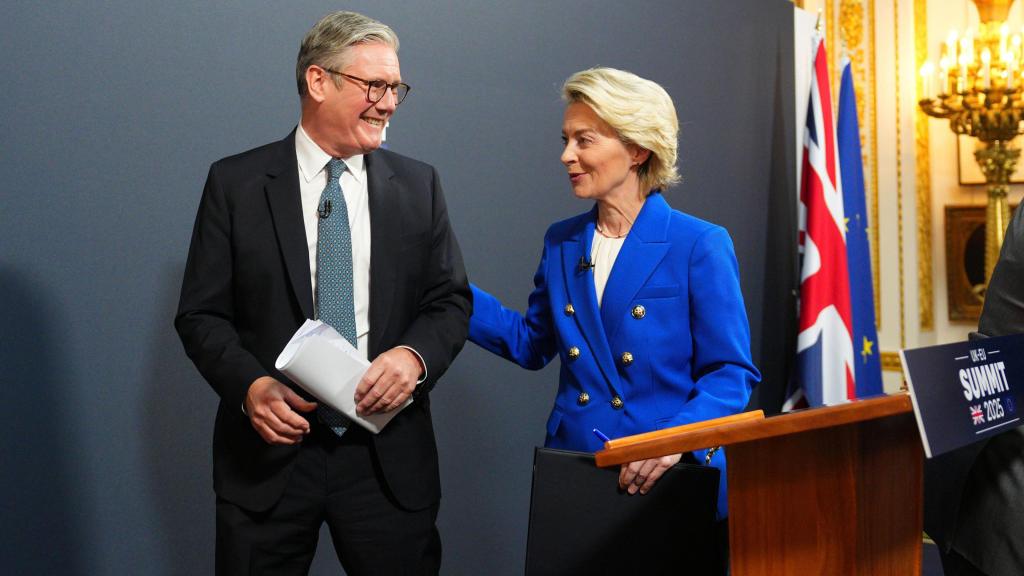
There seemed to be quite a lot of backlash this week following Sir Keir Starmer’s UK Government agreement with the EU. Now, depending on which paper you read—and its political leaning—you’ll see varying reports on the reaction. The Labour-supporting Mirror said, “Deal is Win-Win,” while The Guardian reported, “EU deal puts Britain back on world stage.” On the other side, the Conservative-supporting Mail declared, “Starmer’s Surrender,” and The Daily Telegraph (or “Torygraph” as it’s sometimes known) ran with, “Kiss goodbye to Brexit.”

With any deal, there are always going to be winners and losers—it’s pretty much impossible to keep everyone happy. As I always say, the devil is in the detail. While there are various headlines surrounding what’s been discussed, a lot of it is still in the planning stage and should have a large TBC written next to it.

Purely from a selfish point of view, and focusing on the parts that matter to us here in Mallorca, I think it’s a great deal for travellers and businesses.

The food deal—or to give it its full name, the Sanitary and Phytosanitary (SPS) Agreement—would eliminate some of the trade barriers erected during Brexit. This would provide provisioners, supermarkets, and their suppliers with the opportunity to import more UK produce more quickly and easily. I imagine this could result in cost savings, so hopefully we’ll see a drop in prices too.

Also, for businesses here wanting to sell their produce in the UK, the previous barriers should now be removed, making it easier and cheaper to export.

Using e-Gates-There is a suggestion that holidaymakers could avoid “huge queues” at airports through an agreement allowing British travellers to use e-Gates at European airports. The agreement states that there will be “no legal barriers to e-Gate use for British nationals travelling to and from member states”—but nothing firmer yet. It’s up to individual member states to implement this. I’m not sure if Palma Airport’s owner, AENA, will be too happy, after redesigning Terminal A to cater solely for British tourists and passengers from non-Schengen countries. But still a positive step for UK travelers around Europe.

A youth mobility scheme—which the government has now rebranded as a “youth experience scheme”—also appears to be in the works. The terms must be mutually agreed, as the final numbers, how the cap will apply, and the time limits all still need to be worked out.

If it does happen, I think it will be great news not only for young adults who want to travel and work, but also for businesses here, which are crying out for young workers. I do hope the Spanish Government acts quickly on this. It benefits not only young Brits wanting to come here, but also Spanish young adults, who should have a reciprocal arrangement.

As I said above, all these so-called deals still need some meat on the bone—they need to be fully negotiated. But in my opinion, the ones that affect us represent a positive step in the right direction. I had that opportunity as a young person, and I didn’t look back. I, for one, would like my children to have the same opportunities.

Spain’s New Workweek: 37.5 Hours and Same Pay

If you say to any worker, “I’m going to reduce your working hours but still pay you the same,” without a doubt they’ll respond, “Where do I sign?”

Ask the same question to employers, and I’m sure they’ll look at you in utter dismay and ask, “Why?” Most employers are already finding it hard enough to recruit good, qualified staff—and enough of them to cover the hours they need.

But the Spanish government is moving ahead with plans to reduce the official working week from 40 to 37.5 hours, without reducing salaries. Implementation is expected towards the end of 2025, and it won’t surprise you to know that the proposal has full support from the unions.

“This proposal is about living better, working less, and being much more productive and economically efficient,” said Labour Minister Yolanda Díaz, who put the idea forward.

However, the centre-right Catalan separatist party Junts has already signalled resistance, while the main employers’ lobby, CEOE, argues it will raise Spanish firms’ costs and make them less competitive.

If I’m honest, I lean toward the second opinion. This proposal is heavily weighted in favour of employees rather than employers, and it feels like a populist move designed to win votes in the next election.

I can understand it more on the mainland, where industries like manufacturing and construction are more prominent than here in Mallorca. On the island, tourism is by far the dominant sector, accounting for a significant portion of the economy. While specific figures vary, tourism is estimated to contribute between 40% and 75% of Mallorca’s GDP. It’s also the primary driver of employment, with a large percentage of the workforce directly or indirectly involved in tourism-related businesses.

Once again, Mallorca will suffer from a policy that benefits the mainland more than it benefits us.

Starting A New Chapter: My Mallorca Concierge Service Launch

2024 was a difficult year if I’m honest . Losing my Mother, having a few health problems and leaving Pirates after 30 years wasn’t how I had planned the year to turn out. I decided to take stock of everything and reevaluate what I wanted to do going forward. It did give me an opportunity to spend some time with my family and friends and do some things I probably wouldn’t have done in the past. 

My eldest son Jacob had decided to carry on his education for another two years which really pleased us. After doing a summer season at Pirates he had also managed to find a job coaching football for youngsters with Rob Croll who runs the Russell Martin Academy. More free time also allowed me to spend more time with my youngest son Jude who has signed with a football agency and was asked to play in a higher age group for his club CD San Francisco. At 15 years old he is already playing for San Francisco Juvenil regional and he trains and is the reserve goalkeeper for San Francisco Juvenil Nacional who train at Real Mallorcas training ground Son Biblioni. 

A few people thought I had retired but that wasn’t on my radar, if I’m honest. If I wanted to carry on living on this beautiful island I certainly needed to earn some money. The start of a new radio station came a little bit out of the blue and hadn’t been in my plans. However as I said before the feedback has been amazing and the feeling we’re getting from the community and also further afield makes me think we made the right decision. That was strengthened even further this week when we did three live broadcasts from the Palma International Boat show. I’m reliably informed that it’s the fourth largest boat show in Europe and is probably second to tourism as far as its size as an industry on the island. A big thanks to Estela Yachts and Precision Marine for inviting us to their stands and a shout out to all our sponsors that made it possible. It was a classic example of how a team of professional people pull together to put on such an event. We are already looking forward to next year. 

What I have been working on was starting my own concierge service. It was a natural move into that World considering the amount of contacts I have acquired over the years. I am constantly being asked for a variety of different things and turning that into a business was the perfect progression. 

I have built up a team of people who are professionals in their own particular fields and it’s a case of using their professionalism to help others. 

Therefore if I can be of any help to your business or you have family or friends coming to Mallorca or any of the Balearic Islands, please let me know.

http://www.prioritymallorca.com 

Magaluf & San Antonio: From Excess to Excellence

Back in January 2020, the Balearic government passed a decree law against the so-called “tourism of excesses” and for the improvement of quality in tourist zones. They singled out the resorts of Arenal, Playa de Palma, and Magaluf in Mallorca, and San Antonio in Ibiza, as the areas that would be affected.

At the time, these laws didn’t really come into effect as the pandemic took over, but when everything returned in 2022, they were put into practice.

In 2024, after the elections, the laws were relaxed a little—but what has changed in these resorts since 2020? Well, having lived and worked in Magaluf since 1990, I think I’m well placed to tell you about it. I’ve also asked my good friend Martin Makepeace to give you a view on San Antonio in Ibiza. We do a weekly podcast called Talking Balearics, where we talk about Mallorca and Ibiza. Martin, like me, has lived in Ibiza for over 30 years.

Magaluf, ever since I’ve known it, has had a reputation—some see that as bad, others see it as an opportunity for good.

When I arrived in 1990, families and young people mixed without any problems—even in the winter. Slowly but surely, that balance ebbed away, and the headlines became worse and worse. You didn’t need to be a rocket scientist to know that something had to change.

Meliá was the first to invest in the resort, followed by pretty much every other hotel chain, meaning that over 75% of the hotels in Magaluf are now either 4 or 5-star. Anyone in the know will tell you that Magaluf beach is still one of the best on the island. A new four-million-euro promenade is being built as we speak, with phase one due for completion at the beginning of May. Phase two will be completed in the early part of 2026.

In my opinion, the measures brought in were a bit draconian and wouldn’t have been needed if the resort had been policed properly. The map of the so-called “Red Zone” was drawn in a way that benefited some businesses and not others. It should have been a blanket ban or nothing at all.

It was the short-sightedness of authorities in the past that meant they didn’t understand that the youngsters of today will be the families of the future. Most of my friends had been to Magaluf in their teenage years. They loved it so much that, fast forward five years, they were coming back and staying in a four or five-star hotel. Fast forward another five or ten years, they were renting villas with their families—and all of a sudden, they are the clientele that the authorities want.

You need to give people a taste of what your tourism product is at a relatively early age and hope that it ignites that blue touch paper. They then become bonded and emotionally attached to that location for the rest of their lives.

My list of positives about Magaluf is endless. And when you look closely, it’s a resort that still mixes families and youngsters—and, in my opinion, for longer throughout the year. For families, there’s Pirates, Gringos Family Rave, Western Water Park, karting, Katmandu, the beach, and countless bars, beach bars, cafés, and restaurants to cater to their needs.

For youngsters, there’s Reloaded & Gringos, Oceans Beach, BCM, The Strip, the beach—and again, countless bars, beach bars, cafés, and restaurants to cater to their needs.

I like the new Mayor and his administration in Calvia and believe the changes that are being made are good for the future. Magaluf has changed for the better, and my love for it doesn’t diminish.

Reputation is everything, and the court of public opinion can be a brutal place, passing judgment without the full facts. But times change. 

San Antonio, or Sant Antoni de Portmany to use its official name, is a great example. The stigma of the 80s and 90s still lingers—but it ain’t 1987 anymore. It’s 2025, and the shackles have been released.

New luxury hotels, top-end restaurants serving delicious food, world-class entertainment venues, a sunset that many say is the best on the planet—and more importantly, a young, ambitious mayor who’s not afraid to try new things, improve infrastructure, and make big plans for the future with major investment.

San Antonio now has some of the most expensive real estate in Spain and is already the most expensive place to rent. The gentrification process continues unabated on a small island with limited space. This is the yin and yang of an island that has seen incredible growth over the last 15 years. 

Being comfortable in your own skin takes time, and Ibiza’s second-largest town is finally the mature adult it wanted to be—rather than a sulky teenager prone to bouts of self-harm. 

“It’s a process” is a well-used phrase, and the perception of San Antonio is no different. But this can only be changed by a potent mixture of self-awareness, communication, consistency, and patience. The town is now controlling its own narrative—with actions rather than words. 

New and improved pedestrianised areas, world-famous street art, a new environmentally friendly summer police station, a spanking new port area, plans for cutting-edge sports facilities… and this is just in the last 12 months!

The future is bright. San Antonio isn’t walking into the future—it’s sprinting with confidence.

We both feel that the tourist model of Mallorca and Ibiza is changing for the better—and will need to change even more to keep up with its competitors.

You can hear “Talking Balearics” every week wherever you get your podcasts and Martins blog is https://maninsanan.com