Real Mallorca’s Coaching Changes: A Turning Point

I’ve kept my powder dry on what’s been happening at Real Mallorca over the last few weeks. I think it had become obvious that the coach, Jagoba Arrasate, had taken the team as far as he could. When he came to the club in July 2024 from Osasuna, he was known as an attacking coach who loved to promote younger players into the team.

He started well enough, and by Christmas that year they’d accumulated enough points to virtually assure their La Liga status for the following season. That was when the wheels started to come off, as the second half of the season was awful. That disappointing form continued into the start of this season, and by Christmas I thought the club would look elsewhere.

However, they continued with some good results at home, notably against Sevilla and Athletic Club, but away they were awful. Arrasate finished his tenure at Real Mallorca with a win rate of approximately 30.9% (21 wins in 68 matches).

His record across all competitions during his time in charge (spanning from July 1, 2024, to his departure on February 23, 2026) was:

Matches: 68

Wins: 21

Draws: 15

Losses: 32

The disappointing part of his tenure was not promoting enough youngsters into the first team. The squad is ageing and needs some young, refreshing talent. The only young player who was successful was Jan Virgili, brought in from Barcelona. It was a shame to see former San Francisco forward Marc Domenech loaned out when backup was needed for Muriqi.

When the club did decide to twist, it was obvious they didn’t have a candidate in place. Luis García Plaza and Kike Sánchez Flores seemed to be the two names in pole position. The only problem was that the club did not want to commit to a contract longer than the end of the season, as if they were relegated budgets would have to be cut.

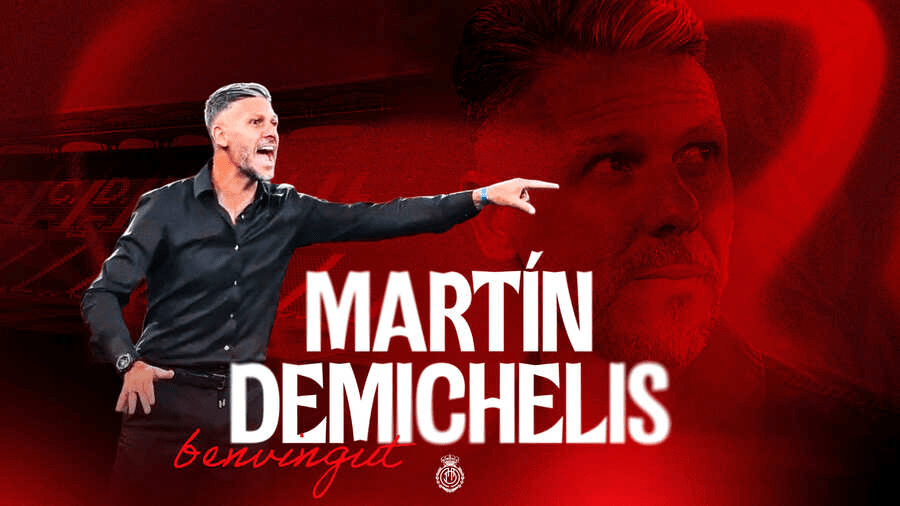
Out of the blue, Argentine Martín Demichelis appeared. The former Manchester City and Bayern Munich player had played over 50 times for his country and had been coaching in Argentina. He agreed to take the short contract and try to keep Mallorca in La Liga.

Demichelis’ first match was yesterday afternoon, away in Pamplona against Osasuna, a side that had only lost two games at home so far this season. Unbelievably, Mallorca found themselves 0–2 up in a game they dominated. That was until Virgili was sent off in the 73rd minute. Osasuna managed to get two goals back, with the second coming from former Mallorca player Ante Budimir.

In all honesty, if you’d offered Mallorca a draw before the game they would have taken it, but having been 0–2 up it will feel like a loss. The huge plus is the form of Vedat Muriqi, who has scored 18 goals this season so far. Making him the second best scorer in La Liga, 5 goals behind Kilian Mbappe of Real Madrid. 

With 11 games to go, Mallorca lie in the relegation places, but a win could see them climb out. The next game is at home to Espanyol next Sunday at Son Moix, kick-off at 14:00.

I can’t stress enough how important it is for Mallorca to stay up. It’s great for tourism, as people do visit the island to watch football. It’s great for those of us who live here to see teams such as Barcelona and Real Madrid play live. And finally, it’s great for youth football here on the island. To have a team playing in La Liga is so aspirational for all of our young footballers.

As they say here in Spain “Si se puede”(yes we can).

Real Mallorca’s Growth: A Community Football Vision

This weekend sees the return of La Liga here in Spain, and for fans of Real Mallorca, it’s another season where the first aim is to avoid the drop. Having finished in a very impressive 10th place last year, you’d think relegation wouldn’t be on our minds—but we all know Mallorca too well. This season will be their fifth consecutive one in La Liga, and the growth in interest in the club has been enormous. Since their promotion in the 2020/21 season, they have gone from 14,471 season ticket holders to 23,044 this season.

You cannot help but applaud the American owners for what they have done since buying the club in 2016. One sticking point in the sale of the club, however, was that the ownership of the stadium is not directly tied to the club’s ownership structure. While RCD Mallorca has a long-term agreement to use the stadium, the facility is owned by the local government, specifically the Consell de Mallorca. The club has a 50-year agreement with the city council to use the stadium, which they have occupied since 1999.

Where I think the Americans have been very clever is in getting their stadium improvements approved by the government in return for agreeing to open the stadium year-round. Both parties are working together to ensure it is not just a football venue but a place that serves the local community throughout the year. The broader aim is to increase the stadium’s accessibility and utility for residents of Mallorca, promoting it as a place for recreation, events, and social interaction.

Last month I had a tour of the stadium to see the improvements and to learn about how the La Liga salary cap works and how they manage ticketing. They had just finished a series of outdoor concerts on the pitch, which was being dug up and replaced. At that point, you would have thought it impossible to host La Liga matches just a month later.

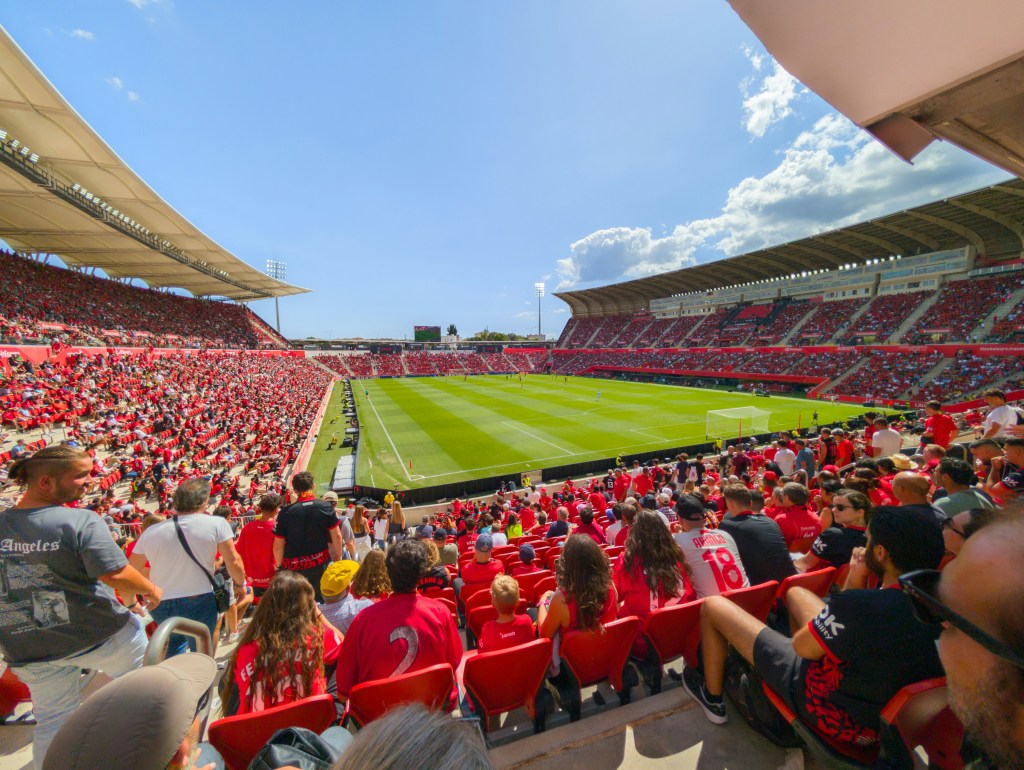
The stadium is very impressive these days. With the running track gone, fans are much closer to the pitch, making the atmosphere far more intense. But it’s also behind the scenes where you notice the biggest changes. They have gone all-in on corporate hospitality, adding a tunnel experience, private boxes, and various lounges where you can enjoy food and drink both before and after the game. While I was there, stadium tours were running, the Mallorca Sports Bar was open, and a new sports clinic had just launched. The club shop has been transformed into a state-of-the-art space that does a roaring trade, not only on match days. Conference facilities of various sizes are now available around the stadium.

Every one of these extras contributes to how the salary cap is calculated for the club. La Liga’s salary cap, known as the Squad Cost Limit, restricts how much clubs can spend on player and staff wages, amortised transfer fees, and other related expenses. This limit is determined by each club’s projected revenue and expenses for the season, including debt repayment and overheads. So, all this investment ultimately supports the entire playing structure of the club, from the first team right down to the youth levels.

There’s little to criticise the owners for, but one thing I don’t understand is why the club doesn’t yet have a women’s team. You’d think that with Spain and the USA ranked number 1 and 2 in the world, respectively, they would. The other professional team on the island, Atlético Baleares, does have one, and they play in the second tier of women’s Spanish football.

Mallorca has produced outstanding women’s talent. Three players from the island were in Spain’s national team at the European Championships: goalkeeper Cata Coll from Pòrtol, midfielder Patri Guijarro from Palma, and forward Mariona Caldentey from Felanitx. All three started in the final against England. So, the talent is definitely here.

I’m hearing that Mallorca will finally launch a women’s team ahead of the 2025/26 season. It will initially compete in the Alevín eight-a-side category, for players aged 10 and 11. The club has emphasised a long-term commitment to the women’s programme, ensuring it will be a serious project with dedicated staff and resources.

Prior to this launch, the club focused on stabilising the men’s team and building a solid foundation for growth. The women’s team will be fully integrated into the club’s football structure, with shared facilities and staff. Hopefully, that will evolve into a full programme for women, giving girls on the island the chance to pursue their dreams here rather than having to go elsewhere.

The wait is over for the first team—and tonight they face the small matter of current La Liga champions Barcelona in their opening match.

Visca Mallorca!