I’ve kept my powder dry on what’s been happening at Real Mallorca over the last few weeks. I think it had become obvious that the coach, Jagoba Arrasate, had taken the team as far as he could. When he came to the club in July 2024 from Osasuna, he was known as an attacking coach who loved to promote younger players into the team.
He started well enough, and by Christmas that year they’d accumulated enough points to virtually assure their La Liga status for the following season. That was when the wheels started to come off, as the second half of the season was awful. That disappointing form continued into the start of this season, and by Christmas I thought the club would look elsewhere.
However, they continued with some good results at home, notably against Sevilla and Athletic Club, but away they were awful. Arrasate finished his tenure at Real Mallorca with a win rate of approximately 30.9% (21 wins in 68 matches).
His record across all competitions during his time in charge (spanning from July 1, 2024, to his departure on February 23, 2026) was:
Matches: 68
Wins: 21
Draws: 15
Losses: 32
The disappointing part of his tenure was not promoting enough youngsters into the first team. The squad is ageing and needs some young, refreshing talent. The only young player who was successful was Jan Virgili, brought in from Barcelona. It was a shame to see former San Francisco forward Marc Domenech loaned out when backup was needed for Muriqi.
When the club did decide to twist, it was obvious they didn’t have a candidate in place. Luis García Plaza and Kike Sánchez Flores seemed to be the two names in pole position. The only problem was that the club did not want to commit to a contract longer than the end of the season, as if they were relegated budgets would have to be cut.
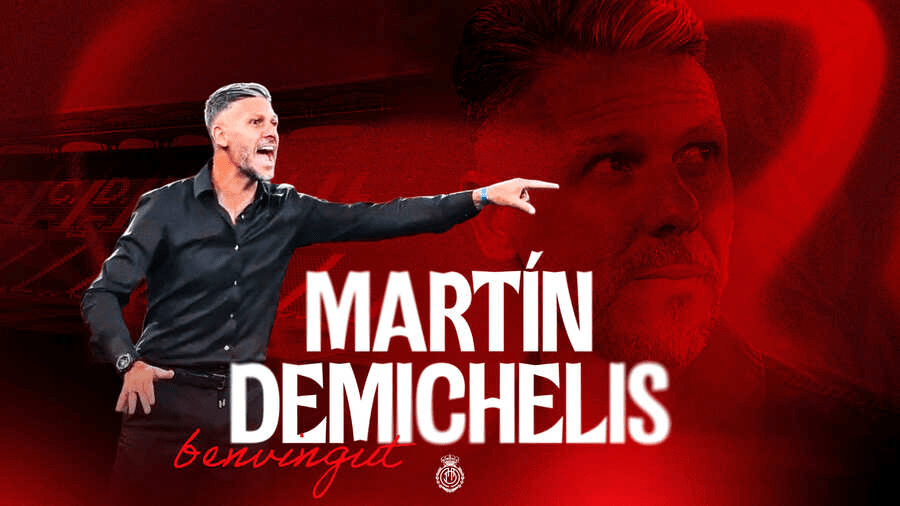
Out of the blue, Argentine Martín Demichelis appeared. The former Manchester City and Bayern Munich player had played over 50 times for his country and had been coaching in Argentina. He agreed to take the short contract and try to keep Mallorca in La Liga.
Demichelis’ first match was yesterday afternoon, away in Pamplona against Osasuna, a side that had only lost two games at home so far this season. Unbelievably, Mallorca found themselves 0–2 up in a game they dominated. That was until Virgili was sent off in the 73rd minute. Osasuna managed to get two goals back, with the second coming from former Mallorca player Ante Budimir.
In all honesty, if you’d offered Mallorca a draw before the game they would have taken it, but having been 0–2 up it will feel like a loss. The huge plus is the form of Vedat Muriqi, who has scored 18 goals this season so far. Making him the second best scorer in La Liga, 5 goals behind Kilian Mbappe of Real Madrid.
With 11 games to go, Mallorca lie in the relegation places, but a win could see them climb out. The next game is at home to Espanyol next Sunday at Son Moix, kick-off at 14:00.
I can’t stress enough how important it is for Mallorca to stay up. It’s great for tourism, as people do visit the island to watch football. It’s great for those of us who live here to see teams such as Barcelona and Real Madrid play live. And finally, it’s great for youth football here on the island. To have a team playing in La Liga is so aspirational for all of our young footballers.
As they say here in Spain “Si se puede”(yes we can).








 Dad Taxi Mallorca