Climbing the Football Ladder: A Family’s Journey

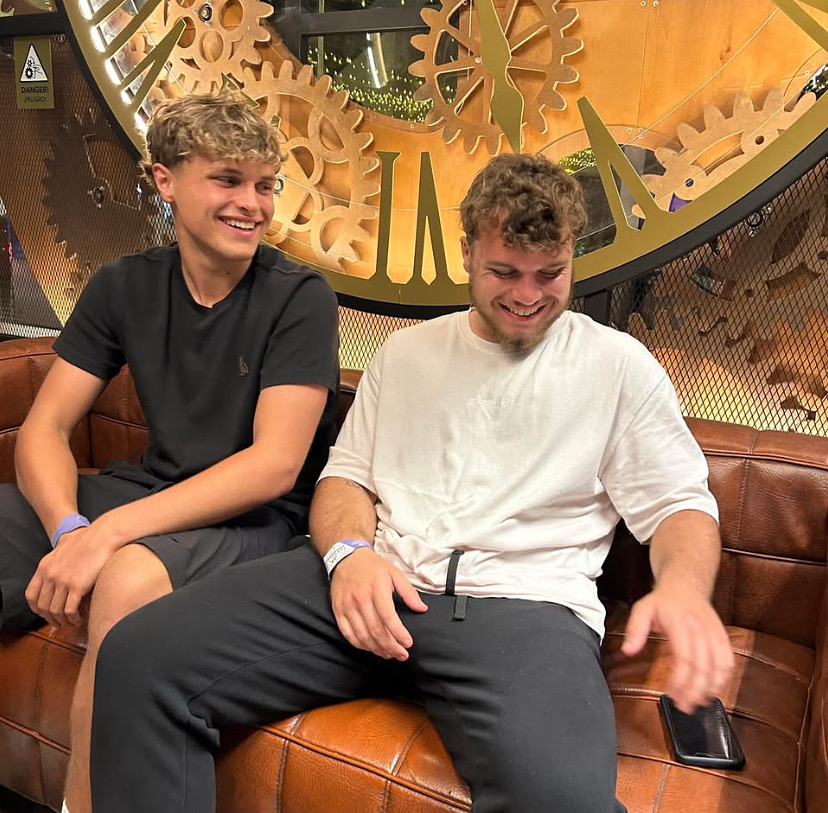
We have two sons who are both working hard to climb the football ladder. Our eldest, Jacob, at 19 years old, is starting on the path to becoming a coach. He has been working at the Borussia Dortmund International Academy Mallorca for a couple of years, running various training sessions. This year, however, he will be coaching his own team while studying for a UEFA C licence and completing his education with an FP Superior in Sport.

Our youngest, Jude, at 16 years old, has his sights set on becoming a professional goalkeeper. He is playing at the second-highest level of youth football with Palma FC while studying for an FP in Sport, just like his brother.

Both realise that they are on a difficult path, as very few actually make it, which is why their studies become so important.

Footballers who do make it enter a life that most of us can only dream of. Whilst most behave in a manner befitting their standing, unfortunately there are some who don’t. Several cases have come to light this season, both here in Mallorca and back in the Premier League.

Dani Rodríguez is a player I admire at Real Mallorca. He has been at the club since January 2018 and always gives 100%. However, a couple of weeks ago he let himself down. He was suspended by the club after publicly criticising the club and coach on social media following a loss to Real Madrid. He was frustrated at not being brought into the game—especially as his family was watching—and questioned the value of loyalty and hard work in the dressing room. The club responded by suspending him for 10 days without pay and permanently removing him as vice-captain.

I hope he can train his way back into the team, whether under the current coach or another one (that’s for another day!).

Players thinking they are above the law are becoming more and more common. The case of Alexander Isak is probably the biggest one this summer. He refused to play for his parent club, Newcastle, while still under contract, in an attempt to force a move to Liverpool, who had submitted a bid for him. On the other hand, you have a club like Chelsea, who have sidelined two of their squad players—Raheem Sterling and Axel Disasi—making them train in the evenings, away from the first-team squad. The Professional Footballers’ Association (PFA) has become involved, reminding Chelsea of their duty of care.

But where were the PFA in the case of Isak, telling him he should fulfil his contractual obligations? You heard nothing from them. Yet when it comes to a player like Sterling, they suddenly come out of the woodwork and get involved. I am sure these players had opportunities to move on in the summer but, for whatever reason, chose not to. They are still being paid and have access to all the facilities provided to the first team. In Sterling’s case, he is still earning £325,000 a week! On that amount of money, I’d be training all day, all night, and twice on Wednesdays! I’m sorry, but the “duty of care” argument in this case doesn’t wash with me.

We have taught our sons to be respectful to others, and we hope that if either—or both—of them make it into the big wide world of football, they continue in that vein. As the old saying goes: be nice to the people on your way up, because you might well meet them on your way back down!

Real Mallorca’s Growth: A Community Football Vision

This weekend sees the return of La Liga here in Spain, and for fans of Real Mallorca, it’s another season where the first aim is to avoid the drop. Having finished in a very impressive 10th place last year, you’d think relegation wouldn’t be on our minds—but we all know Mallorca too well. This season will be their fifth consecutive one in La Liga, and the growth in interest in the club has been enormous. Since their promotion in the 2020/21 season, they have gone from 14,471 season ticket holders to 23,044 this season.

You cannot help but applaud the American owners for what they have done since buying the club in 2016. One sticking point in the sale of the club, however, was that the ownership of the stadium is not directly tied to the club’s ownership structure. While RCD Mallorca has a long-term agreement to use the stadium, the facility is owned by the local government, specifically the Consell de Mallorca. The club has a 50-year agreement with the city council to use the stadium, which they have occupied since 1999.

Where I think the Americans have been very clever is in getting their stadium improvements approved by the government in return for agreeing to open the stadium year-round. Both parties are working together to ensure it is not just a football venue but a place that serves the local community throughout the year. The broader aim is to increase the stadium’s accessibility and utility for residents of Mallorca, promoting it as a place for recreation, events, and social interaction.

Last month I had a tour of the stadium to see the improvements and to learn about how the La Liga salary cap works and how they manage ticketing. They had just finished a series of outdoor concerts on the pitch, which was being dug up and replaced. At that point, you would have thought it impossible to host La Liga matches just a month later.

The stadium is very impressive these days. With the running track gone, fans are much closer to the pitch, making the atmosphere far more intense. But it’s also behind the scenes where you notice the biggest changes. They have gone all-in on corporate hospitality, adding a tunnel experience, private boxes, and various lounges where you can enjoy food and drink both before and after the game. While I was there, stadium tours were running, the Mallorca Sports Bar was open, and a new sports clinic had just launched. The club shop has been transformed into a state-of-the-art space that does a roaring trade, not only on match days. Conference facilities of various sizes are now available around the stadium.

Every one of these extras contributes to how the salary cap is calculated for the club. La Liga’s salary cap, known as the Squad Cost Limit, restricts how much clubs can spend on player and staff wages, amortised transfer fees, and other related expenses. This limit is determined by each club’s projected revenue and expenses for the season, including debt repayment and overheads. So, all this investment ultimately supports the entire playing structure of the club, from the first team right down to the youth levels.

There’s little to criticise the owners for, but one thing I don’t understand is why the club doesn’t yet have a women’s team. You’d think that with Spain and the USA ranked number 1 and 2 in the world, respectively, they would. The other professional team on the island, Atlético Baleares, does have one, and they play in the second tier of women’s Spanish football.

Mallorca has produced outstanding women’s talent. Three players from the island were in Spain’s national team at the European Championships: goalkeeper Cata Coll from Pòrtol, midfielder Patri Guijarro from Palma, and forward Mariona Caldentey from Felanitx. All three started in the final against England. So, the talent is definitely here.

I’m hearing that Mallorca will finally launch a women’s team ahead of the 2025/26 season. It will initially compete in the Alevín eight-a-side category, for players aged 10 and 11. The club has emphasised a long-term commitment to the women’s programme, ensuring it will be a serious project with dedicated staff and resources.

Prior to this launch, the club focused on stabilising the men’s team and building a solid foundation for growth. The women’s team will be fully integrated into the club’s football structure, with shared facilities and staff. Hopefully, that will evolve into a full programme for women, giving girls on the island the chance to pursue their dreams here rather than having to go elsewhere.

The wait is over for the first team—and tonight they face the small matter of current La Liga champions Barcelona in their opening match.

Visca Mallorca!

Dare to Dream?

A few weeks ago, Real Mallorca started their season with a creditable 1-1 draw with Real Madrid. At the time, I wrote, “There’s always a sense of excitement and nervousness when a new football season starts. How will your team play, where will they finish the season, and will they win a trophy? These are three of the most important questions in most fans minds.” Now having been a Mallorca fan for many years, my expectations, to be honest, weren’t that high. Last season we finished 15th in the league, but we had made the Copa del Rey final, losing on penalties to Atlético Bilbao. More importantly, we had replaced our very cautious and defensive coach Javier Aguirre with a fairly unknown one in Jagoba Arrasate. He was in charge at Osasuna for six years, and they had become a solid mid-table team and two years ago finished in 7th place. What Arrasate was known for was encouraging youth team players to push for first team places, and he wasn’t afraid to throw them in. 

After the Madrid game, things got a little worse for Mallorca, an encouraging away win at Leganés was followed by two losses and a draw. So after 5 games they had 5 points. 

At that time of the Madrid game I had commented on how well the American owners had done in improving the stadium, its facilities and the atmosphere. I was hoping that all that hard work would also transfer onto the pitch. But it wasn’t happening. It looked like Arrasate was searching for his best 11 as he was constantly changing the team, even the goalkeepers. What he was doing though was giving the youngsters a chance. Marc Domenech who 2 years ago was playing with my son Jacob at San Francisco in Palma, was one of the first and encouragingly more are now coming through. Whilst this was all welcome, points on the board were what Mallorca was missing, and it was looking like it was going to be another relegation battle. However, in the space of three games, they have all of a sudden woken up. A battling 1-0 home win against Real Sociedad has been followed by what can only be described as two amazing 1-2 away wins against Real Betis and Valladolid. Bearing in mind that they only won two away games in the whole of last season, and already they have three this season. As they had played Valladolid on the Friday night it meant that for at least 24 hours they were lying in a Champions League place, with Atlético Madrid, Real Madrid and Barcelona above them. That did change over the weekend, and now they lie in sixth place. Today they play another away game at Espanyol, so let’s hope they can continue this run of good form. It’s a great start and has the fans dreaming of Europe next season but let’s not get too excited we are only 8 games into a 38 game season. 

“I hope that it’s not another 20 years before we do son!”

You might be surprised when I say that Sevilla didn’t disappoint. Yes, of course it would have been amazing for Real Mallorca to win the Copa Del Rey, but the whole experience was a joy from start to finish. 

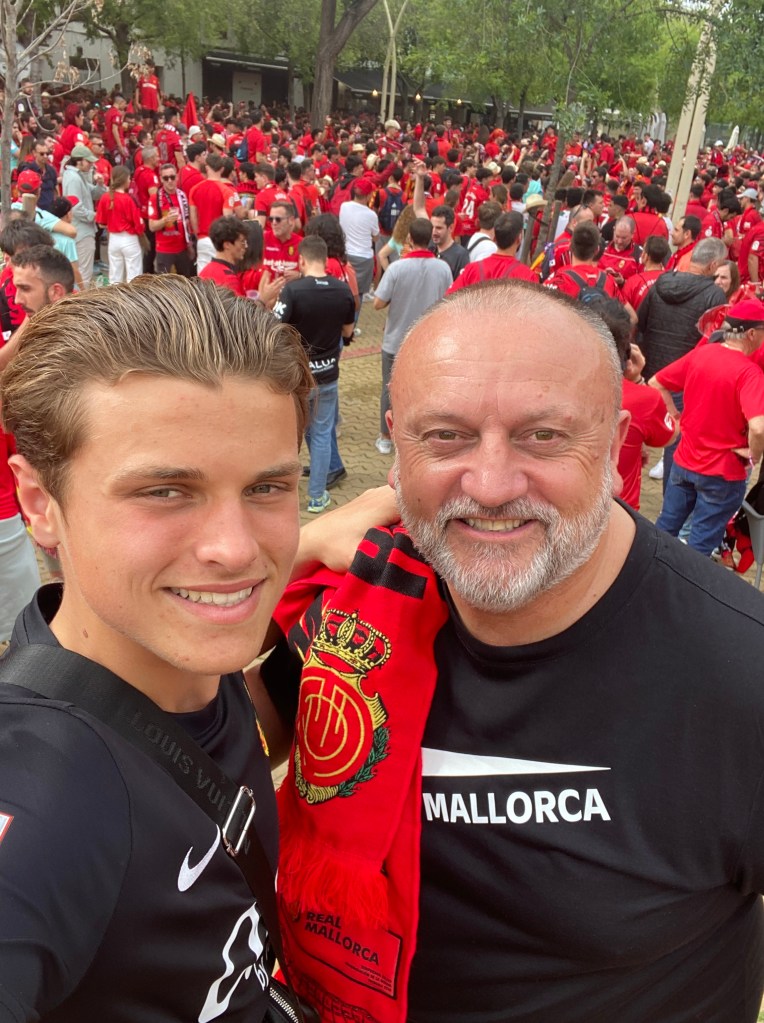
On the Friday, I talked to Hawksbee and Jacob’s on Talksport radio in the UK about how well Real Mallorca had done to actually get to the final. My youngest son Jude and I also visited the club shop at the stadium. Which, as you can imagine, was doing a roaring trade. Credit to the club’s owners, who have built a much larger one when the stadium was being converted. I’m not sure the old one, which was like a broom cupboard, would have coped. I talked about Nike last week, and it’s no surprise that with American owners, Mallorca swapped their shirt sponsor from Umbro to Nike in July 2021. Now they don’t make football shirts like they used to, and the more fashionable tighter fit means a fat git like me struggles to get into one. So I bought a much more flattering and cheaper t-shirt. My son bought the goalkeeper jersey and even though we got a 10% discount as season ticket holders, it was still an eye-watering €76.50.

Saturday morning we set off for Sevilla. We flew to Valencia and after a short stop we boarded the same plane for the trip to Seville. We arrived at three in the afternoon and asked the taxi driver to take us to as close to the Cathedral he could. As we got out of the taxi, all we could see was red and white Athletic Club shirts. Stories say there were 20,000 with tickets (which we’ll talk about soon) and another 50,000 made the trip without tickets. We found our way to our favourite tapas bar called “Pelayo”. It was a bar recommended to us by a friend, which we visit every time we go to Seville. It is very noticeable that when you’re eating out on the mainland, you can see that Mallorca is much more expensive. On leaving the restaurant, we found the square that quite a few of the Real Mallorca fans were congregating in. There was a great fun atmosphere with lots of singing and drinking. We bumped into quite a few friends, and then we all made our way to the ground. Up to that point, our day had gone really well. The checking of bags by the police just to get into the fan zone outside the ground was to me a bit excessive. But the same bag search happened again as you made your way into the grounds of the stadium. 

La Cartuja Stadium was built in the mid-nineties, as Sevilla fancied itself as an Olympic host city and set about building a stadium to the exacting standards laid down by the International Olympic Committee. Three years and 120 million euros later, it had a 60,000 capacity stadium, but no Olympic Games as Sevilla didn’t even make the ballot process for the 2004 or the 2008 games. They offered it to both the cities football clubs, but neither Real Betis nor Sevilla wanted an athletics track and to be tenants. So, since then it has hosted some Spain games, the Copa Del Rey, UEFA finals and music concerts. 

Once inside, it was clear that we were going to be outnumbered by the Athletic fans. They seemed to be everywhere. Each club was supposed to receive 20,000 tickets and the other 20,000 was supposed to go to dignitaries, sponsors and families of the players. But it looked to me that most had been got by the Athletic fans. Some had even got into the Mallorca end, and I think that Mallorca and the RFEF (Royal Spanish Football Federation) should look into that. Nevertheless, we out sang their fans, creating an unbelievable atmosphere and most of our fans were in way before the start. Ironic that it’s called the Copa del Rey (King’s Cup) and yet all the Athletic Club fans booed & whistled at the Spanish National Anthem and the King when put onto the big screen!  I’m sure most of you have heard the result by now, so I don’t need to go into any detail. Suffice to say that when we scored it was absolute bedlam, and unfortunately we couldn’t hang on. 

Grown men, women and children were crying around me, but in truth the best team won. If you could win on heart and passion, the cup would have been ours. Athletic Club’s annual budget is €261.60 compared to Mallorca’s €87.10 and in Nico Williams (man of the match) they have a player arguably worth more than the whole of the Mallorca squad. 

It is something I will look back on fondly, when 20,000 islanders went to Seville via plane or ferry to the mainland and then car, train, bus, coach, and we showed the World what a passionate football club we are. My Son said “do you think we’ll ever create that atmosphere again Dad?” 

My reply, “I hope that it’s not another 20 years before we do son!”

Richie is the MD at Pirates, the island’s number one night out featuring Adventure, Reloaded and Gringos. Subscribe to receive his blogs at http://www.dadtaximallorca.com

Follow him on Twitter @DadTaxi1 & Instagram @dad.taxi or feel free to email him at rprior@globobalear.com 

Mallorca Shines in Another Industry

I’m always banging on about football in Mallorca and how important it is to the youth of our island but also the success of Real Mallorca and its importance to the island’s tourism industry cannot be underestimated. As it works mainly in the low season from late August to early May it should be shouted from the rooftops how well they are doing. Mallorca’s average home attendance last season was 14,798 and this season it currently stands at 17;193. The club has a record 20,000 season ticket holders compared to 16,000 last season and there is no doubt that the stadium improvements with more still to come are a big factor in this. The league form hasn’t been amazing and there’s still work to do to avoid relegation but the run to the Copa del Rey final has caught the fans attention. I talked last week about the difficulty in getting to the final in Seville but you could see as many as 20,000 make the trip. 

Tourism is our number one industry and I hear about more and more people coming to the island to take in a game. Mallorca have five home games left and two of those are against Real Madrid and Atlético Madrid which I’m sure will draw sellout crowds. 

The success of Real Mallorca’s first team has helped its U-19 Division Honor team to make history by winning the Copa del Rey Juvenil for the first time in their history. The team won 4-2 on penalties against RCD Espanyol in Oviedo after 120 minutes of high quality football but with no one managing to score a goal. This is a competition with the majority of teams from La liga represented including Real Madrid and Barcelona. A friend of mine went to watch the game and was very impressed by the team. Some of those players will be integrated into the first team or the B team next season and some will move onto other professional teams but it’s great to see them doing so well. 

Probably one of the best players Real Mallorca has produced is Marco Asensio. He started at a local club Platges de Calvia, followed by Real Mallorca. He then moved to Real Madrid and is now plying his trade at Paris Saint Germain. This week it was announced by Calvia Council that the Platges de Calvia stadium in Magalluf will be renamed the Marco Asensio Stadium in tribute to its finest player. 

Whilst this is all good news for Mallorca I’m still surprised that they still haven’t got a Women’s team, despite the island providing two of Spains World Cup winners in Cata Coll and Mariana Caldentey. It’s a subject I’m trying to get more information on. However our other professional team here in Mallorca, Atlético Baleares does have a very successful women’s team which to be honest is currently doing better than their Men’s team. Despite only being formed in 2018 they have made their way from local leagues to the Segunda RFEF which in women’s football is equivalent to the third division. They are currently in third place with an opportunity to get promoted to the Primera RFEF and then they will be one promotion from the highest women’s league in Spain. A great achievement.

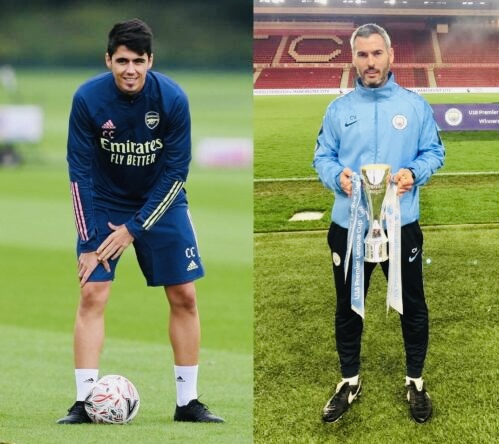
Success on the pitch comes from good coaching and two of the biggest clubs in the English Premier League have coaches that were born here in Mallorca. 

Carlos Vicens of Manchester City was born in Colonia de San Jordi here on the island and started his career as the academy director and assistant manager at CD Llosetense. He joined City’s academy in 2017 and after a successful season in 20-21 as a Head Coach of the U18s, winning the FA Youth Cup and being crowned U18 Premier League National Champions, he was promoted to the first team as Assistant Coach under Pep Guardiola in the summer of 2021. As assistant coach he was credited on Match of the Day last Sunday as the architect for Jon Stones goal against Liverpool last weekend. 

Carlos Cuesta at just 28 years old has already got a very impressive coaching CV. He was born here in Palma and was an accomplished footballer playing at Santa Catalina Atlético and representing a Balearic representative side alongside fellow Mallorquín and Real Madrid player Marco Asensio. But playing wasn’t his thing, he enjoyed coaching so started with his clubs Benjamin(U-9 to U-10’s) team. After training the kids for four years, at 18 years old, Carlos moved to Madrid to study at INEF (Faculty of Sciences for Physical Activity and Sport) and also helped out at Atletico Madrid. Where, as he did here in Mallorca, he took control of a number of the youth teams and all the while he watched Diego Simeone coach the first team. Since then he has worked at Manchester City with Pep Guardiola and at Juventus with Max Allegri and Maurizio Sarri. He is now part of the new set up at Arsenal under Mikel Arteta, who was part of Pep’s coaching team where he first met Carlos. 

He speaks a remarkable six languages; English, Spanish, Italian, Portuguese, French and Catalan and works on a one-on-one basis with the players.

His focus is heavy on technical skills and tactical ideas, while physical loading is kept to the minimum. The training sessions are filmed and Cuesta does a lot of video analysis with Arsenal’s stars individually. For him it’s about holistically working out a player’s identity to find out what they need to thrive, leaning on their physical, mental, technical and tactical capabilities and requirements. That without doubt would have helped the players in the penalty shootout win against Porto last Tuesday. Even though he is only 28, he is already being talked about as a future manager. 

Once again Mallorca shines through in another industry and it’s remarkable when you think the population is just under one million people. 

Richie is the MD at Pirates, the islands number one night out featuring Adventure, Reloaded and Gringos. Subscribe to receive his blogs at http://www.dadtaximallorca.com

Follow him on Twitter @DadTaxi1 & Instagram @dad.taxi or feel free to email him at rprior@globobalear.com