Mallorca’s Extreme Weather: Lessons from Recent Storms

The weather has been hitting the headlines here for all the wrong reasons over the last couple of weeks. The islands were hit badly by the storms, with Ibiza probably getting the worst of it.

I really believe we are sleepwalking into another flooding disaster, like the one we experienced back in 2018 here in Mallorca. If you can’t remember that awful night seven years ago, here’s an excerpt from my blog at the time:

“Thoughts and prayers are with the people of San Llorenç and the surrounding areas this week. Living on a holiday island, you never expect us to be hit by the kind of storm that hit last Tuesday. Shocking videos and pictures were all over social media, and I think the realisation of how bad it was only dawned the following morning. Thirteen people tragically lost their lives, making it one of the worst natural disasters here on record.”

That storm happened at night, and the true devastation it caused only really became apparent the morning after. I don’t think even the word apocalyptic describes it — it was truly shocking.

The storms were caused by an extreme weather event with a massive amount of rainfall, exacerbated by factors including the town’s geography, existing infrastructure, and the difficulty of accurately forecasting the disaster. There was also a subsequent discussion about potential shortcomings in the emergency response and planning.

So here we are, seven years later — and what have we learned? Well, after talking to my Talking Balearics podcast partner, Martin Makepeace, who lives in Ibiza, the answer is: precious little. Ibiza bore the brunt of it, and the warnings that did come arrived too late. Martin, like me, has a blog called Man in San An.

He wrote:

“Saturated streets, mudslides, rockfalls, collapsed roofs, DC10 underwater, UNVRS without power, flights missed, cars submerged, tunnels full of water, the port of Ibiza cascading with water as passengers disembarked up to their knees, and the two most important hubs of the island – the airport and hospital – both leaking like a sieve. This was a generational event that will be spoken about for years to come.”

Remind you of anything?

The only good thing to come out of these recent awful storms is that there was no loss of life — probably more by luck than by preventative measures.

Back in June, we learned that since its inception in 2016 and up until the end of 2023, the tourist tax had raised a total of 698 million euros. Of this total, 218 million euros relating to the years 2020 to 2022 were used to cover needs arising from the pandemic. Of the remaining 480 million euros, only 59 million had been spent on fully implemented projects — a touch over 12%!

Remember, the tax was introduced to offset the environmental and territorial impact of mass tourism by funding projects for environmental conservation, cultural heritage restoration, and the promotion of sustainable tourism. It also aims to compensate local residents for the strain tourism places on the islands’ resources and infrastructure.

If ever there was a time to spend some of this money on our islands’ infrastructure, it’s now. Well, it was after the storms of 2018 — but when you look into the management of the tax, you seriously wonder who is actually running this absolute s…show (sorry, I couldn’t find a better word!).

The Public Audit Office has criticised the “chaos and lack of control” in the management of the tax up to 2023 — one of the reasons there has been such a low level of project execution. Difficulties the Audit Office encountered in preparing this report have led it not even to issue an audit report. It cannot endorse tax data or guarantee that the law has been complied with, or will be complied with, throughout the processes pertaining to the various projects. I actually can’t believe I’m writing this.

Now we learn that the Balearic Government — which has changed since the tax was first implemented — would like to increase it further. Surely they should be looking at the management of the money that hasn’t yet been spent first?

According to the experts, global warming is making weather more extreme and unpredictable by causing hotter temperatures, more severe storms, and more frequent and intense droughts. This is driven by rising global temperatures, which lead to more evaporation and moisture in the atmosphere, fuelling powerful storms like hurricanes and causing intense rainfall or longer periods of drought. Melting ice and warming oceans also contribute to sea-level rise, which exacerbates coastal flooding from storms.

I just hope someone here realises the seriousness of this — and sorts this mess out.
Devastation across Spain

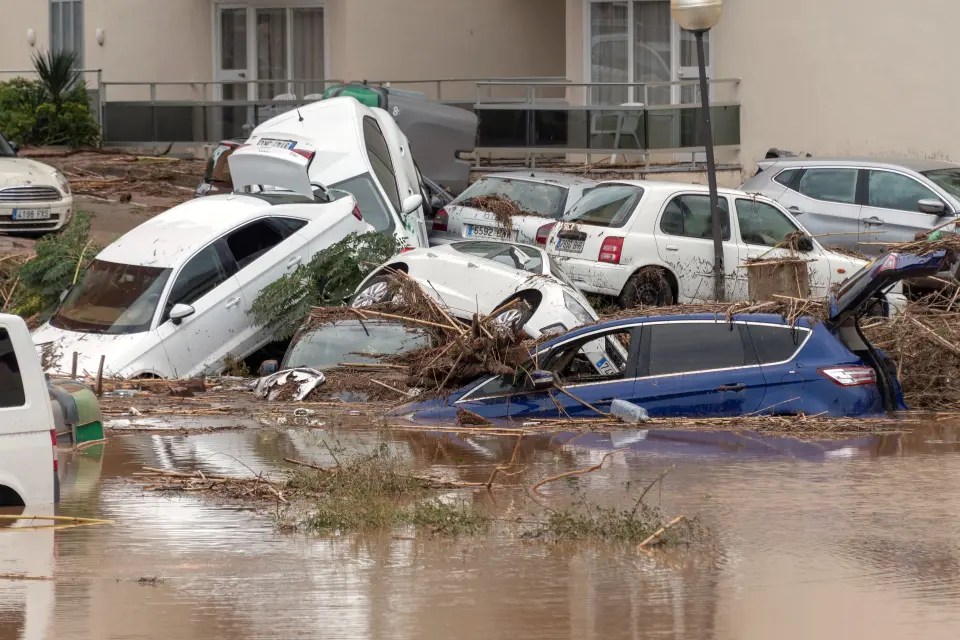
The awful scenes of flooding in Valencia took me back to what we saw at San Llorenç here in Mallorca back in 2018. A similar wall of water struck the village in devastatingly quick time, and 13 people sadly lost their lives. I remember the cleaning up operation and the huge amount of charity donations made by people at the time. I was part of the team at Radio One Mallorca who along with Bosuns locker took a van load of donations to a church in Manacor as the whole of San Llorenç was completely shut off. 

Believe it or not since those dreadful floods nothing has been done to avert future problems. After researching this further I saw a report in March this year by IB3, our island television station, that the Government will invest 40 million euros in the improvement of the Ses Planes and Sa Blanquera torrents in Sant Llorenç des Cardassar. The first steps were to commission the drafting of the project and the works are expected to begin in 2027, that’s nine years after the fateful flooding.

There have also been calls for an emergency alert system to be activated, which sends out an SMS message in the event of a catastrophe or emergency such as a fire, an explosion or a flood. Apparently this has been around for years but has not been activated by successive Governments who have failed to put it into place. Friends of ours in Porto Cristo sent us pictures and videos of similar floods there on Sunday night into Monday morning. Whilst not as devastating, still not good. 

This rain I imagine then made its way across the water to Valencia to cause the destruction there. This time though on a far greater scale and with many more people sadly losing their lives. Both tragedies have similar stories, copious amounts of rain causing tsunami like conditions and creating flooding in such a way that it’s impossible to avoid. It’s caused by a weather phenomenon called DANA – ‘depresion aislada en niveles altos’ in Spanish – which translates as ‘isolated low-pressure system at high levels’. I am led to believe that an SMS was sent out for people to remain in their homes, but many were still out in their cars and were caught out when a major road flooded. Authorities across Spain will have to look at this more seriously now, as this is not a problem that is going to go away and will only get worse. 

It’s a travesty that disasters like this make the people in power take more notice of the problems in hand. 

Near where I live, there is a place called El Toro that has a heavy Valencian population. They are collecting non-perishable foodstuffs, hygiene products & pet food, at their HQ Casa de Valencia, on the Main Street. Gran Via 1.

Collection times are, 

Saturday 2nd of November 10.00h until 13.00h & 16.30h – 18.30h 

Monday 4th of November 09.30h until 13.00h.

Also in Port Adriano on Monday 4th and Tuesday 5th of November from 09.00h to 20.00h, they will set up a container to collect food and clothes to send to those affected by the DANA in Valencia. You can bring non-perishable food, clothes, towels, blankets, nappies and animal feed

I am sure there will be other collections across the island, so please help in any way you can. 

Who is Brad Robertson?

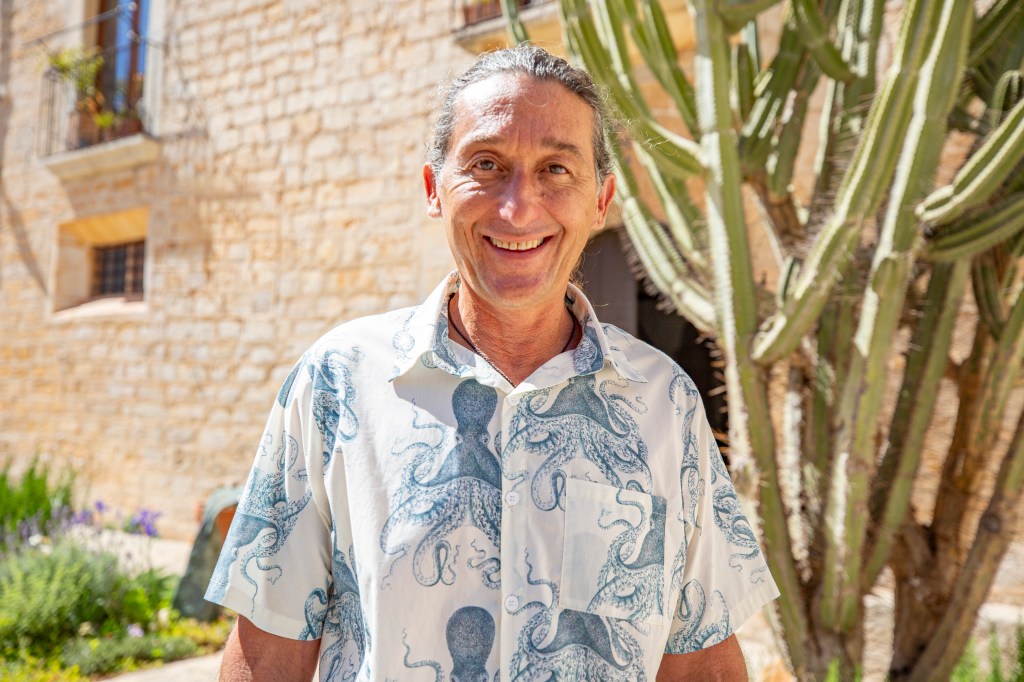
Brad Robertson is the sort of bloke you want to go and have a beer with and listen to not only what he is doing in his work life, but also what he’s done in his past. I’ve interviewed him on the radio a couple of times, and I have to be honest and say he was my inspiration to start recycling more and more. So much so now that I even pull things out of our bins at home I f they’ve not been recycled properly. My niece Florence is working for a company called the Blue Marine Foundation in the UK, a charity dedicated to restoring the ocean to health by addressing overfishing, one of the world’s biggest environmental problems. She was my inspiration to contact Brad again. So after chasing him for a chat for ages, due to us both being so busy, we finally sat down together a couple of weeks ago. 

So who is Brad Robertson?

He was born in Australia and spent most of his time on the East coast diving around the Great Barrier Reef. Which is where his love for marine life and conservation first started. He arrived in Mallorca 13 years ago from Australia with no contacts and began a land and sea business called Ondine Escape, showing people the beauty of Mallorca. As part of his business, he set up Asociación Ondine which was his way of helping the ecosystems that he was making money from. That was all fine, but it became apparent that he didn’t have the resources to cope with both. So he had the choice of keeping diving and chasing money, or following his heart and having no money! Much to his bank accounts dismay but to Mallorca’s gain, he chose the latter and concentrated on the Asociación. Eventually though, the Asociación outgrew itself and became a foundation with a new name and Save the Med was born. 

At the heart of Save the Med are four main areas of concentration, marine regeneration, scientific research, education programmes and plastic pollution reduction. 

In 2012 Sa Dragonera became the main focus for a marine protected area and after a lot of work they presented the dossier to the local government and the mainland government. In 2016 the local government recognised Sa Dragonera as a marine protected area and in 2020 it was also recognised by the Madrid government. Which was a tremendous achievement for a foundation with hardly any funding, no traction, and no reputation. The building of relationships with local and national governments is definitely key for them in the work they do.

There are many more marine protected areas, but one of the main things Brad found hard to understand was that fishing was still allowed in these areas. But what it did was make him realise that the fishermen cared just as much about the areas as he did. It led to him embracing their community to find out more about them. He then realised that they were fundamental to his ideas for marine protected areas, as they were in fact the guardians of the projects. 

Dos manos (two hands) is a 10-year-old education programme aimed at teaching children about the single use plastics industry. They teach through different methods, mainly about the harm the use of single plastics can be. I took my kids years ago to a beach clean up in Colonia de Sant Jordi organised by Brad, and it was an eye-opening experience to see what actually gets dumped. 

I asked if the foundation had ever received any money from the tourist tax? Remember, the tax was introduced to help inject funds into conserving the environment and to make tourism more sustainable for the island’s ever-increasing population in the high-season. Brad breaks off and shouts to a colleague, “Jaime, have we ever received any money from the tourist tax?” Jaime sniggers and shakes his head. Not that we’ve asked for it, says Brad, but surely these are the sort of people that should be receiving money? 

Our chat turns to single use plastics, and you can tell it’s a subject that Brad is passionate about. The textile industry and clothing in particular is a massive user of single use plastics. Brad calls it “the sleeping giant of plastic pollution”. Plastic made clothing, which is normally “poly” something, when you put them into a washing machine they let off micro fibres, which go into the water system and into the sewage and then out to sea. And so the cycle continues. 

He would love to see Real Mallorca football club have one set of their entire kit made in natural fibre. This would start a big conversation in the industries that are super saturated in money, super saturated in the urge to earn more money, and super saturated in the ability to change their behaviour. 

The message he and the foundation want to get out there is that single – use plastics do not get recycled, it’s impossible and a fact. But it still happens, and when it does get recycled it comes back as a lower quality plastic. He doesn’t know how many times it gets “recycled” but eventually it becomes useless, and then what do you do with it? In Brads words, this recycling and circular economy with plastic is complete bullshit! (Sorry for the expletive, but he says it as it is). One of the biggest lies we’ve ever been told is that single use plastic is recyclable. It isn’t and yet it is still being peddled by the recycling and rubbish management companies. The Foundation is currently focusing more on promoting reuse methods and circularity. Despite recycling being mainstream, only about 10% of plastics have been successfully recycled over the years, so there’s clearly a gap somewhere.

What message would you like us to finish on? “Before making a purchase, please consider the impact. Reuse whenever possible, and continue to support the local environmental groups in our shared mission.”

Brad is such an inspirational character and if you ever have the chance to have a beer with him, sit down and listen as it will be a complete education.

Richie is the MD at Pirates, the island’s number one night out featuring Adventure, Reloaded and Gringos. Subscribe to receive his blogs at http://www.dadtaximallorca.com

Follow him on Twitter @DadTaxi1 & Instagram @dad.taxi, or feel free to email him at rprior@globobalear.com