Debate on Playground Football Restrictions: A Parent’s Perspective

Looking back, going to school was one of the fun times in my life. I say “fun” because, to be honest, studying wasn’t my strong point. I go back to the days when your whole school year depended on an end-of-year exam — and there was my problem.

My daily schoolwork, whilst not amazing, was passable, but if I had to revise for something, I was dead in the water. I couldn’t sit still in a room and study. I was too busy wanting to go and play football. That could have been outside in the street, at school in the playground, or for the school team. In the evenings, I was playing for my youth football team and training with my town team too.

I made my debut for my town team at just 15 years old in the then Isthmian League, playing in front of a few hundred people — and that was a pretty good standard at that time.

So I didn’t have time for Maths, Biology, and French exams. It was football or nothing for me. I remember my French teacher writing in my school report, “When will Richard realise that a laugh and a joke won’t get him through life?”

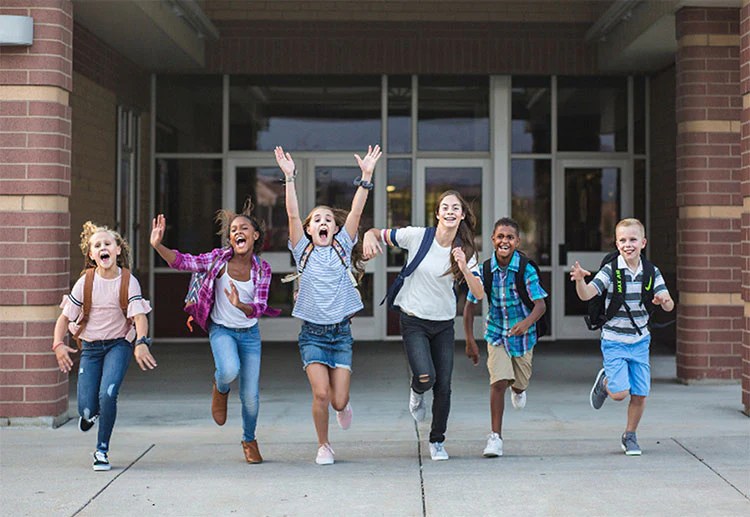
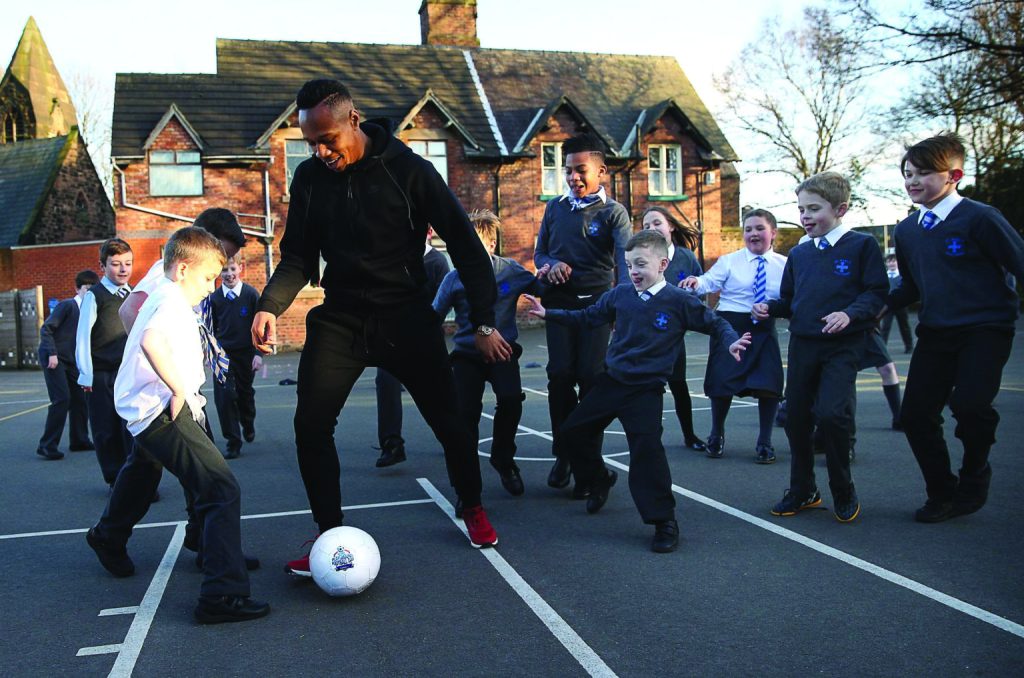
One of the things I loved at school was the lunchtime break. We used to congregate in the playground, pick two teams, and off we went. Now, I was a goalkeeper, just like my youngest son Jude is now, but there was no way I was playing in goal in the playground. I was running around trying to show my mates how good an outfield player I was.

It was very competitive, of course, and nobody wanted to go back into a double chemistry lesson having been on the losing team. Competitive also meant that every now and again it would get feisty and disagreements would occur. I went to an all-boys school, so the testosterone was flying around, as you can imagine, but it would soon cool down and on we went. Writing this now brings back great memories and, for me, it was all part of growing up.

So imagine my surprise when I read on the front page of one of the Spanish papers here in Mallorca that schools are going to limit the playing of football in the playground due to the conflicts it generates. Are we serious??

I posted this on my Facebook page and it got a huge reaction — most finding it a stupid decision and a few supporting it. In fact, some parents have said that in some schools already kids can only play on certain days. One parent from the UK said it happens at his son’s school. Another parent here says his son comments excitedly every Thursday that it’s his day to play football. Another said her son had said that arguments in the playground happen anyway, not just because of football.

I saw the paper that had written the story had posted it on their Facebook page, and the pile-on from the Spanish was unbelievable. I couldn’t find one person who supported it.

In an official statement issued last Thursday evening, the FFIB (the Balearic Football Federation) expressed its regret that initiatives are being promoted that could limit children’s participation in sports, and pointed out that football is the most popular sport in the Balearic Islands, with a long history and social impact that makes it a key tool for education, coexistence, and the comprehensive development of children and young people.

The Federation emphasised that youth football goes far beyond mere competition. It is, they explain, a learning environment in which values such as respect, teamwork, discipline, equality, effort, and solidarity are transmitted — all of which are essential elements in the personal and social growth of young people. Through clubs and sports schools, thousands of schoolchildren learn to live together, manage their emotions, and face challenges in a regulated and supervised environment.

I couldn’t have put it better myself.

The Absurdity of UK Politics: A Deep Dive

Politics and religion have long been known as subjects to steer clear of, and in this day and age you could probably add gender in there too.

But politics, believe it or not, is something I’ve always been fascinated by. I don’t really know why, as I have no family history to back that up.

A lot of people will be tuned into EastEnders or Coronation Street of an evening, but I always try to make time to watch Prime Minister’s Questions at 12 midday UK time on a Wednesday. If I miss it, I’ll always watch it on catch-up or YouTube. I know I should get out more, but I’m drawn in by watching grown men and women, most of the time, talking absolute rubbish and always blaming each other for the problems in the country whilst never coming up with the solutions that are needed. It’s like being back in the playground at school, except these are the people who are supposed to be running the country.

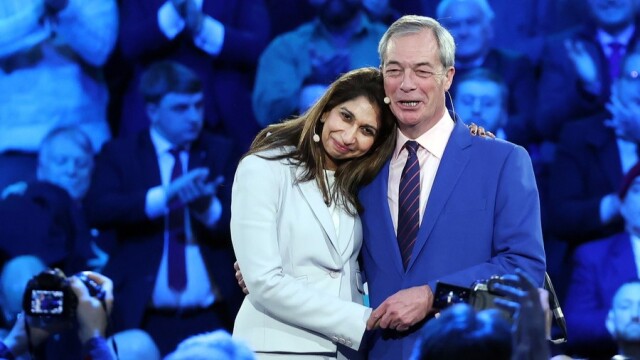
These past few weeks have been very interesting, with some Conservative politicians, both in and out of the party, defecting to Reform UK. Now let’s get this straight: politicians have no morals, and as soon as you hear them say, “I’m putting the country first,” you know it’s complete bull and that they’re trying to save their own political careers because they’ve been rubbish at anything they’ve done in the past. In fact, if they truly believe in putting the country first, then call a by-election so the voters can decide if they still want them as their MP.

When asked in her press conference about this, Braverman said that she believes that if an MP changes party there should be a by-election — but then waffled on about why, after she has changed party, there shouldn’t be a by-election in her constituency. Putting the country first?

The three main protagonists right now are Nadhim Zahawi, Robert Jenrick and Suella Braverman. All three have, in the past, criticised Reform or have been criticised themselves by its leader, Nigel Farage. And yet, when asked about it in their press conferences, they hide behind the words, “Well, we say things in the heat of politics, but we don’t really mean them.” These are the very same failed politicians who want another chance to run the country. Are they really expecting us to believe this utter crap they come out with?

Remember, Suella Braverman was sacked twice as Home Secretary; Nadhim Zahawi was sacked after it emerged he’d been investigated by HMRC for not paying enough tax when he was Chancellor — not to mention claiming expenses from taxpayers for heating his stables — and Robert Jenrick was sacked as Housing Secretary by Boris Johnson in September 2021 following controversies. He was later removed from the shadow cabinet and had the Conservative whip withdrawn in January 2026 by Kemi Badenoch after planning to defect to Reform. But Reform are happy to take them into the party to help run the country if they get back into power.

The problem is: what are the alternatives? The current Labour government, which arrived triumphant only 18 months ago, seems to be doing its very best to get everything wrong. Countless U-turns on unpopular policies, followed by decisions by the Chancellor which beggar belief.

The Conservatives seem to be in a downward spiral, and I’m not sure how they get themselves back on track. Then there are the Liberal Democrats, who, despite the complete incompetence of the two main parties, never actually seem to go anywhere.

So it seems that Reform has the momentum right now, and it’s going to be interesting to see how this all pans out. Remember that Zahawi, Jenrick and Braverman all wanted to be leader of the Conservative Party — and failed. Don’t be surprised if one of them tries to topple Farage at some point because, as I said before, they’re only in it for themselves.

I, of course, no longer live in the UK, so I’m watching from afar. Although, to say things are rosy here in Spain, with a coalition government that’s going nowhere, isn’t easy either!

I would, though, always encourage you to go out and vote. In the words of Plato, who is considered one of the most brilliant and influential philosophers in history:

“One of the penalties for refusing to participate in politics is that you end up being governed by your inferiors” — or, in modern terms, by idiots!

I’ll leave you with that great line from an old song by Stealers Wheel, which couldn’t sum up politics and politicians in a better way:

“Clowns to the left of me, jokers to the right, here I am stuck in the middle with you.”

Walking for Pauline: A Son’s Journey of Love, Hope and Determination

Birds of a Feather actress Pauline Quirke MBE was diagnosed with dementia in 2021. Her family, who are unsure what stage she is at, have spoken of the “disbelief” they felt at the time.

I have known Pauline, her husband Steve, and their children Charlie and Emily for a very long time. They used to own a property here in Mallorca, which is when I first interviewed Pauline. That interview sparked a meeting with my wife Rachael, Pauline, Steve and me that led to the opening of the Pauline Quirke Academy here in Mallorca in 2009.

PQA is a performing arts academy for children and young people aged 4–18, offering classes in musical theatre, comedy and drama, and film and television. They have over 200 academies in the UK and here  in Mallorca, it runs every Saturday from 10:00 to 13:00 at Agora School in Portals Nous.

Since Pauline’s diagnosis, the family have been very private, as they did not want any press intrusion. Last month they shared an update on Pauline’s condition, and the news that Charlie will be bringing hope home this Christmas by embarking on a trek in honour of his beloved mum. The trek starts next Monday, the 8th of December, and he will walk 140 km in five days, raising money for Alzheimer’s Research UK.

I interviewed Charlie last week to find out more about it.

RP: Hi Charlie, good to talk to you. I think everybody would like to know: how is your mum?

CQ: Hi mate, thank you for asking. She’s good. You know, she is still, as you know, the funniest woman ever—caring and loving as always. We’re all determined to raise awareness and funds to find a cure for this illness.

RP: Just over 15 years ago, we started the Pauline Quirke Academy here in Mallorca, and it’s been fantastic. The support that we’ve received from both your mum and your dad has been amazing throughout that time. This is a great thing you’re doing, Charlie. When do you actually start?

CQ: Monday, December the 8th. So yeah, it’s a little under two weeks now. It’s come around fast, and I’m walking for five days across five counties, embarking on places that have touched my mum’s life, and our family’s life and history. So starting in Chigwell—the iconic home of Birds of a Feather, of course—then to West Ham’s training ground, through London to Islington, then Windsor where my mum got her MBE, then to the headquarters of PQA, and finally to where we now live.

RP: Five days, 140 kilometres. So it’s more or less 30 kilometres a day. So we’re talking… well, not far off a marathon a day, basically.

CQ: Yes. Maybe I’m not good enough at maths—I didn’t realise how much it was! I think it’s about three and a half marathons in the five days.

RP: Have you been training? I ask because am I right in saying that you are recovering from a broken leg?

CQ: So, in a football match at the end of August, I fractured my tibia and did my MCL. So it’s all been a bit of a mess. I was allowed out yesterday for the first time in four months to walk for about 45 minutes in one go. So I’m aching a little bit now.

RP: You need to make sure you have a good pair of trainers. I think I saw you out in a pair of Adidas the other day?

CQ: I’ve been lucky enough that Alzheimer’s Research UK have got me all kitted out in Adidas. Adidas wanted to come on board and help the cause. So yeah, I’m head to toe in Adidas clobber, and the shoes are actually Alzheimer’s Research UK colours, so that’s a good omen.

RP: Have you got people joining you on the walk?

CQ: Yeah, so they’ve been keeping it a surprise, but I think I’ve got a lot of familiar faces from my mum’s career joining me. Also a lot of my friends that are in the industry. Some actors that my mum’s worked with who can’t make it because of scheduling issues, but who really appreciate and respect my mum, are sending good-luck videos as well.

RP: If people want to donate, what’s the best way to do it?

CQ: The best way is the website, which is trek.charliestrek.org. You can go on there and see all the reasons why I’m doing it, and there’s a nice little handy donation button. Otherwise, you can text CHARLIE20 or CHARLIE10 to 70255.

RP: Right now you are just under £50,000, which is an amazing amount of money.

CQ: I never had a figure in my head. I’m hoping I can get to six figures and that now seems a possibility. That’ll make such a difference for research and for finding a cure. It’s incredible—the amount of money shows the amount of support and love for my mum. It’s such a nice feeling, honestly.

RP: Well, listen mate, we wish you all the luck. Please send our love to your mum, your dad and your sister too.

CQ: Cheers Richie, and thanks for your support.

Christmas is a time when families may notice signs of dementia for the first time—a condition almost one million people in the UK are living with today. Heartbreakingly, there is no cure for the condition—yet.

But Alzheimer’s Research UK exists to change that. With your support, the charity will give families hope by funding the research that will change and save lives. Here in Mallorca and across Spain there are support groups that are listed below. 

  • Age Concern Mallorca: They provide a wide range of support, including advice, help with paperwork, and connecting people with support groups for dementia and Alzheimers.
  • Ceafa: This is part of the Spanish Alzheimer’s network and is active in Mallorca.
  • Fundación Pasqual Maragall: This foundation has a presence in Mallorca, including holding awareness events in Palma. 
  • Age in Spain: Provides information and referrals for dementia care and support services across Spain.

Nearly all of us have family, a friend or someone we know that suffers from this awful illness, I wish Pauline, Steve, Charlie and Emily all our love. 

Remembrance and Identity: A British Expat’s Tale

I came to Mallorca back in 1990. Back then, I worked the summer seasons and went back home in the winter to look for work. My wife Rachael and I met at Pirates; she was Captain Scarlett and I was Captain Darling. We bought an apartment together in 1999, and once we had done that, we tended to stay here in the winters more and more. We got married in 2005 and moved to where we live now, and not long after that our first son, Jacob, was born. Three and a half years later our second son, Jude, arrived.

I class Mallorca as my home, but I have never once considered giving up my British passport and becoming a Spanish citizen. Having lived here for 35 years now, and my wife for slightly less, we could both apply for citizenship — but it’s not something we want to do. We have said to our sons that it’s entirely up to them what they decide.

My youngest, Jude — who you probably know is an aspiring footballer — said to me, “What if it comes to choosing England or Spain in football?” Now, firstly, he’ll be lucky to ever get into that position of course, but we can dream. If he ever did, I said it would be totally up to him. His choice right now is England.

He is also considering other avenues of work in case the football dream doesn’t materialise, which is something we have encouraged. Right now, he wants to go into the military or the fire service, and he would like to do that in the UK.

Working on the radio, I like to keep a keen eye on the news and particularly on things that are happening in the UK. I also listen intently to family and friends and what they have to say about the state of my country of birth. None of it right now seems to be positive.

A poll released only a few days ago from King’s College London reported that less than half of those polled (46%) felt proud of Britain, down from 56% in the past five years.

Remembrance Sunday was a couple of weeks ago — a day held annually on the second Sunday in November in the UK and other Commonwealth countries to commemorate the contribution of British and Commonwealth military and civilian service members in all wars and conflicts. It is a time for national reflection, observed with acts of remembrance such as wearing poppies, attending ceremonies, laying wreaths, and observing two minutes of silence.

My nephew William was part of the RAF band playing at the Cenotaph. I was saddened to hear Alec Penstone, aged 100, who fought in World War II and has attended several remembrance events and appeared on ITV’s Good Morning Britain. When asked what his message was for Remembrance Sunday, he said:

“My message is, I can see in my mind’s eye those rows and rows of white stones, of all the hundreds of my friends who gave their lives. For what? The country of today? No, I’m sorry. The sacrifice wasn’t worth the result that it is now.”

Alec explained:

“What we fought for was our freedom, and even now, it’s a darn sight worse than what it was when we fought for it.”

Surely this can’t be right?

Mallorca’s Tourism Strategy: Diversification and Sustainability Goals

This past week has seen the World Travel Market in London, where the great and the good of the travel world descend on the Excel Centre to showcase their wares. Mallorca focused on diversification and sustainability as the new buzzwords, while the Government continues to fend off questions about tourismphobia.

There are three main travel markets in Europe: the WTM in London in November, Fitur in Madrid in January, and the ITB in Berlin in March. The majority of Mallorca’s tourist numbers come from three countries:

Germany: The largest single source market for tourists in Mallorca, accounting for around 40% of total tourist traffic. In 2024, estimates suggest over 5 million German visitors. Reports indicate that this year there has been a decrease in the number of German tourists.

United Kingdom: The second-largest market, typically making up around 26% of visitors. In 2024, there were an estimated 3.58 million British tourists. Reports suggest that the British helped save the summer season this year, with a slight decline in visitor numbers in July and August but a significant increase in September.

Spain: Domestic tourism from mainland Spain is also a key market, with approximately 1.8 million visitors estimated in 2024.

We are starting to see more and more visitors from other countries. In my concierge business, I have met and spoken with people from the USA, France, Italy, Austria, Scandinavia, the Netherlands, Iraq, and Singapore. Next year, we are expecting flights from Canada, Abu Dhabi, and possibly South Africa.

For me, it is fundamental that we are represented at these travel markets. I often see comments online such as, “Why are we going when we’re always full?” and “Do we really need to spend this money?”

Marketing is crucial for sustainable growth — not just for attracting more visitors. It helps draw in a higher-spending demographic, which is something the Government is keen to encourage. It also helps spread tourism throughout the year and attracts people interested in different types of activities, helping to manage and reduce pressure during peak times. In addition, it can attract tourists with different needs and preferences, which in turn diversifies the local economy and ensures long-term stability.

Not being represented may not have a noticeable effect on tourism numbers in the short term, but you can be sure that in the long term, we would start to suffer. Competition among destinations is increasing, and according to the organisers of the WTM, London 2025 is expected to be the largest event in its 45-year history. Early indicators show significant growth, surpassing the more than 4,000 exhibitors from 2024, with an 8% increase expected.

Let’s be clear: tourism accounts for approximately 45% of Mallorca’s GDP, making it the island’s primary economic driver. The sector’s total impact is even greater, with analyses suggesting it influences up to 90% of the island’s economy through indirect effects on other industries. Most of us have a family member or friend who works in tourism.

Sustainability will be a vital part of our tourism strategy in the coming years. One change I would make immediately is to the tourist tax — I would charge a fixed fee all year round for every traveller.

At the moment:

• Under-16s don’t pay.

• Rates vary depending on the type of accommodation.

• There’s a 50% reduction if you stay longer than nine nights.

• It’s discounted during the low season.

Let’s be in no doubt: the island’s beauty must be maintained for generations to come — but we should also be proud of what we have. I’ve said it before, and I’ll keep saying it:

We are a beautiful island of contrasts — from the stunning beaches in the north to the mountains of the west, the caves and coves of the east, and the bustling nightlife of the south. There is something here for absolutely everyone.

If ever there was a destination built for tourism, it’s our island. It hasn’t been one of the most popular islands in the world for the past 50 years for nothing. In my opinion, it remains one of the best places to live and one of the best holiday destinations anywhere.

We can boast turquoise-blue waters, secret coves, soft golden sands, lush green landscapes, rugged mountains, picturesque villages, amazing cuisine, an up-and-coming wine industry, vibrant nightlife, and a lively capital city. And we’re just a couple of hours’ flight from most major European cities — right in the heart of the Mediterranean.

As someone who lives and works here, I see Mallorca’s magic every single day — in the people, the landscapes, and the memories our visitors take home. If we can combine smart marketing with genuine care for our environment and communities, I have no doubt that Mallorca will continue to shine as the jewel of the Mediterranean for decades to come.

Mallorca’s Extreme Weather: Lessons from Recent Storms

The weather has been hitting the headlines here for all the wrong reasons over the last couple of weeks. The islands were hit badly by the storms, with Ibiza probably getting the worst of it.

I really believe we are sleepwalking into another flooding disaster, like the one we experienced back in 2018 here in Mallorca. If you can’t remember that awful night seven years ago, here’s an excerpt from my blog at the time:

“Thoughts and prayers are with the people of San Llorenç and the surrounding areas this week. Living on a holiday island, you never expect us to be hit by the kind of storm that hit last Tuesday. Shocking videos and pictures were all over social media, and I think the realisation of how bad it was only dawned the following morning. Thirteen people tragically lost their lives, making it one of the worst natural disasters here on record.”

That storm happened at night, and the true devastation it caused only really became apparent the morning after. I don’t think even the word apocalyptic describes it — it was truly shocking.

The storms were caused by an extreme weather event with a massive amount of rainfall, exacerbated by factors including the town’s geography, existing infrastructure, and the difficulty of accurately forecasting the disaster. There was also a subsequent discussion about potential shortcomings in the emergency response and planning.

So here we are, seven years later — and what have we learned? Well, after talking to my Talking Balearics podcast partner, Martin Makepeace, who lives in Ibiza, the answer is: precious little. Ibiza bore the brunt of it, and the warnings that did come arrived too late. Martin, like me, has a blog called Man in San An.

He wrote:

“Saturated streets, mudslides, rockfalls, collapsed roofs, DC10 underwater, UNVRS without power, flights missed, cars submerged, tunnels full of water, the port of Ibiza cascading with water as passengers disembarked up to their knees, and the two most important hubs of the island – the airport and hospital – both leaking like a sieve. This was a generational event that will be spoken about for years to come.”

Remind you of anything?

The only good thing to come out of these recent awful storms is that there was no loss of life — probably more by luck than by preventative measures.

Back in June, we learned that since its inception in 2016 and up until the end of 2023, the tourist tax had raised a total of 698 million euros. Of this total, 218 million euros relating to the years 2020 to 2022 were used to cover needs arising from the pandemic. Of the remaining 480 million euros, only 59 million had been spent on fully implemented projects — a touch over 12%!

Remember, the tax was introduced to offset the environmental and territorial impact of mass tourism by funding projects for environmental conservation, cultural heritage restoration, and the promotion of sustainable tourism. It also aims to compensate local residents for the strain tourism places on the islands’ resources and infrastructure.

If ever there was a time to spend some of this money on our islands’ infrastructure, it’s now. Well, it was after the storms of 2018 — but when you look into the management of the tax, you seriously wonder who is actually running this absolute s…show (sorry, I couldn’t find a better word!).

The Public Audit Office has criticised the “chaos and lack of control” in the management of the tax up to 2023 — one of the reasons there has been such a low level of project execution. Difficulties the Audit Office encountered in preparing this report have led it not even to issue an audit report. It cannot endorse tax data or guarantee that the law has been complied with, or will be complied with, throughout the processes pertaining to the various projects. I actually can’t believe I’m writing this.

Now we learn that the Balearic Government — which has changed since the tax was first implemented — would like to increase it further. Surely they should be looking at the management of the money that hasn’t yet been spent first?

According to the experts, global warming is making weather more extreme and unpredictable by causing hotter temperatures, more severe storms, and more frequent and intense droughts. This is driven by rising global temperatures, which lead to more evaporation and moisture in the atmosphere, fuelling powerful storms like hurricanes and causing intense rainfall or longer periods of drought. Melting ice and warming oceans also contribute to sea-level rise, which exacerbates coastal flooding from storms.

I just hope someone here realises the seriousness of this — and sorts this mess out.

Discover Mallorca: An Emerging International Destination

Mallorca is developing more and more into an international destination, and with that, more opportunities are becoming available to those of us living and working here. The truth is, why would you not want to come here?

We are a beautiful island of contrast, from the stunning beaches in the north to the mountains of the west, the caves and coves of the east, and the bustling nightlife of the south. There is something for absolutely everyone.

If ever there was a destination built for tourism, it is our island. It hasn’t been one of the most popular islands in the world for the last 50 years for nothing. In my opinion, it remains one of the best places to live and one of the finest holiday destinations. We can boast turquoise-blue waters, secret coves, soft golden sands, lush green foliage, rugged mountains, picturesque villages, amazing cuisine, an up-and-coming wine industry, a lively nightlife scene, and a vibrant capital city. We’re also an island in the Mediterranean, just a couple of hours’ flight from most European cities.

Palma Airport, which is Spain’s third busiest, is currently undergoing a €559 million expansion and modernization by its owner, AENA. The project began in 2022 and is expected to be completed by the end of 2026. Its purpose is to improve the airport’s passenger-friendliness, efficiency, and sustainability.

One thing that is changing is the increasing number of direct flights arriving from outside of Europe. It used to be that anyone coming from further afield had to visit us via Madrid, Barcelona, or another European city. Since the pandemic and around the start of the airport expansion, things have started to change. In June 2022, a direct flight from New York to Palma began operating, and its frequency has increased every year. From June 17th to October 24th, 2026, Air Canada will launch a direct flight between Montreal and the island, and Etihad Airways has officially announced that it will begin direct flights between Abu Dhabi and Mallorca starting June 12th, 2026, running through to mid-September. This will be the first-ever direct connection between the UAE and Mallorca, and currently the only direct air link between Asia and the island — a landmark moment in Mallorca’s international connectivity.

Not only are all these connections great for the island but let’s remember we now have the opportunity to travel to these destinations for either business or pleasure. Making it a win-win situation.

Friends of mine in the wedding industry here on the island tell me that since the flights from New York began, there has been a steady increase in American couples getting married here. Friends in the property world also say that more and more foreign buyers are being lured to the island because of its beauty and great connectivity.

Not only is this good for business here but this also has a knock-on effect on many third-party businesses that may not be directly involved in these industries but will benefit from their growth.

I see all of this as positive, but I also understand that the sustainability aspect needs to be seriously looked at and addressed in a constructive way. We need to continue working to extend our seasonality. A 12 month year round Mallorca is far more appealing then a 6 month one and it could well lighten the load on the summer months. I see this slowly moving in the right direction, and we need to look at how we can better cope during the busiest months of the year, July and August. For Mallorca to become a year-round destination, we all need to work harder during the shoulder months to achieve this. Don’t listen to the naysayers who constantly say it can’t be done — Magaluf is now a perfect example of how positive change can happen. Keep those glasses half full!

Climbing the Football Ladder: A Family’s Journey

We have two sons who are both working hard to climb the football ladder. Our eldest, Jacob, at 19 years old, is starting on the path to becoming a coach. He has been working at the Borussia Dortmund International Academy Mallorca for a couple of years, running various training sessions. This year, however, he will be coaching his own team while studying for a UEFA C licence and completing his education with an FP Superior in Sport.

Our youngest, Jude, at 16 years old, has his sights set on becoming a professional goalkeeper. He is playing at the second-highest level of youth football with Palma FC while studying for an FP in Sport, just like his brother.

Both realise that they are on a difficult path, as very few actually make it, which is why their studies become so important.

Footballers who do make it enter a life that most of us can only dream of. Whilst most behave in a manner befitting their standing, unfortunately there are some who don’t. Several cases have come to light this season, both here in Mallorca and back in the Premier League.

Dani Rodríguez is a player I admire at Real Mallorca. He has been at the club since January 2018 and always gives 100%. However, a couple of weeks ago he let himself down. He was suspended by the club after publicly criticising the club and coach on social media following a loss to Real Madrid. He was frustrated at not being brought into the game—especially as his family was watching—and questioned the value of loyalty and hard work in the dressing room. The club responded by suspending him for 10 days without pay and permanently removing him as vice-captain.

I hope he can train his way back into the team, whether under the current coach or another one (that’s for another day!).

Players thinking they are above the law are becoming more and more common. The case of Alexander Isak is probably the biggest one this summer. He refused to play for his parent club, Newcastle, while still under contract, in an attempt to force a move to Liverpool, who had submitted a bid for him. On the other hand, you have a club like Chelsea, who have sidelined two of their squad players—Raheem Sterling and Axel Disasi—making them train in the evenings, away from the first-team squad. The Professional Footballers’ Association (PFA) has become involved, reminding Chelsea of their duty of care.

But where were the PFA in the case of Isak, telling him he should fulfil his contractual obligations? You heard nothing from them. Yet when it comes to a player like Sterling, they suddenly come out of the woodwork and get involved. I am sure these players had opportunities to move on in the summer but, for whatever reason, chose not to. They are still being paid and have access to all the facilities provided to the first team. In Sterling’s case, he is still earning £325,000 a week! On that amount of money, I’d be training all day, all night, and twice on Wednesdays! I’m sorry, but the “duty of care” argument in this case doesn’t wash with me.

We have taught our sons to be respectful to others, and we hope that if either—or both—of them make it into the big wide world of football, they continue in that vein. As the old saying goes: be nice to the people on your way up, because you might well meet them on your way back down!

Ryanair’s New Baggage Rules: What Travelers Need to Know

My last column, writing about Ryanair and the possibility of them setting up a tour operator, got some really good feedback — so thank you for that. Ryanair is a story that keeps on giving, and these past two weeks have been no exception.

They have introduced new baggage rules which, to be honest, won’t make much of a difference. I imagine I’ll just be able to bring back a few more tea bags than I did before. They have increased the maximum size of the so-called “personal item” (to be stored under the seat) from 35x20x20cm to 40x25x20cm. This is the standard allowance for all passengers. If you want to bring a larger wheelie case, you must pay for priority boarding, which includes one larger cabin bag (55x40x20cm) and a second smaller item that can be stored in the overhead locker. Don’t you just love it when the priority boarders have to get on the same bus to the airplane as the rest of us in cattle class — or is that just me?

I wish all airlines would agree on a standard size for cabin baggage. It’s very confusing. When you arrive at the gate there are so many different baggage sizers. Take a look at the photo above — and that’s only four airlines.

Ryanair will no doubt have their pack of hyenas at the gates, doing their best to ruin the start of your flight. I think some of them take pleasure in causing that misery. To make matters worse, they have increased their staff incentive programme to catch people out — from €1.50 to €2.50. This bonus used to be capped at €80 per month per person, but this has now been removed, which means they can earn as much as they want. Be warned!

I still laugh that they charge you a €45 administration fee to change a flight. I have no problem with being charged the difference between the flight I booked and the flight I am changing to. What I do object to is the so-called “admin fee.” Why? Because you actually do the admin yourself! At this rate, I’ll be charging myself for an oversized bag if I’m not careful.

They’ve also been in the news this week after apparently dropping one million seats from Spanish airports for the upcoming year. I’m led to believe that the rise equates to €0.68 per passenger. AENA, the company in charge of most of Spain’s airports, has said that it’s a 6.62% year-on-year rise. AENA also points out that Ryanair has raised its fares by 21% in the past year. Whilst this is a game of poker, it will be interesting to see if either side folds. My guess is that the routes Ryanair has dropped are their least profitable or loss-making ones and therefore won’t have a significant effect on their bottom line.

My friend and fellow podcaster Martin Makepeace, from our Talking Balearics podcast, loves Ryanair. He always books seat 17F — by the window, with legroom. Mind you, he is 6’7”, so he needs as much help as he can get!

As you can probably tell from the above, I’m not a fan. Will it stop me booking a flight with them if it’s the cheapest around? Probably not. And if any of those hyenas come snooping around, I’ll stick my bag where the sun doesn’t shine!

Ryanair

My last column, writing about Ryanair and the possibility of them setting up a tour operator, got some really good feedback — so thank you for that. Ryanair is a story that keeps on giving, and these past two weeks have been no exception.

They have introduced new baggage rules which, to be honest, won’t make much of a difference. I imagine I’ll just be able to bring back a few more tea bags than I did before. They have increased the maximum size of the so-called “personal item” (to be stored under the seat) from 35x20x20cm to 40x25x20cm. This is the standard allowance for all passengers. If you want to bring a larger wheelie case, you must pay for priority boarding, which includes one larger cabin bag (55x40x20cm) and a second smaller item that can be stored in the overhead locker. Don’t you just love it when the priority boarders have to get on the same bus to the airplane as the rest of us in cattle class — or is that just me?

I wish all airlines would agree on a standard size for cabin baggage. It’s very confusing. When you arrive at the gate there are so many different baggage sizers. Take a look at the photo above — and that’s only four airlines.

Ryanair will no doubt have their pack of hyenas at the gates, doing their best to ruin the start of your flight. I think some of them take pleasure in causing that misery. To make matters worse, they have increased their staff incentive programme to catch people out — from €1.50 to €2.50. This bonus used to be capped at €80 per month per person, but this has now been removed, which means they can earn as much as they want. Be warned!

I still laugh that they charge you a €45 administration fee to change a flight. I have no problem with being charged the difference between the flight I booked and the flight I am changing to. What I do object to is the so-called “admin fee.” Why? Because you actually do the admin yourself! At this rate, I’ll be charging myself for an oversized bag if I’m not careful.

They’ve also been in the news this week after apparently dropping one million seats from Spanish airports for the upcoming year. I’m led to believe that the rise equates to €0.68 per passenger. AENA, the company in charge of most of Spain’s airports, has said that it’s a 6.62% year-on-year rise. AENA also points out that Ryanair has raised its fares by 21% in the past year. Whilst this is a game of poker, it will be interesting to see if either side folds. My guess is that the routes Ryanair has dropped are their least profitable or loss-making ones and therefore won’t have a significant effect on their bottom line.

My friend and fellow podcaster Martin Makepeace, from our Talking Balearics podcast, loves Ryanair. He always books seat 17F — by the window, with legroom. Mind you, he is 6’7”, so he needs as much help as he can get!

As you can probably tell from the above, I’m not a fan. Will it stop me booking a flight with them if it’s the cheapest around? Probably not. And if any of those hyenas come snooping around, I’ll stick my bag where the sun doesn’t shine!